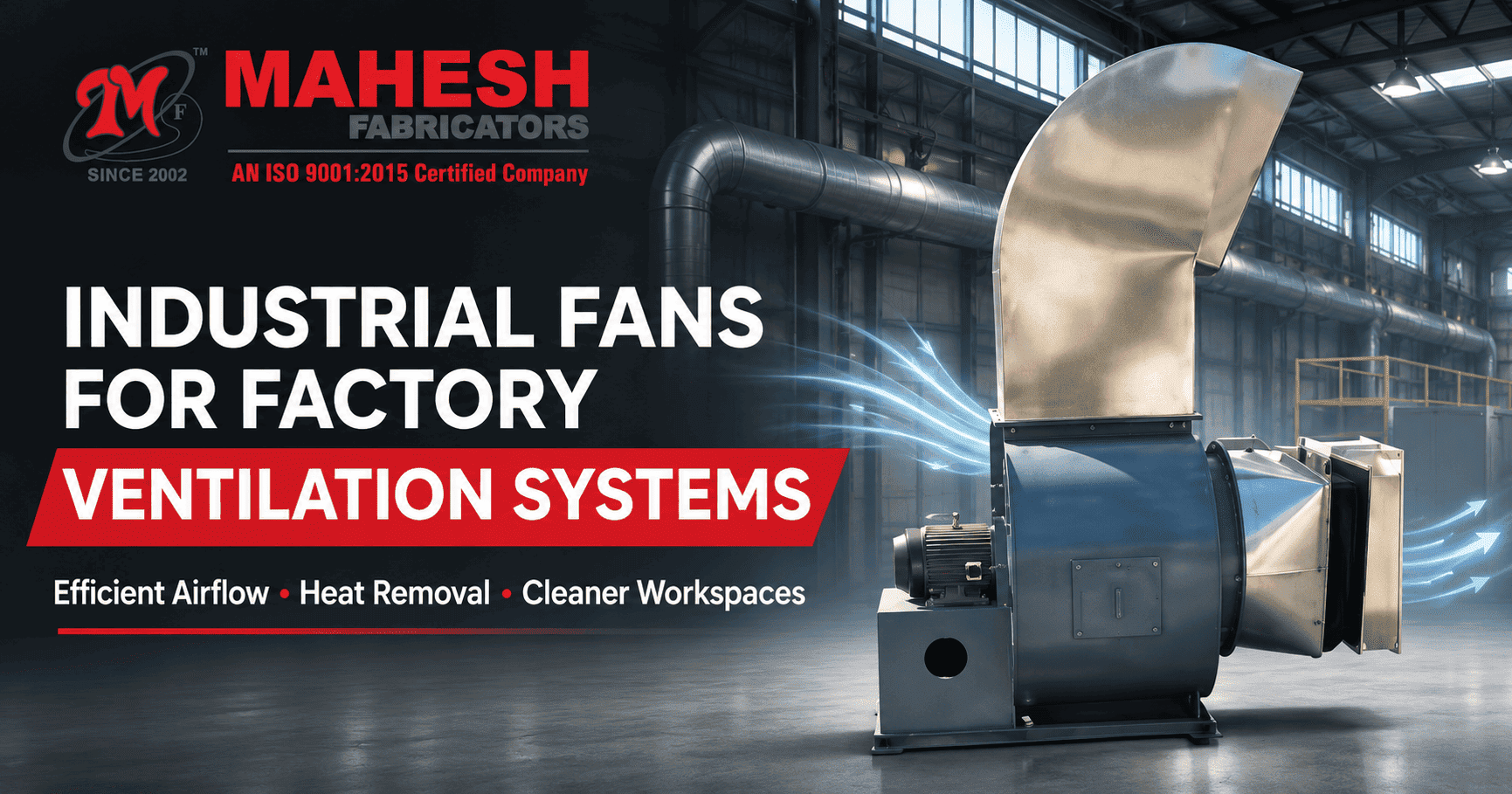
Industrial Fans for Factory Ventilation Systems
In the complex environment of a factory, maintaining optimal air quality is not just a matter of comfort but a critical component of safety, productivity, and operational efficiency. Industrial fans for factory ventilation systems serve as the backbone of these essential air management strategies. These robust machines are engineered to move vast quantities of air, ensuring that harmful pollutants, excess heat, and stagnant air are effectively removed and replaced with fresh, clean air. Whether it's ensuring the safety of workers in high-temperature zones or removing hazardous fumes from production lines, the right industrial fan is indispensable. Mahesh Fabricators, an ISO 9001-2015 Certified Company with over 17 years of experience, specializes in manufacturing a comprehensive range of industrial air systems designed to meet these demanding requirements.
The Indispensable Role of Industrial Fans in Factory Ventilation
Factories and industrial facilities are dynamic environments where processes can generate significant heat, dust, fumes, and other airborne contaminants. Effective ventilation is paramount to mitigate these issues. Industrial fans are specifically designed for these heavy-duty applications, offering the airflow capacity and durability required to handle large volumes of air under challenging conditions. They are fundamental to ensuring that working environments remain safe, compliant with regulations, and conducive to high-quality production. Proper ventilation powered by industrial fans can prevent the buildup of hazardous substances, reduce the risk of fires or explosions, improve worker concentration by maintaining comfortable temperatures, and extend the lifespan of machinery by preventing overheating.
Applications of Industrial Fans in Factory Ventilation
The versatility of industrial fans means they are deployed across a vast array of applications within factory settings. Their primary function is to facilitate air movement, whether for general ventilation, targeted exhaust, or process-specific air handling.
General Ventilation
Ensuring a constant supply of fresh air and removal of stale indoor air to maintain overall air quality and comfort levels in large factory spaces.
Heat Removal
Extracting excess heat generated by machinery and production processes to prevent overheating and maintain a safe working temperature.
Fume and Dust Extraction
Capturing and expelling airborne contaminants such as welding fumes, chemical vapors, or dust particles at their source using Local Exhaust Ventilation (LEV) systems.
Process Airflow
Circulating air for specific industrial processes like drying, curing, or cooling materials and products.
Humidity Control
Managing moisture levels within the factory environment, which is crucial for protecting sensitive equipment and materials.
Key Benefits of Effective Factory Ventilation with Industrial Fans
Implementing a well-designed factory ventilation system powered by industrial fans yields numerous advantages, directly impacting operational efficiency and worker well-being.
- Improved Worker Safety and Health: By removing hazardous fumes, dust, and maintaining breathable air quality, industrial fans significantly reduce the risk of respiratory illnesses and accidents.
- Enhanced Productivity: Comfortable working temperatures and clean air contribute to better focus and reduced fatigue among employees, leading to higher output.
- Regulatory Compliance: Adequate ventilation ensures factories meet occupational health and safety standards, avoiding potential fines and shutdowns.
- Equipment Protection: Preventing overheating of machinery and sensitive equipment through effective cooling and air circulation prolongs their operational life and reduces maintenance needs.
- Energy Efficiency: Compared to air conditioning, industrial fans are a more energy-efficient solution for cooling large spaces, reducing operational costs.
- Reduced Odors and Stagnation: Continuous air movement prevents the buildup of unpleasant odors and stagnant air pockets.
Types of Industrial Fans for Ventilation Systems
Understanding the different types of industrial fans is crucial for selecting the most appropriate solution for specific factory ventilation needs. The two primary categories are Axial Fans and Centrifugal Fans/Blowers.
Axial Fans
Axial fans move air parallel to the fan's axis. They are designed to deliver high airflow volumes (measured in CFM) at relatively low static pressures. These fans are excellent for general ventilation where large volumes of air need to be moved with minimal resistance. Applications include moving air across open spaces, ventilation panels, and electronics cooling.
Mahesh Fabricators offers various axial fan types, including:
- Tubular Axial Fan
- Axial Flow Fan
- Duct Mounted Fan
- Wall Bracket Fan
- Poultry & Dairy Exhaust Fan
Centrifugal Fans and Blowers
Centrifugal fans, often referred to as blowers, utilize impellers to direct airflow outward. They are optimized for generating higher static pressures, making them ideal for applications where air needs to be moved against resistance, such as through ductwork, filters, or other system components. They are crucial for targeted exhaust and dust collection systems.
Mahesh Fabricators manufactures a range of centrifugal fans and blowers, including:
- Centrifugal Blower & Fan
- Low Pressure Blower, High Pressure Blower, Medium Pressure Blower
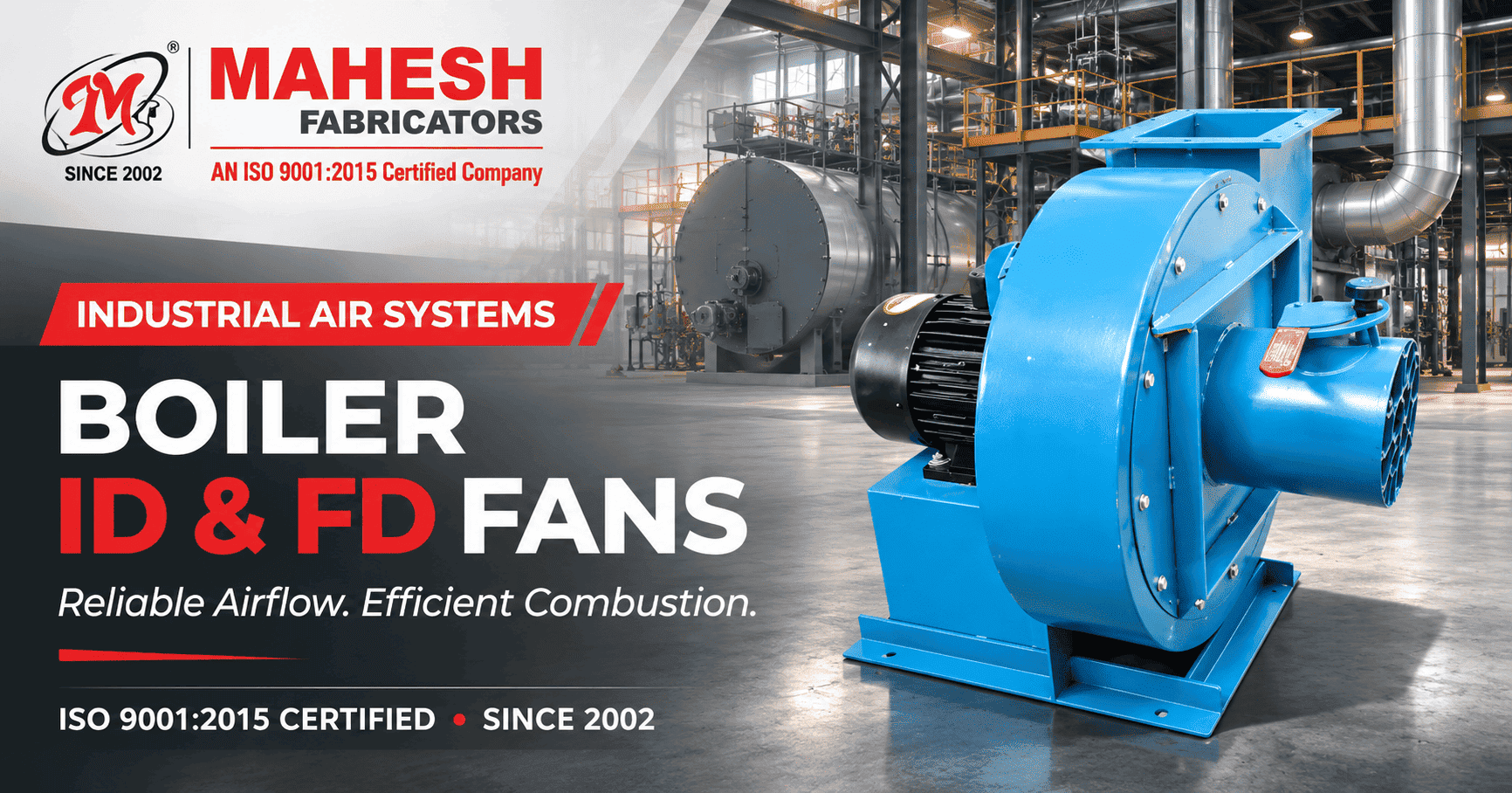
- Boiler ID & FD Fans
- Ring Blowers
- Venturi Blower
- Man Cooler Fan (often a type of centrifugal fan for directed cooling)
Choosing the Right Industrial Fans for Your Factory Ventilation Needs
Selecting the correct industrial fans is a critical decision that impacts the overall effectiveness of your factory's ventilation system. Mahesh Fabricators emphasizes a buyer-oriented approach to ensure you receive a solution tailored to your specific operational requirements.
Key considerations include:
1. Airflow Requirements (CFM)
Determine the total volume of air that needs to be moved per minute to effectively ventilate the space or process. This is often dictated by the size of the area, the number of air changes required per hour, and the specific contaminants or heat load.
2. Static Pressure Needs
Assess the resistance the fan will encounter within the ventilation system. Factors like duct length, bends, filters, and dampers all contribute to static pressure, requiring fans capable of overcoming this resistance.
3. Environment and Contaminants
Consider the nature of the air being handled – is it clean, hot, dusty, corrosive, or explosive? This will influence the materials of construction (e.g., MS, FRP, PP-FRP) and fan design needed for durability and safety.
4. Noise Levels
While industrial environments are often noisy, some applications may have specific requirements for noise reduction. Fan design and installation can impact noise output.
5. Power and Energy Efficiency
Evaluate the power requirements of the fan and its energy consumption. Choosing an energy-efficient model can lead to significant cost savings over time.
6. Maintenance and Durability
Opt for fans designed for low maintenance and long operational life, especially in continuous operation settings. Mahesh Fabricators focuses on user-friendly designs and reduced maintenance costs.
Mahesh Fabricators: Your Partner for Industrial Ventilation Solutions
Founded in 2002 and proudly ISO 9001-2015 Certified, Mahesh Fabricators has established itself as a reliable manufacturer of Industrial Air Systems and Industrial Air Pollution Control Equipment. With over 17 years of dedicated experience, the company offers a comprehensive portfolio of fans and blowers designed to meet the rigorous demands of factory ventilation.
Mahesh Fabricators understands that each industrial setting presents unique challenges. Their product range, including various types of industrial fans for factory ventilation systems, is developed with a focus on delivering robust performance, reduced maintenance costs, and user-friendly operations. Serving a diverse range of industries such as Textile, Pharma, Iron/Steel, Foundry, Ceramics, Plastics, Furnaces, and more, they provide tailored solutions that enhance workplace safety and operational efficiency. Located in Ahmedabad, Gujarat, India, Mahesh Fabricators is committed to providing effective air management systems and dedicated customer support.
Buyer Insight:
When discussing your ventilation needs, be prepared to provide details about the dimensions of your factory space, the types of processes conducted, any specific airborne contaminants or heat sources, and the desired air change rate per hour. This information will help Mahesh Fabricators recommend the most suitable industrial fans and blowers for your application.
Frequently Asked Questions about Industrial Fans for Factory Ventilation
What is the primary purpose of industrial fans in a factory setting?
The primary purpose of industrial fans in a factory is to ensure adequate ventilation by moving large volumes of air. This includes removing heat, dust, fumes, and other contaminants, circulating fresh air, and maintaining safe and comfortable working conditions.
How do axial fans differ from centrifugal fans in ventilation systems?
Axial fans move air parallel to their axis, providing high airflow at low pressure, suitable for general ventilation. Centrifugal fans use impellers to create airflow at a right angle, generating higher pressure and are ideal for moving air through ducts or against resistance, such as in LEV systems.
Are industrial fans energy-efficient for cooling large spaces?
Yes, industrial fans are generally more energy-efficient for cooling large factory spaces than traditional air conditioning systems, as they focus on air circulation and evaporative cooling rather than actively cooling the air itself.
How can I determine the right size industrial fan for my factory?
Determining the right size involves calculating the required airflow (CFM) based on the factory's volume and air change rate needs, and assessing the static pressure the fan will encounter within the ventilation system. Consulting with a manufacturer like Mahesh Fabricators can help ensure the correct selection.
What role do fans play in dust and fume extraction?
Fans are crucial components in dust and fume extraction systems (like LEV). They create the necessary airflow to capture airborne contaminants at their source and transport them away from the workspace to a filtration or exhaust point.
Enhance Your Factory's Air Quality Today
Ensure a safe, productive, and compliant working environment with high-performance industrial fans for your factory ventilation system. Mahesh Fabricators offers a diverse range of robust, reliable, and user-friendly solutions designed to meet your specific needs. With over 17 years of experience and an ISO 9001-2015 certification, we are your trusted partner for industrial air management.
Explore Our Industrial Fan Solutions