How to Select the Right Portable Dust Collector
Maintaining a clean and safe working environment is paramount across numerous industries. Dust generated from various processes can pose significant health risks to workers and lead to operational inefficiencies. A portable dust collector is an effective solution for managing airborne particles, offering flexibility and targeted dust extraction. However, selecting the right unit requires careful consideration of your specific operational needs and the type of dust being managed. This guide will walk you through the essential factors to consider when choosing a portable dust collector, ensuring you invest in a solution that enhances workplace safety and productivity.
Understanding Portable Dust Collectors
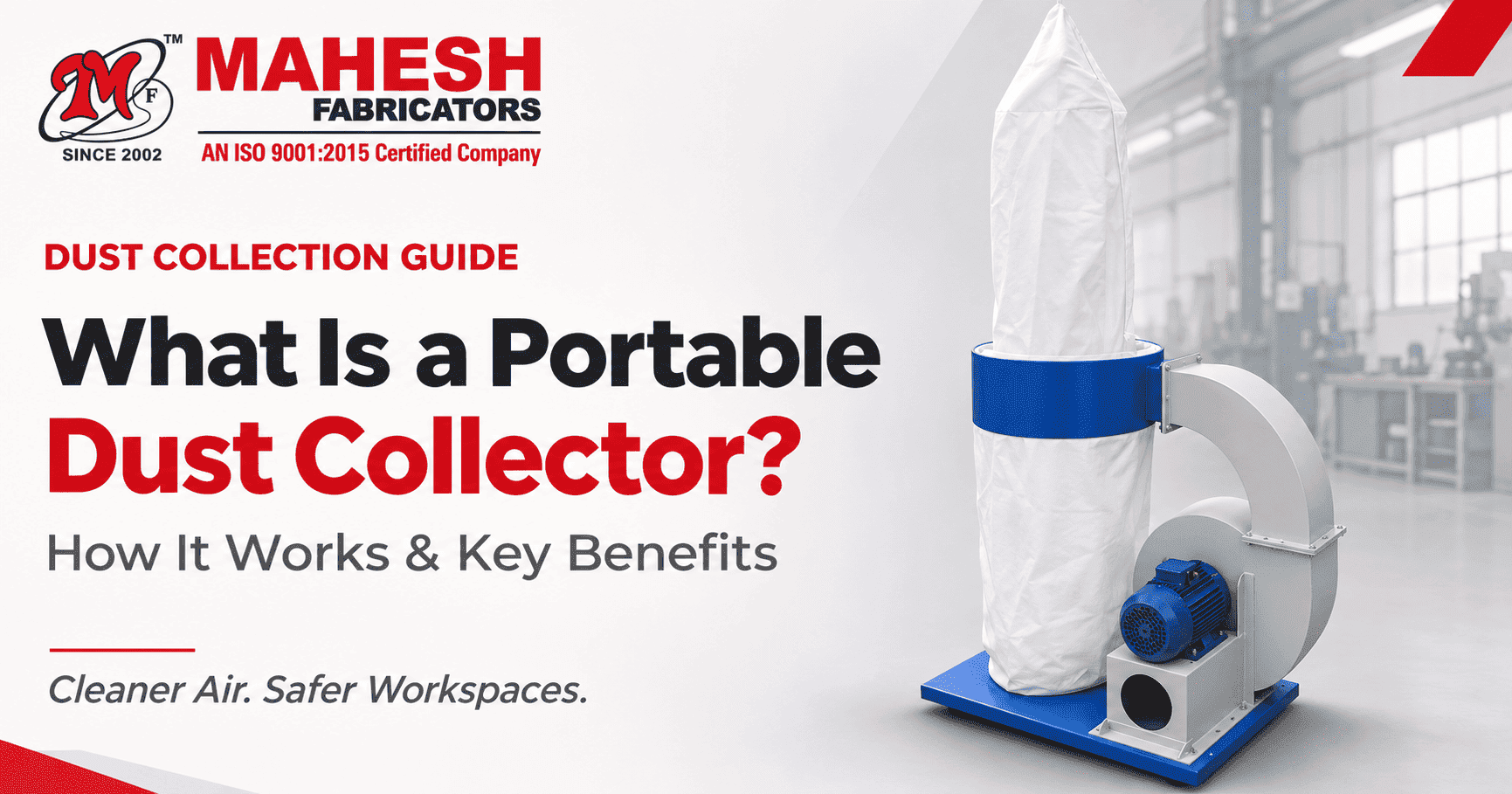
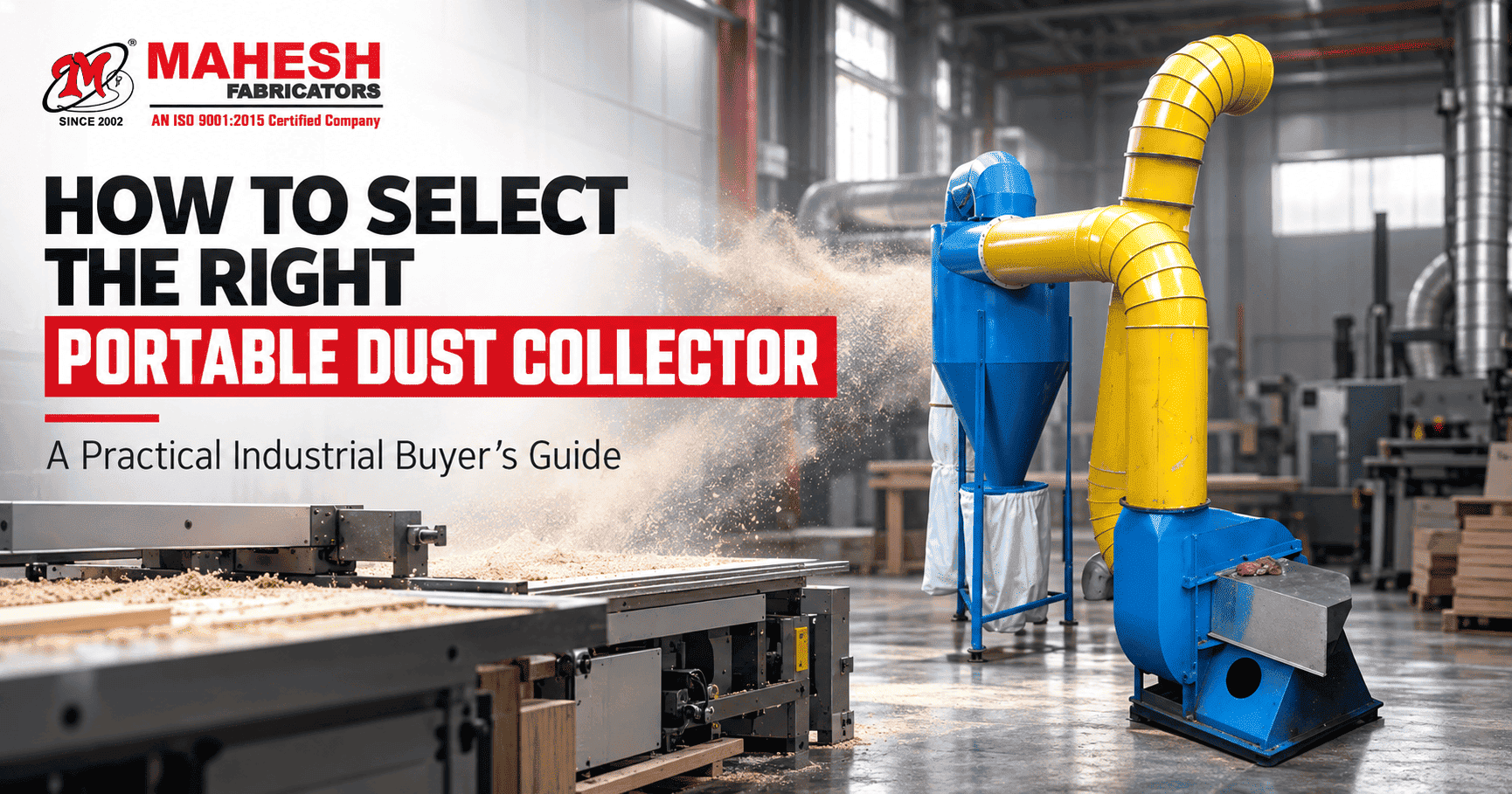
Portable dust collectors are designed to capture dust at its source, preventing it from dispersing into the workplace air. Unlike large, stationary systems, these units are typically mobile, allowing them to be moved from one machine or work area to another. This portability is a key advantage, especially in workshops or facilities where dust generation points vary. They are particularly useful for minimizing static pressure losses that can occur with long duct runs, as they can be placed directly beside the machinery producing the dust.
These units are rated based on several key performance metrics:
- Air Velocity (fpm): The speed at which air moves through the system.
- Air Volume (cfm): The amount of air the collector can process per minute.
- Maximum Static Pressure (sp): The resistance the fan can overcome, crucial for effective suction, especially with ducting.
Mahesh Fabricators, an ISO 9001-2015 Certified Company, manufactures a range of portable dust collectors from 1 HP to 10 HP, available in single, double, or four-bag configurations, catering to diverse industrial requirements.
Key Factors When Selecting a Portable Dust Collector
Choosing the correct portable dust collector involves evaluating several critical aspects of your operations. An improperly sized or specified unit may not effectively capture dust, leading to health hazards and non-compliance with regulations.
1. Air Volume Requirements (CFM)
This is arguably the most critical factor. You need to determine the total airflow (in cubic feet per minute, CFM) required to effectively capture dust from your tools or processes. Consider the CFM rating of each machine the dust collector will serve. It's often recommended to oversize slightly to ensure efficient capture, especially if multiple machines will be used intermittently.
2. Static Pressure (SP)
Static pressure refers to the resistance the dust collector's fan must overcome to pull air through the system, including ductwork, filters, and any internal components. Higher static pressure requirements are common with longer duct runs or finer dust particles that can clog filters more quickly. Ensure the chosen unit can handle the static pressure demands of your specific setup.
3. Type of Dust and Filtration Needs
Different industries produce different types of dust – from fine powders in pharmaceuticals to chips in woodworking. The nature of the dust impacts the type of filtration required. Some dusts are more hazardous (e.g., combustible or toxic), necessitating specialized filters to ensure safe containment and disposal. The filtration system must be capable of capturing particles down to the required size to meet safety standards.
4. Size and Portability
While portable dust collectors are inherently mobile, their size and weight still matter. Consider the space available in your workshop and how easily the unit can be moved between workstations. Look for features like robust casters and convenient handles.
5. Noise Level
Industrial environments can be noisy, and adding a loud dust collector can exacerbate the issue, potentially impacting worker comfort and safety compliance. Check the noise level (usually measured in decibels, dB) of the unit and consider if it falls within acceptable workplace limits.
6. Power Requirements (HP)
Portable dust collectors are often rated by their horsepower (HP). This indicates the power of the motor driving the fan. Higher HP generally corresponds to higher CFM and static pressure capabilities. Mahesh Fabricators offers units ranging from 1 HP to 10 HP, providing options for various scales of operation.
7. Bag Capacity and Maintenance
Consider the capacity of the dust bags and how frequently they will need to be emptied or replaced. Single, double, or four-bag options, as offered by Mahesh Fabricators, provide flexibility based on the volume of dust generated. Easy access for maintenance is also a crucial consideration.
Applications and Industries Benefiting from Portable Dust Collectors
Portable dust collectors are versatile and find application in a wide array of industries where controlling airborne particulates is essential. Their ability to be moved to the point of dust generation makes them highly efficient.
Woodworking
Capturing sawdust from saws, planers, and sanders.
Metal Fabrication
Collecting metal dust and fumes from grinding, welding, and cutting operations.
Pharmaceuticals & Chemicals
Controlling fine powders and airborne particles in sensitive manufacturing environments.
Agriculture
Managing dust from grain handling, feed processing, and other agricultural operations.
Cement & Construction
Collecting dust from mixing, grinding, and material handling processes.
Food Processing
Ensuring hygiene by capturing dust and particulates in food production lines.
General Industry
Used in various applications like polishing, soldering, and smaller-scale manufacturing.
Benefits of Using a Portable Dust Collector
Implementing a portable dust collector offers numerous advantages for businesses:
- Improved Air Quality: Significantly reduces airborne dust, creating a healthier environment for employees.
- Regulatory Compliance: Helps meet workplace safety and environmental regulations regarding dust exposure.
- Enhanced Productivity: Cleaner workspaces reduce cleanup time and can improve worker focus and efficiency.
- Equipment Protection: Prevents dust accumulation on machinery, which can lead to wear and tear or operational issues.
- Cost-Effectiveness: Portable units are often more affordable to purchase and operate than large, centralized systems, especially for smaller operations or specific dust extraction needs.
- Flexibility: Easily moved to where dust extraction is needed most, adapting to changing workflows.
Your Buyer's Checklist: Questions to Ask Before Purchasing
To ensure you select the most appropriate portable dust collector for your needs, consider asking the following questions:
Operational Assessment
- What specific tools or machines will this dust collector be used with?
- What is the estimated CFM requirement for each of these tools/machines?
- What is the total CFM needed when multiple machines operate simultaneously?
- What is the typical length and complexity of duct runs, if any? (Though portable units minimize this, some connection might be needed).
- What is the nature of the dust generated (e.g., fine powder, wood chips, metal shavings)?
Unit Specifications
- What is the rated CFM and static pressure of the unit? Does it meet our requirements?
- What is the filtration efficiency (e.g., HEPA, MERV rating)? Is it suitable for the type of dust?
- What is the horsepower (HP) of the motor?
- What is the noise level in decibels (dB)?
- How many dust bags does it have, and what is their capacity?
- What are the dimensions and weight of the unit?
- What type of maintenance is required, and how often?
Buyer Insight
Don't underestimate the importance of static pressure. Even with portable units, if you're using flexible ducting or if the filter gets clogged, the fan must have enough power to maintain adequate airflow. Always check the manufacturer's specifications against your operational demands.
Tailored Solutions from Mahesh Fabricators
Mahesh Fabricators understands that effective dust collection is vital for operational efficiency and worker safety. As an ISO 9001-2015 Certified Company, we are committed to providing high-quality industrial air systems and pollution control equipment.
Our range of portable dust collectors is designed to offer robust performance and reliability. Available from 1 HP to 10 HP with single, double, or four-bag options, our units are built to handle diverse dust collection challenges across industries such as chemical, food, pharmaceutical, steel, cement, and woodworking. We also specialize in developing customized centralized dust collector designs for larger or more complex applications. When you partner with Mahesh Fabricators, you're choosing a provider dedicated to delivering effective and practical air pollution control solutions tailored to your specific needs.
Frequently Asked Questions
What makes a dust collector 'portable'?
A portable dust collector is designed with mobility in mind. It typically features a compact footprint, integrated casters or wheels, and sometimes handles, allowing it to be easily moved from one workstation or machine to another as needed.
How do I calculate the required CFM for my application?
Calculating CFM involves assessing the airflow requirements of each tool or machine you'll connect to the dust collector. You need to consider the dust-generating capacity of each source and the velocity required for effective capture. Consult the specifications of your tools and aim for a collector that can meet or exceed the highest individual requirement, or the sum of requirements if multiple tools operate simultaneously.
Are portable dust collectors suitable for fine or hazardous dust?
Yes, many portable dust collectors are equipped with advanced filtration systems, including HEPA filters, capable of capturing very fine particles and hazardous dusts. It's crucial to select a model with appropriate filtration levels for the specific type of dust generated in your operations to ensure safety and compliance.
What is the role of static pressure in dust collection?
Static pressure (SP) is the resistance to airflow within the dust collection system. It's generated by friction from ductwork, filters, and other components. A dust collector must generate sufficient static pressure to overcome this resistance and maintain the necessary airflow (CFM) at the point of dust source capture. Portable units often have lower static pressure needs due to shorter or non-existent duct runs, but filter loading can increase this resistance.
Ready to Improve Your Workplace Air Quality?
Selecting the right portable dust collector is a critical step towards a safer, cleaner, and more productive work environment. Don't let dust compromise your operations or the health of your employees.
Contact Mahesh Fabricators today to discuss your specific dust collection needs. Our experts can help you identify the most effective portable dust collector solution for your industry and application. Let us help you achieve superior air quality.
Explore Our Solutions & Get a Quote