Best Dust Collection Systems for Manufacturing Industries
In the dynamic landscape of modern manufacturing, maintaining a clean, safe, and compliant working environment is paramount. Among the most critical components for achieving this are effective dust collection systems. These systems are not merely an operational accessory; they are fundamental to protecting worker health, preventing operational hazards like dust explosions, ensuring product quality, and meeting stringent environmental regulations. For industries that generate particulate matter, from the fine powders in pharmaceuticals to the shavings in woodworking, understanding and implementing the right dust collection solutions is a strategic imperative.
Mahesh Fabricators, an ISO 9001-2015 Certified Company established in 2002, specializes in manufacturing Industrial Air Systems and Industrial Air Pollution Control Equipment. With over two decades of experience, they offer a range of solutions designed to tackle industrial air challenges, including robust dust collection systems tailored for diverse manufacturing needs.
Why Dust Collection is Crucial in Manufacturing
Manufacturing processes inherently produce airborne particles. These can range from fine dust and metal shavings to chemical fumes and organic fibers. Uncontrolled, this dust poses significant risks:
- Health Hazards: Inhaling fine dust can lead to a variety of respiratory illnesses, from simple irritation to chronic conditions like silicosis or asthma. Protecting employees from long-term health impacts is a primary ethical and legal responsibility.
- Safety Risks: Many types of dust are combustible. Accumulations of fine dust can create explosive atmospheres, posing a severe risk of fire and catastrophic damage to facilities and personnel.
- Product Quality: Contamination from airborne dust can compromise the integrity and quality of manufactured goods, particularly in sensitive sectors like pharmaceuticals or electronics.
- Environmental Compliance: Regulatory bodies impose strict limits on industrial emissions. Effective dust collection systems are essential for adhering to these standards and avoiding penalties.
- Operational Efficiency: Dust accumulation can interfere with machinery, leading to increased maintenance requirements and potential downtime. Clean environments contribute to smoother operations.
Key Components of Dust Collection Systems
A comprehensive dust collection system typically involves several integrated components working in concert to capture, filter, and remove particulate matter from the air:
Capture Hoods and Ducts
Strategically placed hoods and a network of ducts capture dust at its source and transport it through the system.
Dust Collectors
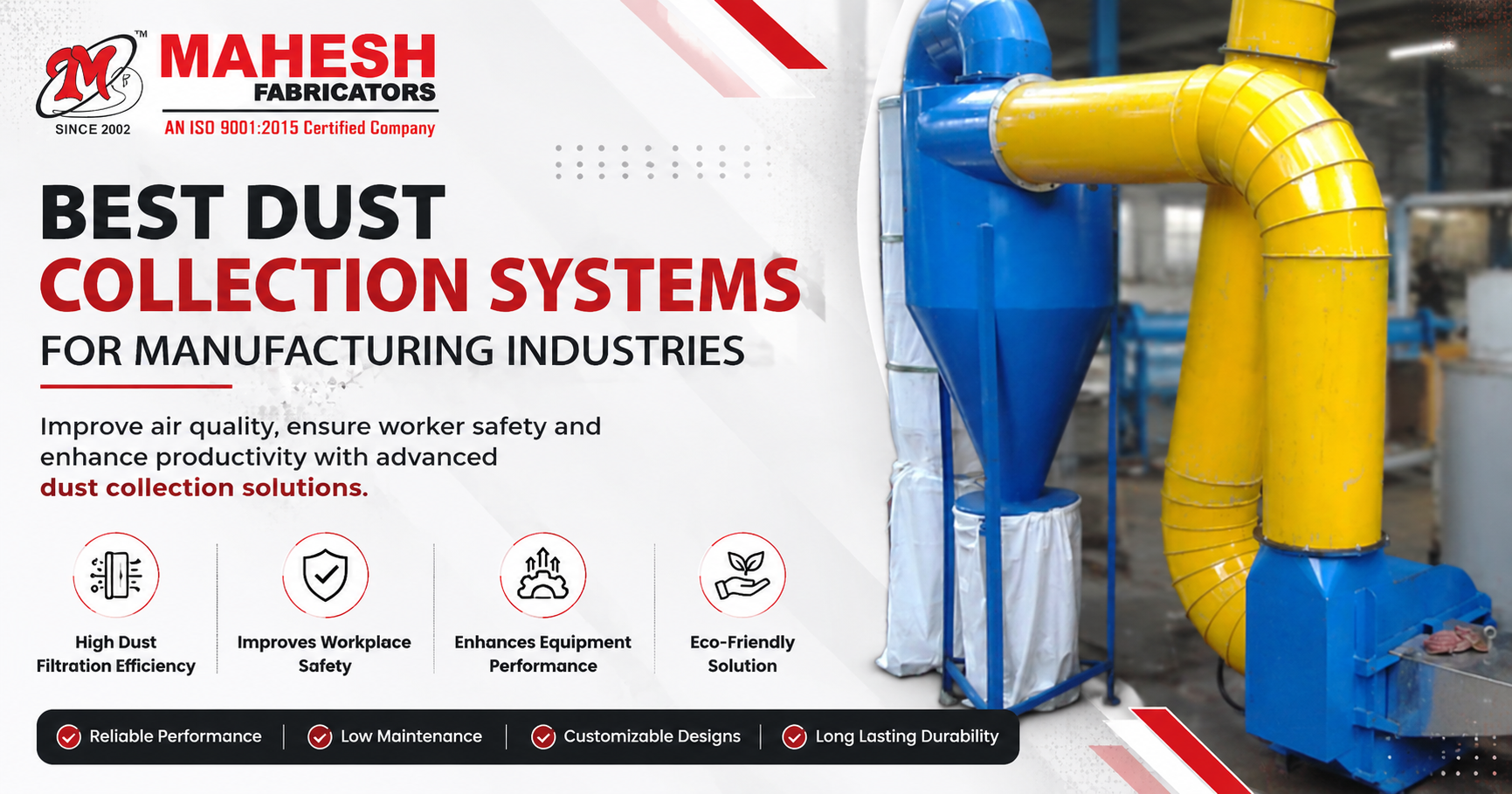
These are the primary units where dust separation occurs. Common types include cyclone collectors, baghouses, and cartridge collectors.
Fans and Blowers
Industrial fans and blowers provide the necessary airflow to move dust-laden air from the source to the collector.
Filtration Media
This includes filter bags, cartridges, or other media designed to trap particulate matter while allowing clean air to pass through.
Dust Disposal
Mechanisms for safely collecting and disposing of the captured dust, such as hoppers and collection bins.
Applications Across Various Industries
The versatility of dust collection systems makes them indispensable in a multitude of manufacturing sectors. Mahesh Fabricators caters to industries including, but not limited to:
| Industry Sector | Primary Dust Concerns |
|---|---|
| Textile | Fiber dust, lint, cotton dust |
| Foundry & Iron/Steel | Metal dust, sand, slag, welding fumes |
| Ceramics | Clay dust, silica dust, glaze dust |
| Plastics | Plastic dust, grinding residue |
| Woodworking & Plywood | Wood dust, sawdust, fine particles |
| Pharma | Fine powders, active pharmaceutical ingredients (APIs), dust containment |
| Chemical | Chemical powders, airborne reagents, hazardous dust |
| Coal, Cement | Coal dust, cement dust, particulate matter |
Selecting the Right Dust Collection System
Choosing the appropriate dust collection system involves careful consideration of several factors to ensure optimal performance and compliance:
- Nature of the Dust: Is it combustible, abrasive, sticky, or corrosive? This dictates the materials of construction and the type of collector needed.
- Air Volume and Concentration: The amount of air to be processed and the dust loading levels will determine the required capacity of the fans and collectors.
- Particle Size: Fine particles require more sophisticated filtration than larger ones.
- Existing Infrastructure: Compatibility with current plant layout and machinery is crucial.
- Maintenance Requirements: Systems should be chosen with user-friendliness and ease of maintenance in mind to minimize downtime and operational costs. Mahesh Fabricators emphasizes reduced maintenance costs and user-friendly operations.
- Regulatory Standards: Ensure the system meets all local and national air quality regulations.
Did You Know? Proper dust collection not only ensures worker safety and regulatory compliance but can also significantly reduce cleaning costs and prevent costly equipment damage caused by dust accumulation.
Benefits of Investing in Quality Dust Collection
Implementing a high-quality dust collection system from a reputable manufacturer like Mahesh Fabricators yields substantial benefits:
- Improved Worker Health: Reduces exposure to harmful airborne contaminants, leading to a healthier workforce and fewer work-related illnesses.
- Enhanced Workplace Safety: Minimizes the risk of combustible dust explosions, protecting personnel and assets.
- Regulatory Compliance: Helps industries meet stringent environmental and occupational safety standards.
- Increased Productivity: Cleaner work environments and well-maintained machinery contribute to higher operational efficiency.
- Reduced Cleaning Costs: Capturing dust at the source significantly cuts down on manual cleaning efforts.
- Extended Equipment Lifespan: Protects sensitive machinery from abrasive dust particles, reducing wear and tear.
Frequently Asked Questions
What are the main types of dust collectors available?
The main types include cyclone collectors, baghouses (fabric filter dust collectors), and cartridge collectors. The best choice depends on the specific application and type of dust.
How does a cyclone dust collector work?
A cyclone dust collector uses centrifugal force to separate dust particles from the air. Dust-laden air enters tangentially, creating a vortex that throws heavier particles against the collector walls, where they fall to the bottom for collection.
What is the importance of airflow in dust collection?
Adequate airflow is crucial for effectively capturing dust at its source and transporting it to the collection unit. Fans and blowers are selected based on the required airflow (CFM) and static pressure needed for the system.
Can dust collection systems be customized for specific industrial needs?
Yes, customisation is often necessary. Factors like the type of dust, airflow requirements, and space constraints mean that systems are frequently tailored to meet unique industrial demands.
Ready to Enhance Your Manufacturing Environment?
Mahesh Fabricators provides reliable Industrial Air Systems and Air Pollution Control Equipment, including efficient Dust Collection Systems. Ensure a safer, cleaner, and more compliant workplace.
Explore Solutions at Mahesh Fabricators