Axial Fan vs Centrifugal Fan: Which One Should You Buy?
In the realm of industrial air movement, selecting the right type of fan is paramount to ensuring optimal performance, energy efficiency, and operational success. Two of the most common types of industrial fans are axial fans and centrifugal fans. While both serve the purpose of moving air, their design, operating principles, and applications differ significantly. Understanding these differences is key to making an informed purchase decision. MAHESH FABRICATORS, a certified manufacturer of industrial air systems, guides you through the nuances of axial versus centrifugal fans to help you determine which is the best fit for your needs.
Understanding Axial Fans
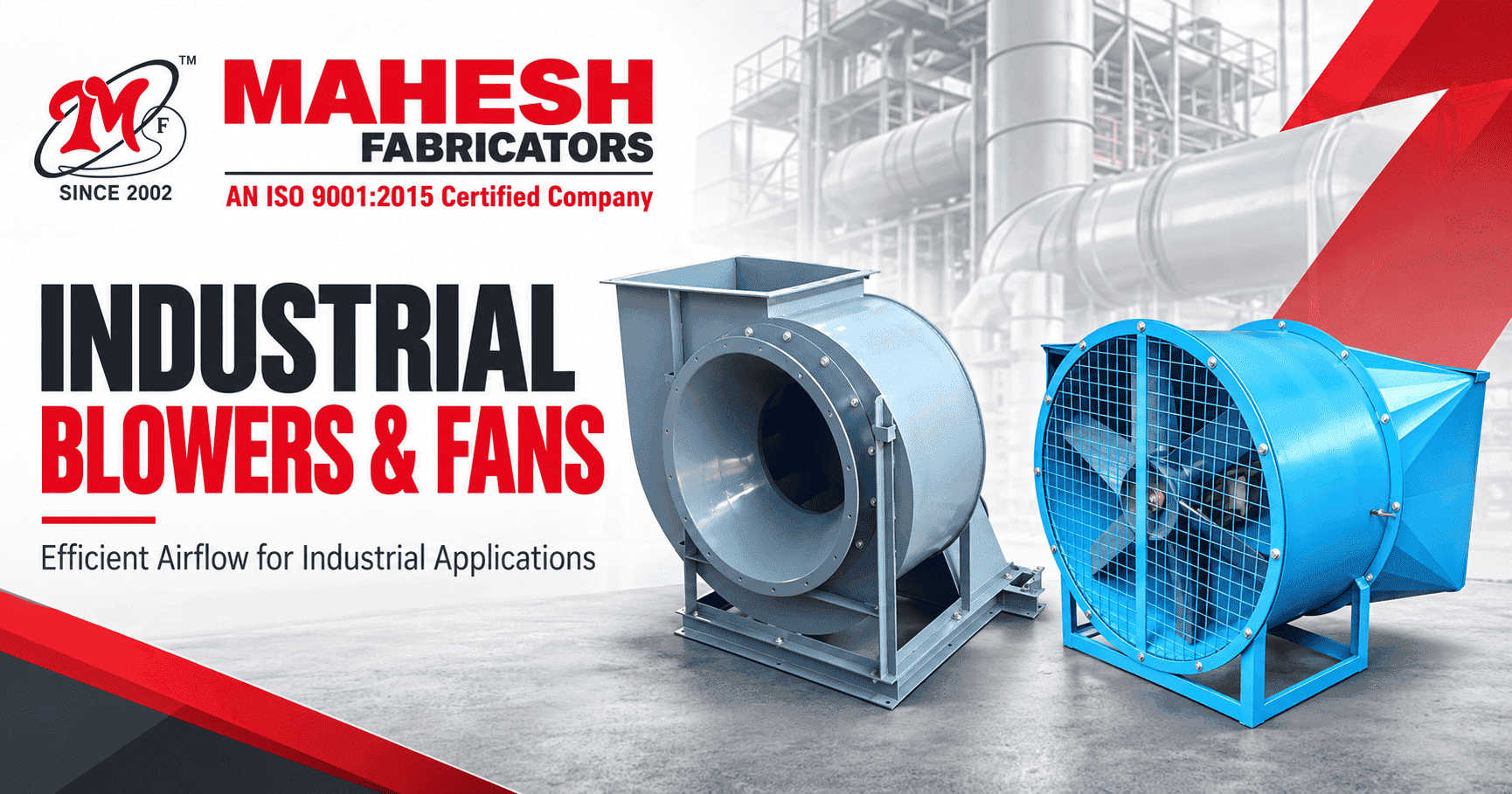
Axial fans, as their name suggests, move air in a direction parallel to the axis of the fan's rotation. Imagine an airplane propeller; it pushes air straight backward. Similarly, axial fans use a rotating impeller with blades that push air along the fan's shaft. This design makes them highly effective at moving large volumes of air quickly, but typically at lower static pressures.
How they work: The blades of an axial fan impart kinetic energy to the air, propelling it forward in a relatively straight stream. The air enters and exits the fan along the same axial path. This direct flow path contributes to their high airflow capabilities.
Key characteristics:
- High Volume, Low Pressure: Ideal for applications where moving a large quantity of air is more critical than overcoming significant resistance.
- Compact Design: Often more space-efficient for the amount of air they move.
- Energy Efficiency: Can be highly energy-efficient in applications matching their performance profile.
Understanding Centrifugal Fans
Centrifugal fans, also known as blowers, operate on a different principle. They use a rotating impeller with blades to impart centrifugal force to the air. The air enters the fan axially at the eye of the impeller and is then accelerated outwards radially by the rotating blades, exiting the fan housing at a 90-degree angle to the inlet. This process allows centrifugal fans to generate higher pressures, making them suitable for applications with resistance.
How they work: The impeller spins, creating a low-pressure area at its center, drawing air in. As the air is thrown outwards by centrifugal force, it gains velocity and pressure before being directed out of the fan's casing.
Key characteristics:
- High Pressure, Moderate Volume: Excellent for moving air through ducts, filters, or systems that offer significant resistance.
- Durability: Often built to handle more demanding conditions and denser air streams.
- Versatility: Can be designed for a wide range of pressure and flow requirements.
Axial Fan vs Centrifugal Fan Applications
The choice between an axial and a centrifugal fan hinges on the specific requirements of the application. Each type excels in different scenarios.
Typical Axial Fan Applications
- General ventilation in large spaces (warehouses, factories)
- Air circulation
- Cooling towers
- Condenser cooling
- Exhausting fumes in open areas
- Drying processes with minimal ductwork
Typical Centrifugal Fan Applications
- HVAC systems with ductwork
- Dust collection systems
- Material handling (conveying granular materials)
- Boiler draft (ID/FD fans)
- Pneumatic conveying
- Fume extraction in confined spaces or through complex ducting
- Industrial drying and process heating
Key Benefits of Each Fan Type
Both axial and centrifugal fans offer distinct advantages that make them indispensable in various industrial settings. MAHESH FABRICATORS leverages its expertise to provide solutions tailored to these needs.
Buyer Insight:
The fundamental difference lies in how they move air: axial fans push it straight through, ideal for high volume, low resistance. Centrifugal fans throw air outwards at a right angle, generating higher pressure to overcome resistance in ductwork or filters.
| Feature | Axial Fans | Centrifugal Fans |
|---|---|---|
| Airflow Pattern | Parallel to the shaft | Perpendicular to the shaft |
| Pressure Capability | Low Static Pressure | High Static Pressure |
| Volume Moved | High Volume | Moderate to High Volume |
| System Resistance | Best for low resistance (open spaces, short ducts) | Excellent for high resistance (ducts, filters, boilers) |
| Energy Efficiency | Highly efficient for high volume, low pressure tasks | Efficient for high pressure, moderate volume tasks |
| Noise Level | Can be noisier at high speeds, depends on blade design | Generally quieter for a given pressure, depends on design |
Buyer's Guide: Selecting the Right Fan
Making the correct fan choice is critical for operational efficiency and cost-effectiveness. Consider these factors when deciding between an axial and a centrifugal fan:
Essential Selection Criteria:
- System Resistance: What is the static pressure your system will impose? If it's high (e.g., long duct runs, filters, industrial processes), a centrifugal fan is likely necessary. For low resistance (e.g., general ventilation in large open areas), an axial fan may suffice.
- Air Volume Requirement (CFM): How much air needs to be moved? Axial fans are often chosen for very high volume needs where pressure is not a major concern.
- Airflow Direction: Does the air need to be pushed straight through an area, or does it need to be directed around corners, through filters, or into a specific process stream?
- Air Contaminants: Are you moving clean air, or air containing dust, corrosive fumes, or high temperatures? Certain fan designs and materials (like MS, FRP, PP-FRP offered by MAHESH FABRICATORS) are better suited for specific conditions.
- Space Constraints: Axial fans can sometimes be more compact for their airflow capacity.
- Energy Consumption: Select a fan that operates efficiently at your required duty point to minimize energy costs. An oversized or improperly selected fan will be inefficient.
Quality Checks Before Buying:
Regardless of the fan type, inquire about the materials used, the quality of construction, bearing type and lubrication requirements, and the overall robustness of the design. Ensure the fan is certified or manufactured by a reputable company like MAHESH FABRICATORS, adhering to quality standards.
Your Trusted Partner for Industrial Air Systems: MAHESH FABRICATORS
Founded in 2002 and an ISO 9001-2015 Certified Company, MAHESH FABRICATORS has established itself as a specialist in manufacturing high-quality Industrial Air Systems and Air Pollution Control Equipment. Serving a diverse range of industries including Textile, Pharma, Iron/Steel, Foundry, Ceramics, Plastics, Furnaces, and many others across Gujarat and beyond, we understand the critical role that efficient air movement plays in your operations.
We offer a comprehensive portfolio of fans designed to meet varied industrial demands:
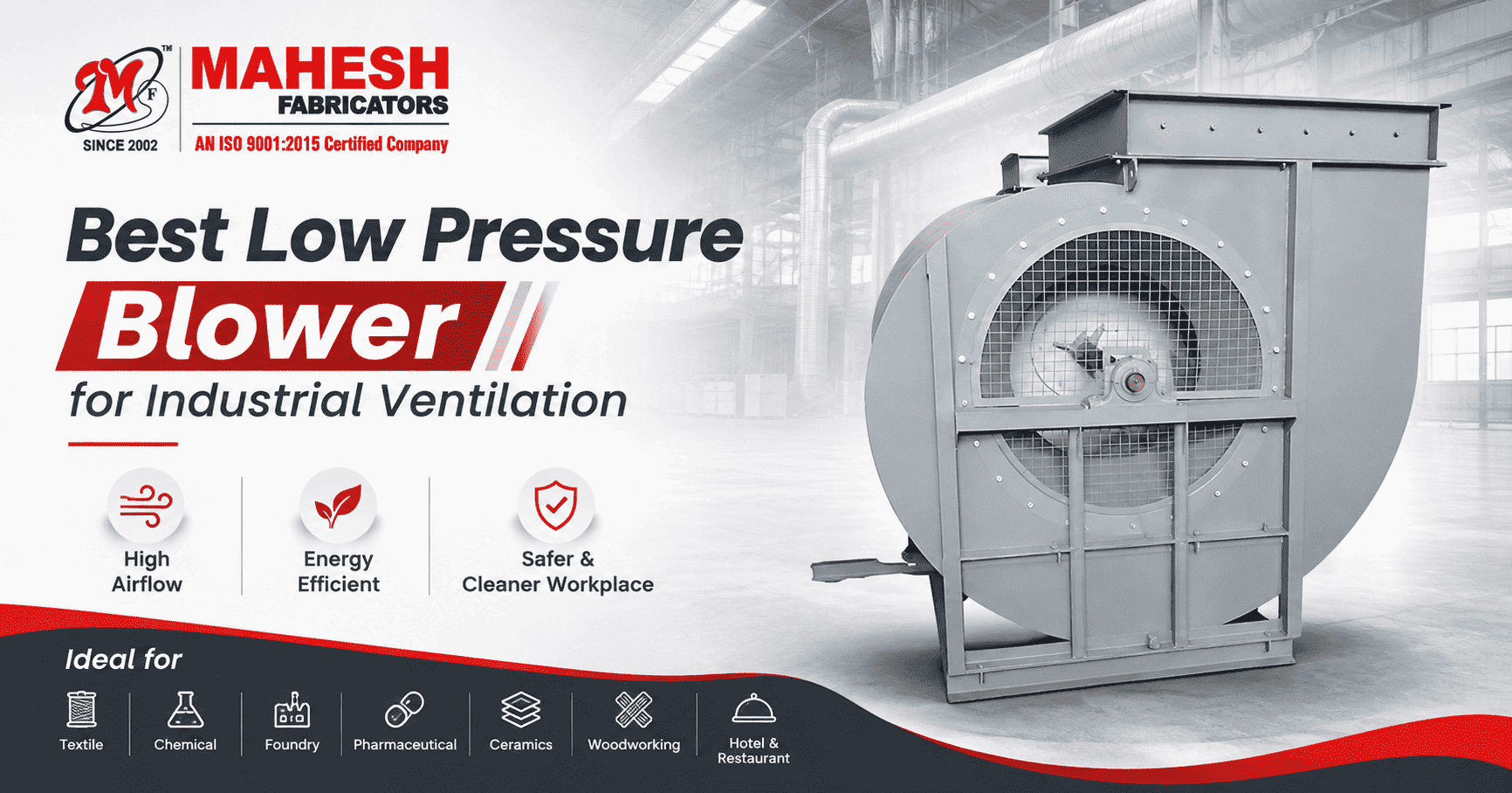
- Centrifugal Fans & Blowers: Including Low, Medium, and High Pressure variants, DWDI (Double Width Double Inlet) types, and options in Mild Steel (MS) and Fiberglass Reinforced Plastic (FRP), as well as Polypropylene FRP (PP-FRP) for corrosive environments.
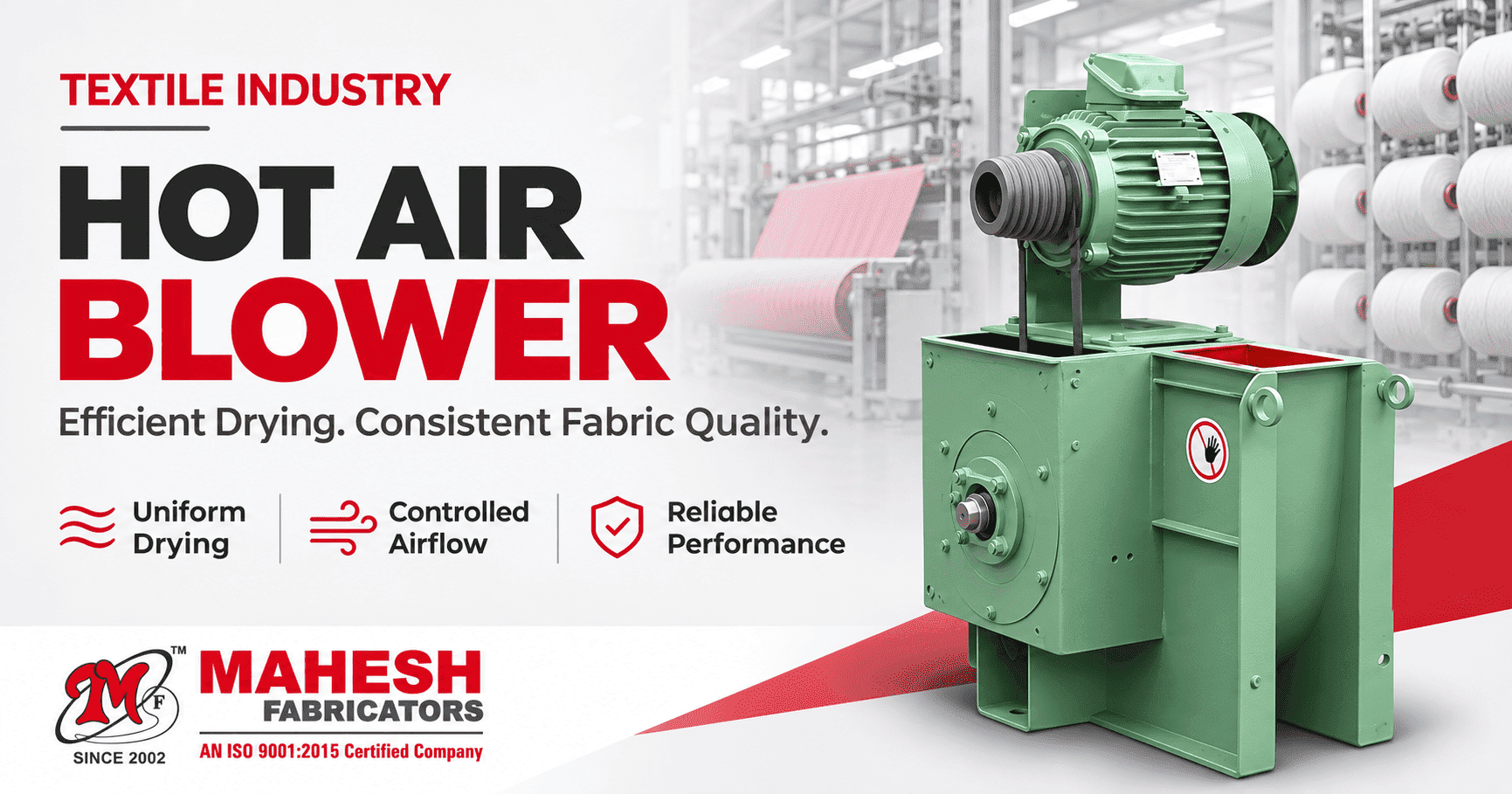
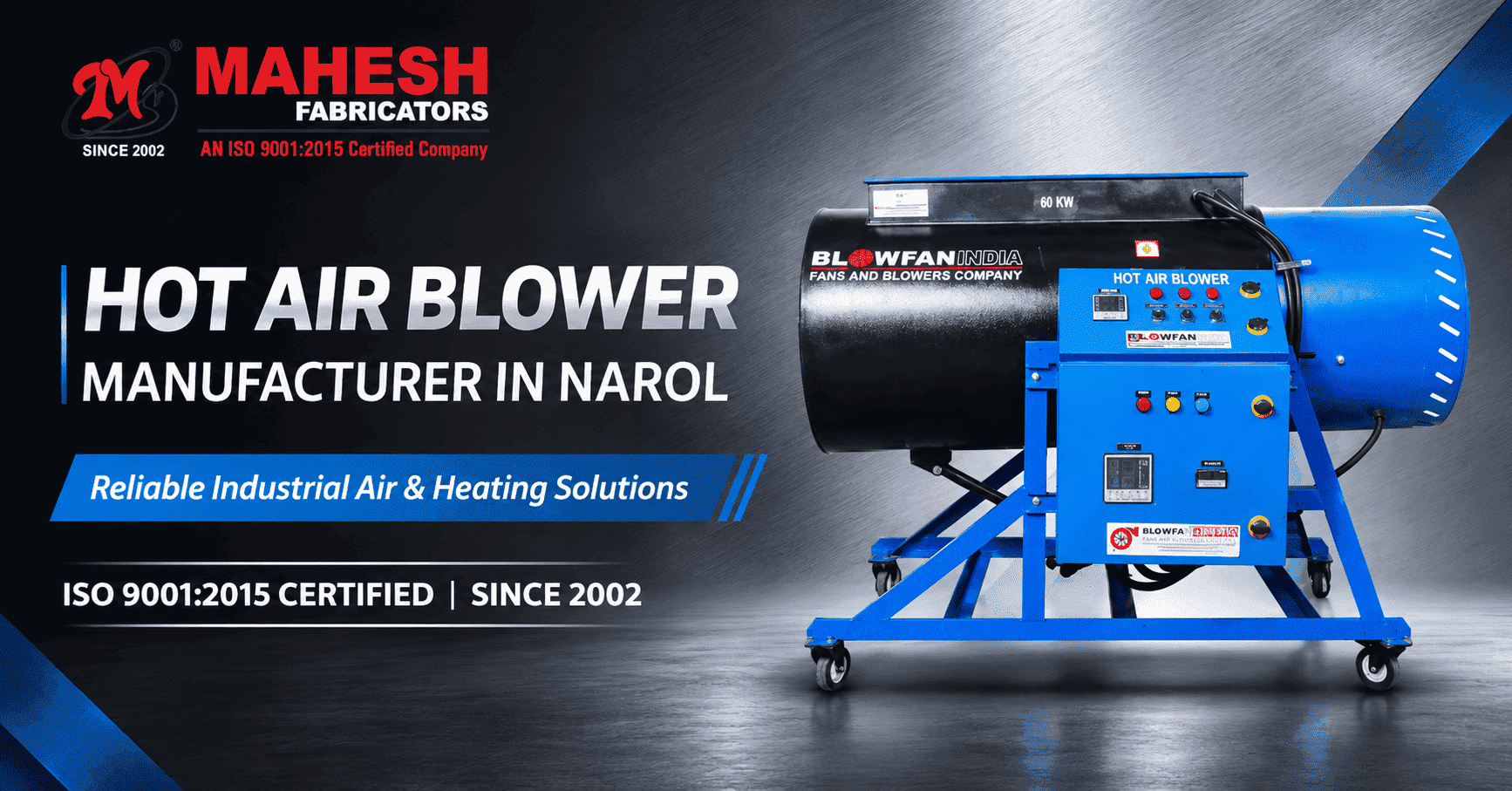
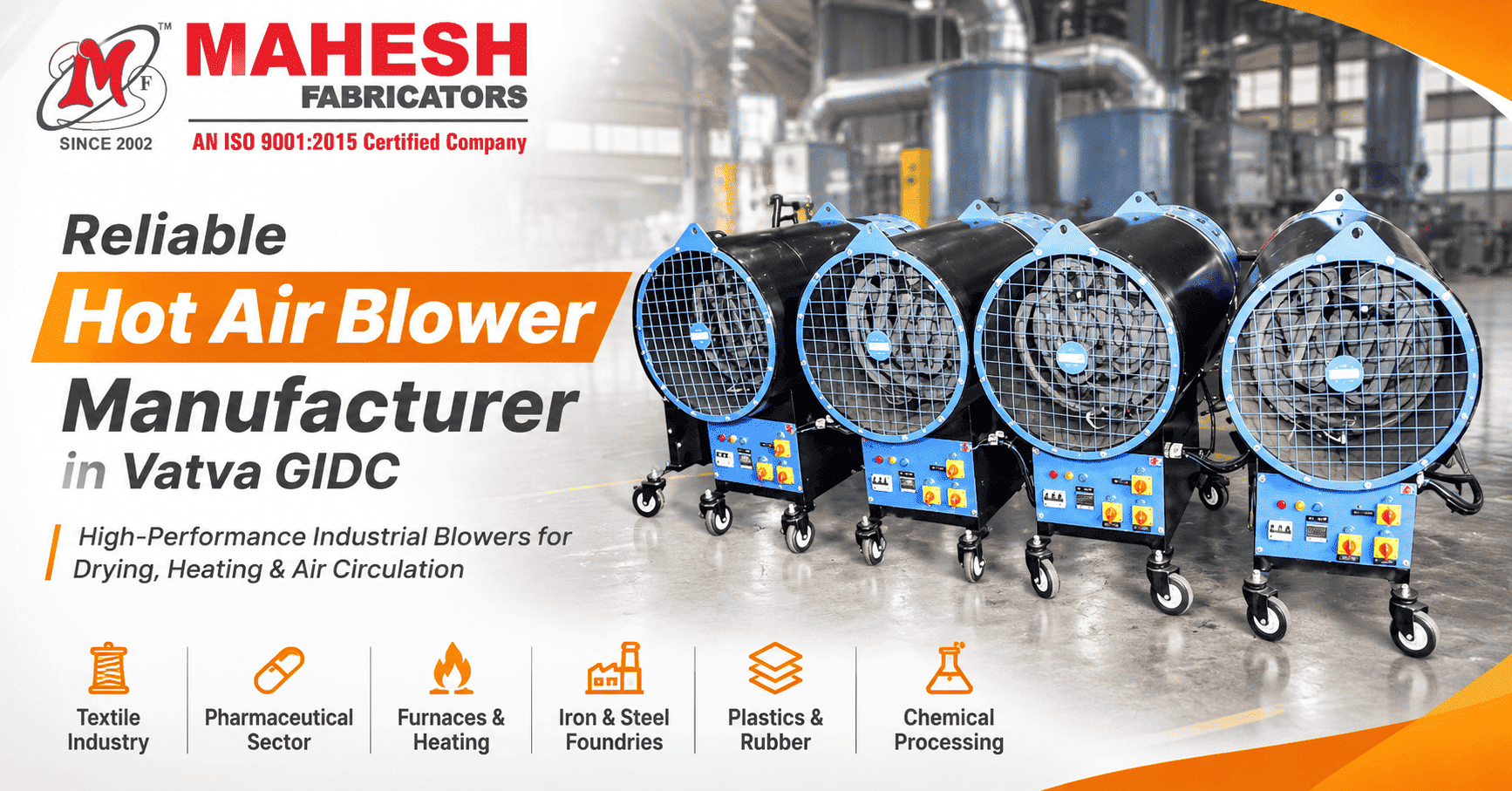
- Axial Fans: Such as Tubular Axial Fans and Hot Air Blowers, perfect for high-volume applications.
- Specialty Fans: Like ID & FD fans for boilers, Ring Blowers, Textile Fans, Venturi Blowers, Man Cooler Fans, Poultry & Dairy Exhaust Fans, and Duct Mounted Fans.
Our commitment is to design and develop products that not only meet but exceed customer expectations, focusing on reduced maintenance costs and user-friendly operation. We work closely with our clients to understand their unique challenges and provide tailored air system solutions.
Frequently Asked Questions
What is the primary difference between axial and centrifugal fans?
The primary difference lies in airflow direction and pressure capability. Axial fans move air parallel to the shaft for high volume, low pressure applications. Centrifugal fans move air perpendicular to the shaft, generating higher pressure suitable for overcoming system resistance.
When should I choose an axial fan?
Choose an axial fan when you need to move a large volume of air with minimal resistance, such as in general ventilation for large open spaces, air circulation, or cooling applications without extensive ductwork.
When is a centrifugal fan the better choice?
A centrifugal fan is the better choice when your application involves significant system resistance, such as moving air through ductwork, filters, dust collection systems, or for processes requiring higher air pressure.
Can MAHESH FABRICATORS help me select the right fan?
Absolutely. MAHESH FABRICATORS specializes in industrial air systems and can assist you in identifying the most suitable axial or centrifugal fan based on your specific application requirements, airflow needs, and pressure considerations.
Ready to Enhance Your Industrial Airflow?
Don't let the complexity of fan selection slow down your operations. Contact MAHESH FABRICATORS today to discuss your specific needs. Our expert team is ready to provide you with high-quality, efficient, and reliable industrial fan solutions tailored for your industry.
Request a Solution Now