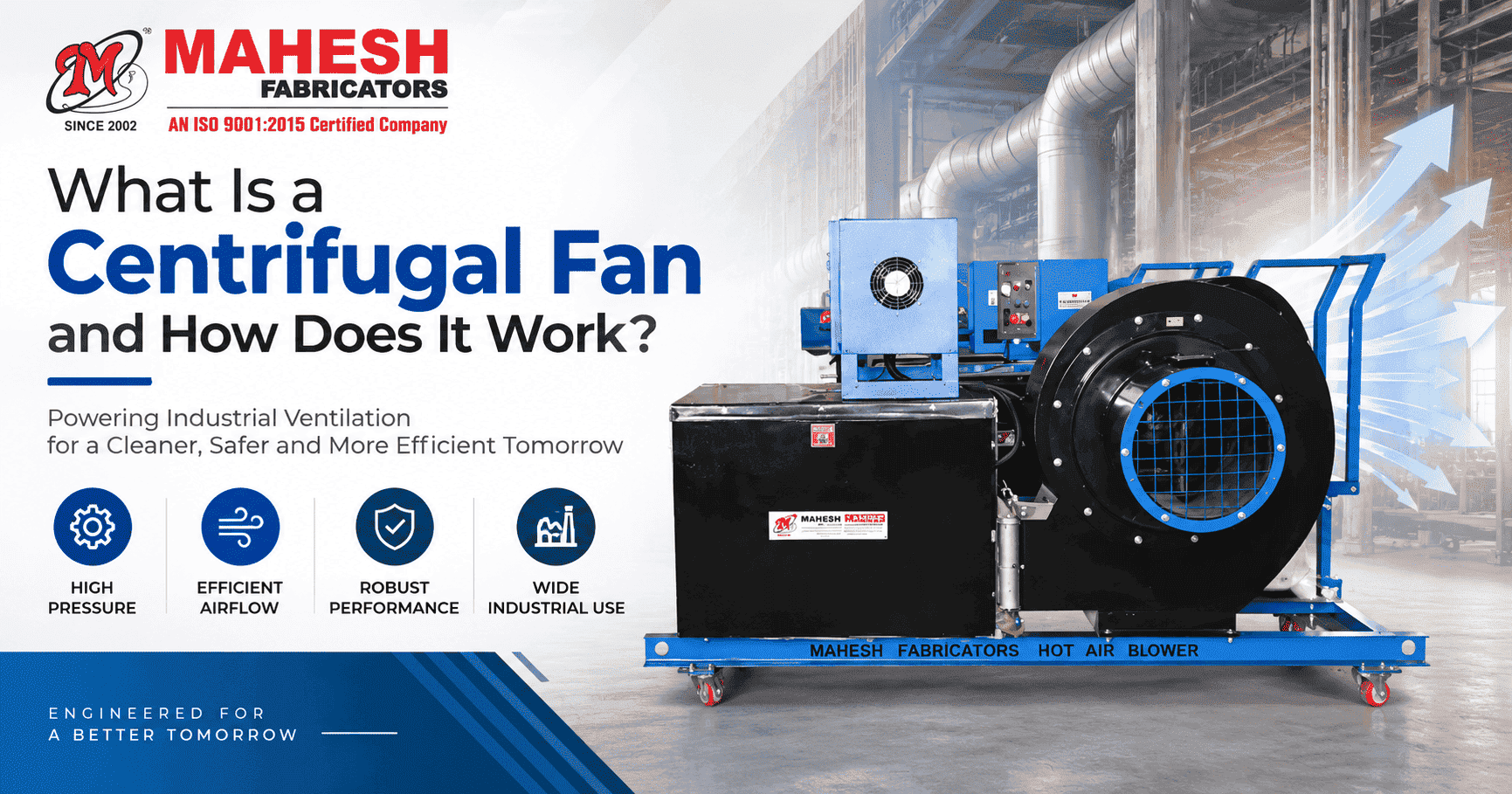
What Is a Centrifugal Fan and How Does It Work?
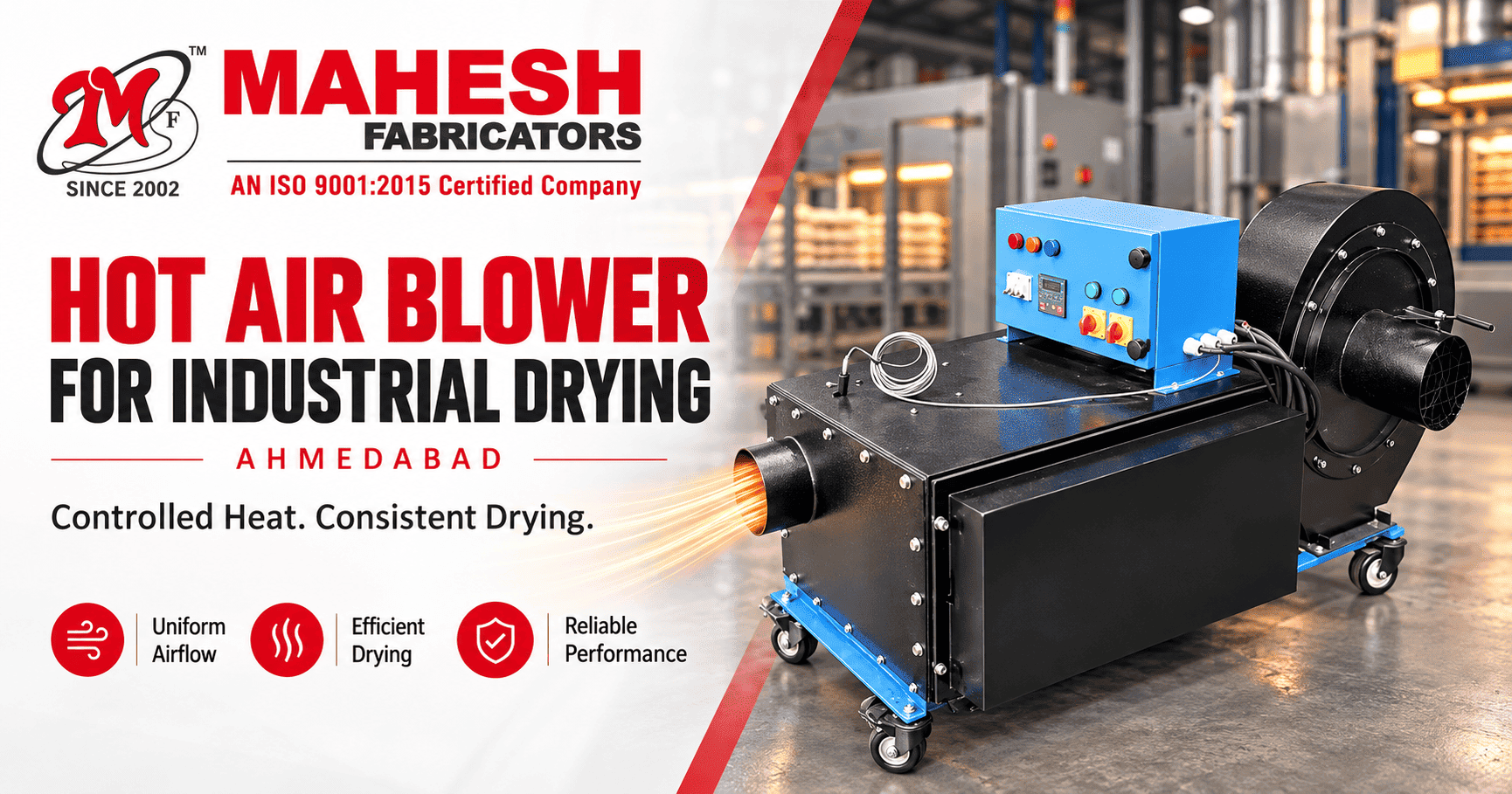
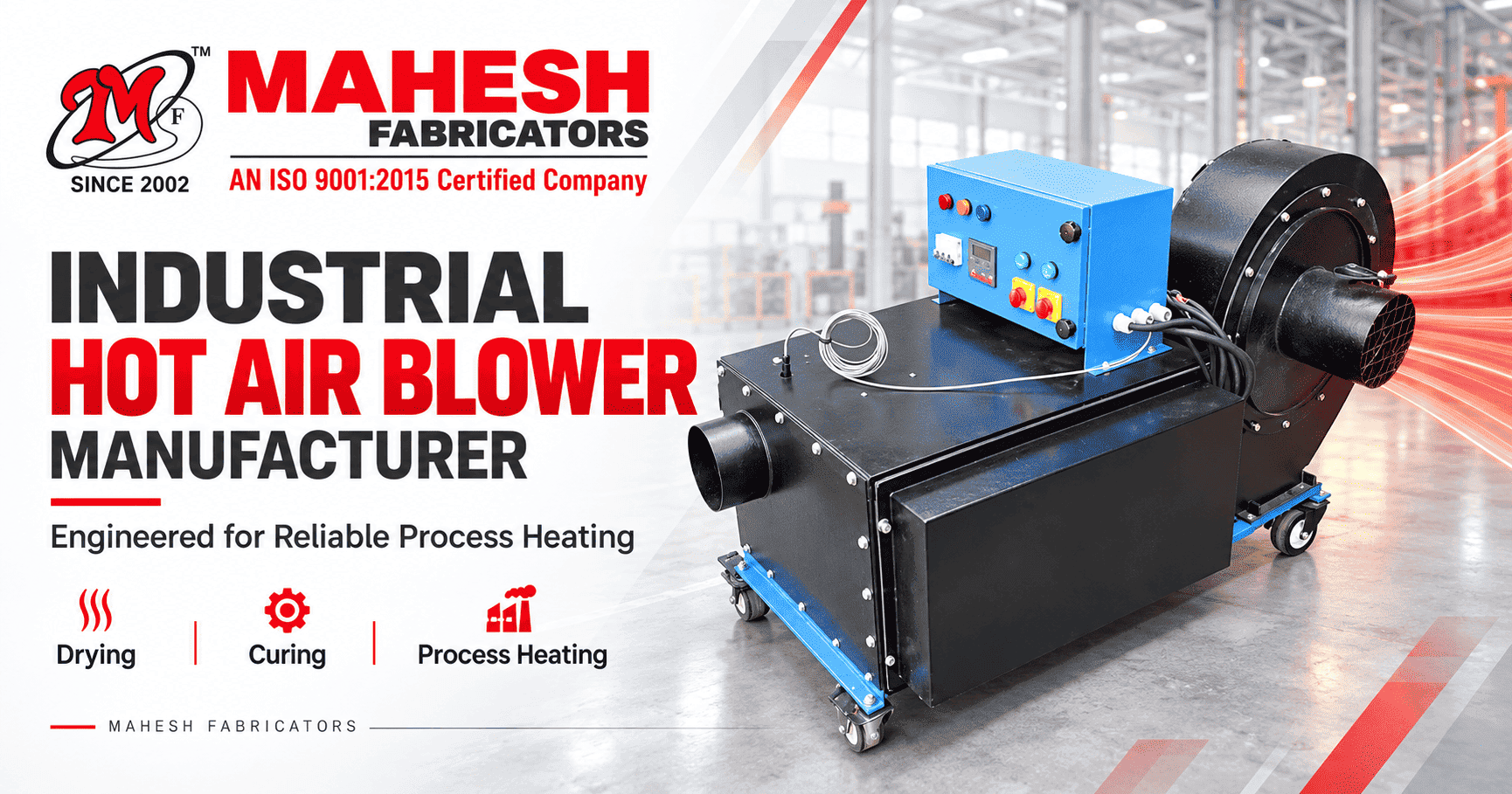
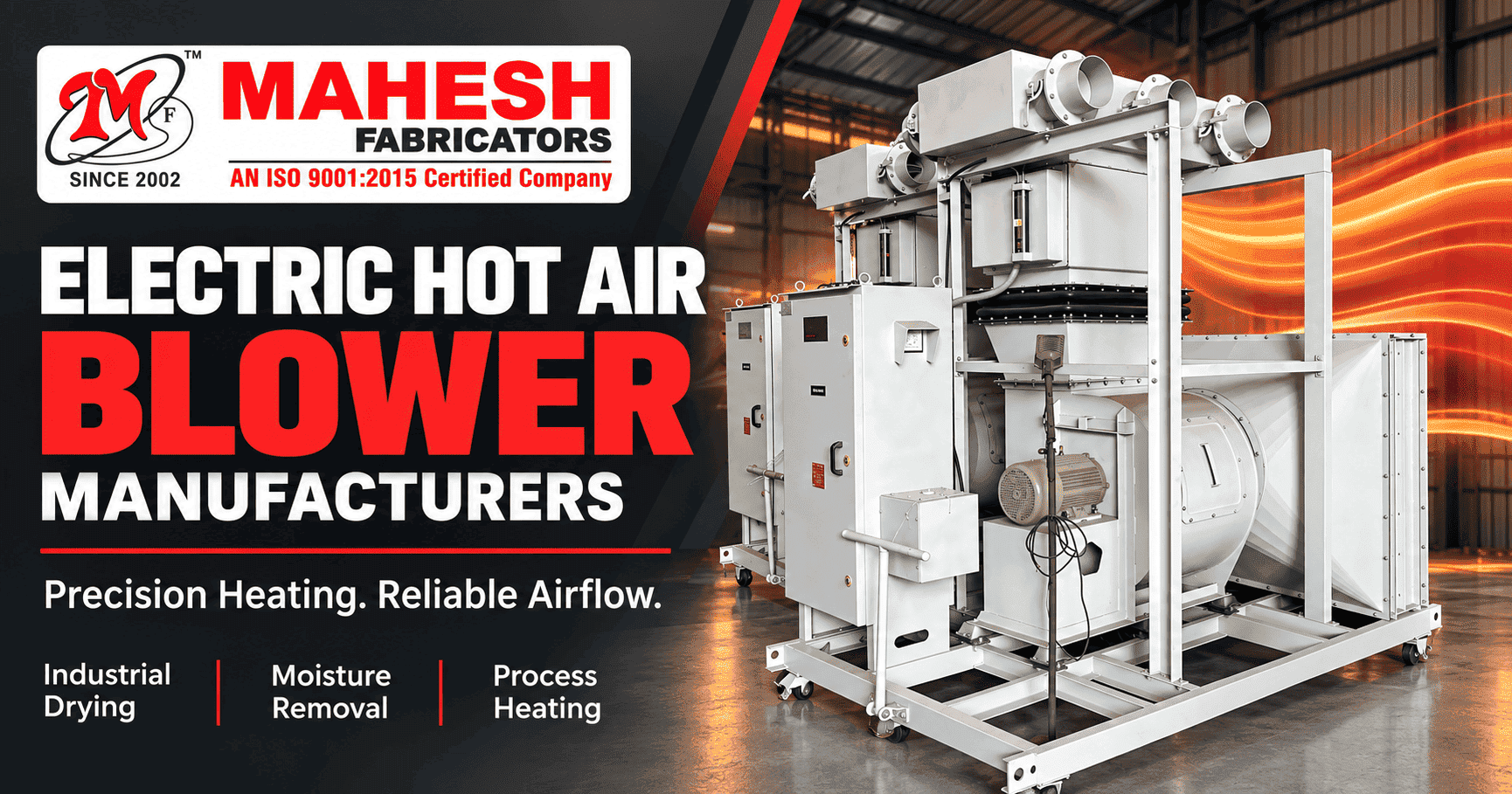
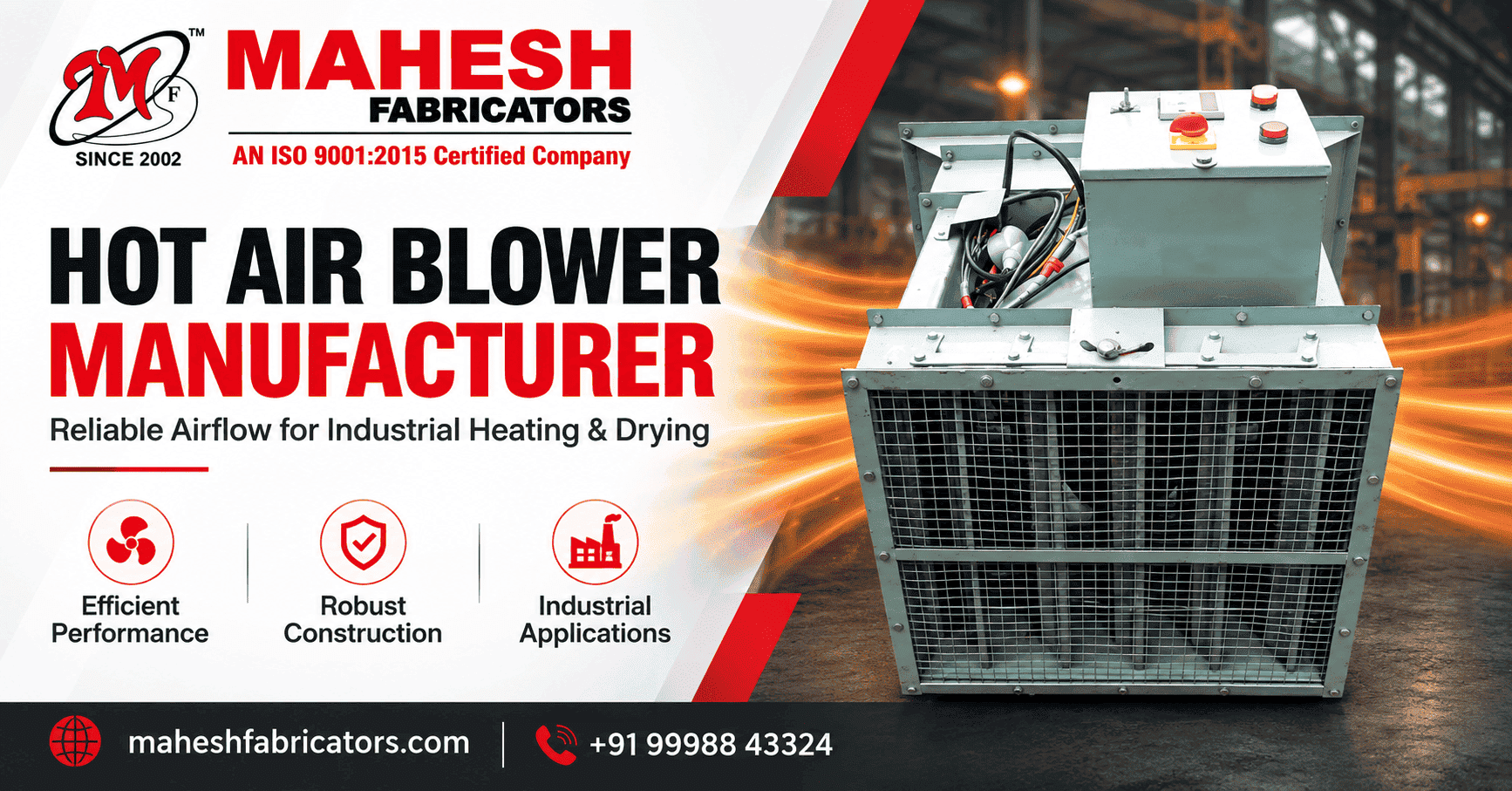
Centrifugal fans are workhorses of industrial ventilation and air movement. Understanding what a centrifugal fan is and how it works is crucial for selecting the right equipment for diverse applications, from material handling to process ventilation. These robust machines utilize centrifugal force to move air and gases, offering higher pressure capabilities essential for many demanding environments. Mahesh Fabricators, an ISO 9001-2015 certified company founded in 2002, specializes in manufacturing industrial air systems, including high-quality centrifugal fans and blowers tailored to meet stringent industry needs.
Understanding the Centrifugal Fan
A centrifugal fan, often referred to as a radial fan or a blower, is a mechanical device designed to transport air or other gaseous mediums. Its primary function is to impart kinetic energy to the air through a rotating impeller and then convert this energy into pressure energy. This conversion process is fundamental to how these fans achieve efficient airflow and pressure delivery, making them indispensable in a vast array of industrial processes.
The core principle governing the operation of a centrifugal fan is centrifugal force. As the impeller, consisting of a series of blades, rotates at high speed within a casing, it accelerates the air from the intake point radially outwards. This outward motion, driven by centrifugal force, creates a low-pressure zone at the inlet, drawing in more air, while simultaneously building pressure at the outlet.
How a Centrifugal Fan Works
The working principle of a centrifugal fan is elegantly simple yet highly effective. Air enters the fan axially, meaning it flows parallel to the axis of rotation of the impeller. Once inside, the air is caught by the rotating impeller blades.
As the impeller spins, its blades accelerate the air outwards due to centrifugal force. This kinetic energy, generated by the speed of the air, is then directed towards the fan's housing or casing. The casing is typically designed with a volute or spiral shape. This specific shape plays a critical role: it gradually slows down the airflow as it moves towards the outlet. According to Bernoulli's principle, this reduction in velocity leads to an increase in static pressure. Consequently, the air is expelled radially, usually at a 90-degree angle to its entry path, at a significantly higher pressure than when it entered.
This design makes centrifugal fans particularly adept at handling resistance within duct systems. Unlike axial fans, which move air parallel to the shaft and are suited for high-volume, low-pressure applications, centrifugal fans excel in situations requiring higher static pressure to overcome obstacles like filters, dampers, or long duct runs.
Key Components of a Centrifugal Fan
A centrifugal fan is comprised of several essential components that work in concert to achieve its air-moving capabilities:
- Impeller (or Rotor): This is the heart of the fan, consisting of a hub with an array of blades attached. The design, number, and angle of these blades (e.g., forward-curved, backward-curved, radial) significantly influence the fan's performance characteristics, such as pressure, flow rate, and efficiency.
- Housing (or Casing): The housing encloses the impeller, directing the airflow. It is commonly shaped like a scroll or volute, with a progressively widening cross-section from the cut-off point to the outlet. This design is crucial for efficiently converting the kinetic energy of the air into static pressure.
- Inlet and Outlet: The inlet is where air enters the fan, typically along the axis of the impeller. The outlet is the discharge point where the pressurized air exits the casing, usually at a 90-degree angle to the inlet.
- Shaft: The shaft transmits rotational power from the motor to the impeller.
- Bearings: Bearings support the shaft and allow for smooth, low-friction rotation.
- Motor: The motor provides the rotational power needed to drive the impeller.
Diverse Applications of Centrifugal Fans
The versatility and robust performance of centrifugal fans make them suitable for a wide range of industrial applications. Mahesh Fabricators manufactures these fans for numerous sectors, including:
Textile Industry: For ventilation, dust collection, and process air in spinning, weaving, and finishing operations.
Pharmaceutical Industry: In HVAC systems, cleanrooms, and exhaust systems requiring precise air control and filtration.
Iron & Steel / Foundry: Providing combustion air for furnaces, cooling, and material handling.
Ceramics Industry: Used in kilns for ventilation, drying, and process air circulation.
Plastics Manufacturing: For cooling, drying, and material conveying systems.
Plywood & Woodworking: Dust collection, ventilation, and drying processes.
General Industrial Ventilation: Removing fumes, heat, and dust from manufacturing floors.
Furnaces & Boilers: Supplying combustion air and managing flue gases.
Chemical Processing: Handling corrosive or hazardous fumes in contained systems.
Key Benefits of Centrifugal Fans
Choosing the right centrifugal fan offers numerous advantages:
- High Static Pressure Capability: Ideal for applications with significant system resistance, ensuring effective airflow even in complex ductwork.
- Durability and Reliability: Engineered for robust industrial environments, centrifugal fans are known for their long operational life and consistent performance.
- Versatile Airflow Control: Can be operated over a wide range of speeds to meet varying airflow demands.
- Quieter Operation: Compared to some other fan types, centrifugal fans are generally known for their quieter operation, especially when properly selected and installed.
- Constant Volume Performance: At a constant speed, they deliver a consistent volume of air, making them predictable for process control.
- Adaptability: Available in various impeller designs (backward-curved, forward-curved, radial) to suit specific pressure, flow, and efficiency requirements.
Buyer Insight: Matching Fan to Application
Selecting a centrifugal fan isn't just about size; it's about matching performance to the specific demands of your process. Consider the airflow volume (CFM or m³/h), the total system static pressure (inches W.G. or Pa), the type of air or gas being handled (temperature, corrosiveness, presence of particulates), and noise level requirements. Mahesh Fabricators excels in understanding these nuances to provide tailored industrial air systems.
Selecting the Right Centrifugal Fan
To ensure you acquire the most suitable centrifugal fan for your needs, consider the following criteria:
- Airflow Requirements: Determine the exact volume of air (CFM or m³/h) that needs to be moved.
- Pressure Requirements: Calculate the total static pressure the fan must overcome, accounting for ductwork, filters, dampers, and other system components.
- Operating Environment: Assess the temperature, humidity, and presence of dust, chemicals, or other contaminants in the air stream. This influences material selection and fan design.
- Impeller Type: Choose the impeller design that best suits the application. Backward-curved impellers offer high efficiency and are good for clean air, while forward-curved impellers are suitable for lower pressures and can handle some dust. Radial blades are robust and handle heavy particulate loads.
- Noise Levels: If noise is a concern, select fans designed for quieter operation or consider sound attenuation measures.
- Efficiency: Higher efficiency fans consume less energy, leading to lower operating costs over the lifespan of the equipment.
- Material of Construction: Ensure the fan is constructed from materials resistant to the operating environment (e.g., stainless steel for corrosive applications).
Questions to Ask Before Buying
Before making a purchase decision, ask potential suppliers:
- What is the fan's performance curve, and does it match our required operating point?
- What materials are used in the construction, and are they suitable for our specific application environment?
- What are the recommended maintenance schedules and procedures?
- What is the expected lifespan and reliability of the fan under our operating conditions?
- What is the efficiency rating of the fan at our duty point?
- Does the fan meet relevant industrial standards for safety and performance?
Mahesh Fabricators: Your Partner in Industrial Air Systems
Established in 2002 and proudly ISO 9001-2015 Certified, Mahesh Fabricators is a leading manufacturer of industrial air systems. We understand the critical role that efficient and reliable fans play in your operations. Our range of centrifugal fans and blowers is engineered to deliver consistent performance and durability across demanding industries such as Textile, Pharma, Iron/Steel, Foundry, Ceramics, Plastics, Furnaces, and more.
We offer comprehensive solutions, including Centrifugal Fan & Blowers, Industrial Fans, Blowers & Fans Accessories, Air Pollution Control Equipment, and Portable Dust Collectors. Our commitment is to provide robust, efficient, and application-specific air movement solutions that enhance your productivity and operational efficiency. Whether you require hot air blowers, industrial blowers, or specialized fan impellers, our team is dedicated to meeting your needs.
Industries We Serve: Textile, Pharma, Iron/Steel, Foundry, Ceramics, Plastics, Furnaces, Cotton/Woodworking, Plywood MFG, Coal, Cement, Chemical, and Hotels/Restaurants.
Request Your Custom Air Solution
Ready to optimize your industrial air systems? Contact Mahesh Fabricators today to discuss your specific requirements for centrifugal fans and blowers. Our technical experts are available to help you select and implement the most effective solution for your application.
Sales Inquiry: +919998843324
Technical Inquiry: +91-9427324492
Email: info@maheshfabricators.com
Frequently Asked Questions
What is the main difference between a centrifugal fan and an axial fan?
The primary difference lies in how they move air. Centrifugal fans move air radially outwards using an impeller, generating higher static pressure, making them suitable for ducted systems. Axial fans move air parallel to the shaft, ideal for high-volume, low-pressure applications like general ventilation.
Are centrifugal fans always noisy?
Centrifugal fans are generally quieter than many other fan types, especially when correctly sized and installed. However, noise levels can vary depending on the fan's speed, design, and the system's resistance. Proper selection and acoustic considerations can further minimize noise.
Can a centrifugal fan handle dusty or particulate-laden air?
Yes, certain designs, particularly those with radial blades, are specifically engineered to handle dusty or particulate-laden air without significant performance degradation or damage. Mahesh Fabricators can advise on the best design for your specific material handling needs.
What does 'static pressure' mean in relation to centrifugal fans?
Static pressure is the force exerted by the air perpendicular to the direction of flow. It represents the resistance within a system (like ductwork, filters, or dampers) that the fan must overcome to move the air effectively. Centrifugal fans are designed to generate this pressure.