Warehouse Cooling & Exhaust Fans for Factories
Warehouse Cooling & Exhaust Fans for Factories play an important role in maintaining safe, comfortable, and efficient working conditions inside industrial spaces. Factories, warehouses, production units, storage areas, and processing zones often face challenges such as heat buildup, poor airflow, stale air, dust, humidity, fumes, and trapped indoor air. If these issues are not managed properly, they can affect worker comfort, equipment performance, product storage conditions, and overall workplace productivity.
Large industrial buildings usually have high ceilings, wide floor areas, heavy machinery, continuous operations, and limited natural ventilation. Because of this, normal air circulation is often not enough. A properly planned warehouse cooling and exhaust fan system helps remove hot air, bring in fresh air, and maintain better airflow across the working area. This creates a more balanced indoor environment that supports daily industrial operations.
The purpose of warehouse cooling and exhaust fans is not limited to heat reduction. These fans also improve ventilation quality by removing unwanted air and supporting steady air movement. This is especially important in factories where workers, machines, materials, and processes generate heat throughout the day. A well-ventilated workplace feels fresher, safer, and more manageable during long operating hours.
Definition & Overview
What Are Warehouse Cooling & Exhaust Fans for Factories?
Warehouse Cooling & Exhaust Fans for Factories are industrial ventilation systems designed to control heat, remove stale air, and improve airflow inside large enclosed spaces. They are commonly used in warehouses, manufacturing plants, fabrication units, assembly lines, packaging areas, storage facilities, and production floors where regular air movement is required.
Cooling fans are mainly used to circulate air and reduce heat discomfort in specific zones. Exhaust fans are used to remove hot, polluted, humid, or stagnant air from the indoor environment. When both systems are used together in a planned way, they create balanced ventilation that supports cleaner and more comfortable working conditions.
In factories, heat can come from machines, lighting, metal fabrication, ovens, compressors, motors, workers, and general production activities. If hot air remains trapped inside, the indoor temperature can rise quickly. Exhaust fans help pull this hot air out, while cooling fans support air movement across the floor. This continuous airflow helps reduce heat pockets and improves the overall working atmosphere.
Advantages
Key Benefits of Warehouse Cooling & Exhaust Fans for Factories
A well-designed fan system provides practical benefits for industrial buildings. These benefits are connected to worker comfort, air quality, productivity, and long-term operational stability.
- Helps remove hot and stale air from factory interiors
- Improves airflow across large warehouse and production spaces
- Reduces heat buildup caused by machines and industrial activity
- Supports better indoor air quality by removing dust, fumes, and odors
- Helps reduce humidity and moisture-related discomfort
- Supports ventilation planning for factories with continuous operations
These benefits make warehouse cooling and exhaust fans suitable for different factory layouts, from small production spaces to large industrial sheds.
Use Cases
Applications of Warehouse Cooling and Exhaust Fans
Warehouse cooling and exhaust fans are suitable for many industrial and commercial working environments. Their use depends on the type of space, air quality requirement, heat level, and operational process.
- Manufacturing units requiring continuous air movement
- Warehouses with large storage and loading areas
- Packaging units where heat and humidity control are important
- Fabrication workshops with welding, cutting, or grinding activity
- Assembly lines with workers and machines operating together
- Industrial sheds with limited natural ventilation
Each application requires a different ventilation approach. Fan size, mounting location, airflow capacity, and exhaust direction should be selected according to the actual working conditions.
Selection Guide
Important Factors to Consider Before Choosing Fans
Choosing the right warehouse cooling and exhaust fans requires a proper understanding of the factory layout and ventilation needs. A fan that works well in one building may not deliver the same result in another if the space size, heat load, and airflow path are different.
Buyers and facility managers should evaluate a few important factors before selecting a system:
- Total warehouse or factory area
- Ceiling height and building structure
- Number of workers and machines inside the space
- Heat generated by equipment or production activity
- Existing doors, windows, vents, and air inlet points
- Maintenance access and long-term durability
A proper assessment helps in selecting a fan system that works efficiently and supports real operating conditions instead of only meeting basic specifications.
Fan Types
Types of Fans Used in Warehouse and Factory Ventilation
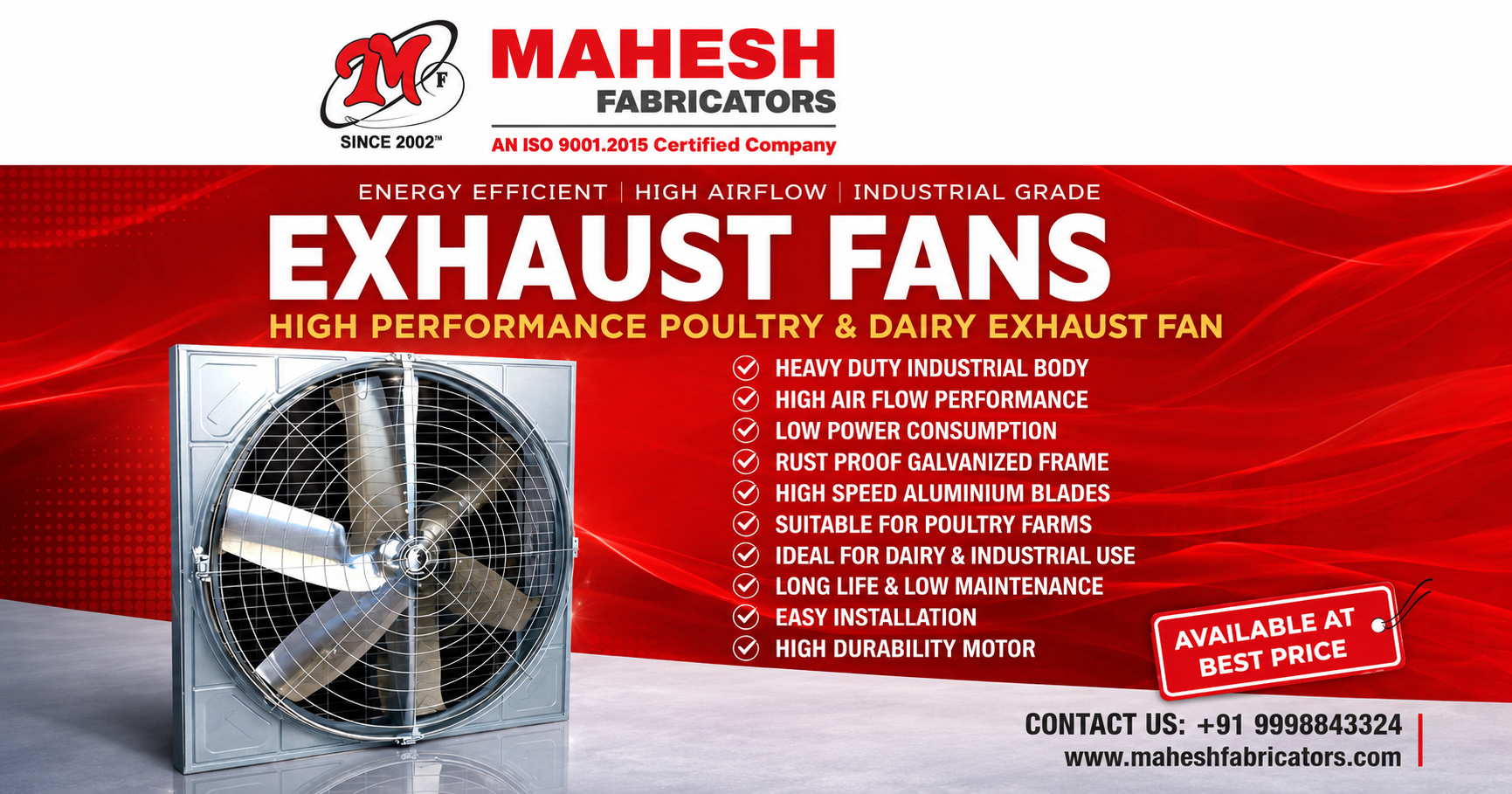
Different fan types are used in industrial ventilation based on airflow requirements. Exhaust fans are commonly installed on walls or roofs to remove indoor air. Axial fans are used for moving large volumes of air with relatively low resistance. Industrial circulation fans help move air across specific areas where workers or machines are located.
Roof exhaust fans are useful in buildings where heat collects near the top. Wall-mounted exhaust fans are practical for removing air directly from production floors or enclosed sections. High-volume low-speed fans may be used in large spaces where wide-area air circulation is needed. The right combination depends on the building layout and ventilation goals.
For factories with dust, fumes, or process emissions, exhaust planning should be done carefully so that unwanted air is removed safely and does not circulate back into the workspace. This improves indoor air quality and supports a healthier working environment.
Ventilation Design
Role of Airflow Planning in Factory Comfort
Fan performance depends strongly on airflow planning. Simply installing fans without considering air direction may not solve heat and ventilation issues. Air should enter, move through the working space, and exit through a controlled path. This creates effective air exchange and prevents dead zones.
In many warehouses, one side of the building can be used for fresh air entry while exhaust fans are placed on the opposite side or upper sections. This creates cross ventilation. In factories with internal partitions, ducts or additional circulation fans may be needed to move air through blocked areas.
Good airflow planning also prevents short-circuit ventilation, where fresh air exits too quickly without reaching the working zone. The goal is to create balanced airflow that covers the main usable space and removes unwanted air efficiently.
Upkeep & Servicing
Maintenance of Warehouse Cooling & Exhaust Fans
Regular maintenance helps fans perform consistently and safely. Industrial fans operate in dusty, humid, and demanding environments, so periodic inspection is important. Dust accumulation on blades, grills, motors, and ducts can reduce airflow and increase energy use.
Maintenance usually includes cleaning fan blades, checking motor condition, inspecting mounting points, tightening fasteners, checking vibration, and ensuring that air inlets and outlets are not blocked. Electrical connections and safety guards should also be inspected at regular intervals.
A well-maintained ventilation system works more efficiently and lasts longer. It also reduces the risk of sudden breakdowns that may affect factory operations during working hours.
Frequently Asked Questions
FAQs
Warehouse Cooling & Exhaust Fans for Factories are used to improve airflow, remove hot and stale air, reduce heat buildup, control humidity, and support better indoor air quality. They are suitable for factories, warehouses, production areas, storage units, and industrial sheds where proper ventilation is required.
Exhaust fans remove hot, polluted, humid, or stagnant air from inside the factory. When indoor air is pulled out, fresh air enters through available openings or inlet systems. This continuous air exchange helps maintain a cleaner, cooler, and more breathable working environment.
Cooling fans and exhaust fans have different functions. Cooling fans mainly circulate air inside the workspace to reduce discomfort and improve air movement. Exhaust fans remove indoor air from the building. In factories, both systems are often used together for better ventilation performance.
Warehouse exhaust fans should be installed where hot air, fumes, humidity, or stale air collects. This may include upper wall sections, roof areas, production zones, or enclosed work areas. Proper placement depends on the building layout, heat source, airflow direction, and ventilation requirement.
Yes, warehouse cooling fans help improve worker comfort by creating steady air movement and reducing hot, stagnant conditions. Better airflow can reduce fatigue, improve working comfort, and support a more productive factory environment, especially in large industrial spaces.
Factory exhaust fans should be checked regularly based on usage, dust level, and operating conditions. Cleaning blades, checking motors, inspecting vibration, and ensuring open airflow paths help maintain performance and reduce the risk of breakdowns.
Yes, these fans can help reduce humidity by removing moist indoor air and supporting fresh air movement. In warehouses and factories where moisture buildup affects comfort or material storage, proper ventilation can help maintain a more balanced indoor environment.
Summary
Conclusion
Warehouse Cooling & Exhaust Fans for Factories are essential for creating a safer, more comfortable, and better-ventilated industrial workspace. They help remove hot air, improve air circulation, reduce humidity, support worker comfort, and maintain better indoor air quality across warehouses and production areas.
A good ventilation system is not only about installing fans. It requires proper planning, correct fan selection, suitable placement, balanced airflow, and regular maintenance. When cooling and exhaust fans are selected according to actual factory conditions, they can support smoother operations and healthier working environments.
For factories, warehouses, industrial sheds, and production units, warehouse cooling and exhaust fans provide a practical solution for managing heat, stale air, and ventilation challenges. With the right system design, these fans can improve daily working conditions and contribute to long-term operational efficiency.
Contact Us
Get In Touch
Email info@maheshfabricators.com Sales Inquiry — Jay Panchal +91 99988 43324 Technical Inquiry — Mahesh Panchal +91 94273 24492Relevant Topics