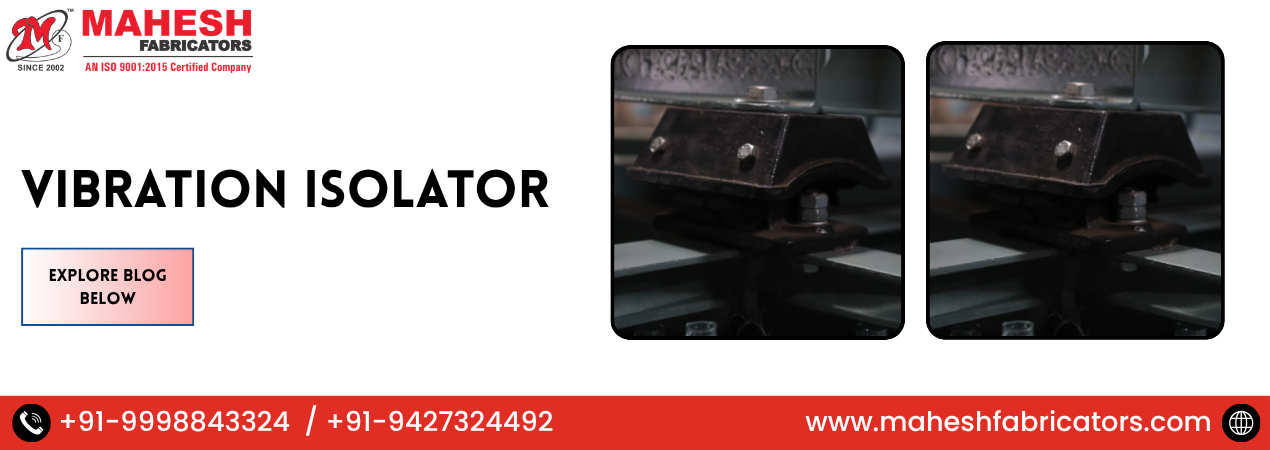
Vibration Isolator
In industrial environments, rotating machinery such as blowers, motors, compressors, and fans continuously generate vibration and shock during operation. These vibrations can negatively affect surrounding equipment, structural components, and overall system efficiency. A vibration isolator plays a vital role in minimizing these disturbances, ensuring smoother operation, reduced noise levels, and improved equipment reliability.
Vibration isolators are designed to absorb and isolate unwanted mechanical vibrations before they transfer to nearby structures. By doing so, they help maintain system stability and protect sensitive components from potential damage. These devices are widely used across industries where performance, safety, and durability are critical.
Understanding the Role of Vibration Isolators in Industrial Systems
Vibration isolators are engineered components that act as a buffer between vibrating machinery and its mounting surface. Their primary function is to prevent the transmission of vibration, shock, and structural noise. This isolation ensures that the energy generated by moving parts does not impact adjacent systems or building structures.
In industrial setups, continuous vibration can lead to misalignment, accelerated wear and tear, and structural fatigue. By installing vibration isolators, industries can significantly reduce these risks while maintaining consistent operational output. These devices also contribute to a quieter and safer working environment, which is increasingly important in modern manufacturing facilities.
How Vibration Isolators Work
The working principle of a vibration isolator is based on absorbing and dissipating kinetic energy generated by mechanical motion. When machinery operates, it produces oscillations that travel through its base and into surrounding structures. A vibration isolator interrupts this transmission path.
The isolator typically consists of elastic materials such as rubber, springs, or composite elements that deform under load. This deformation absorbs vibration energy and prevents it from propagating further. The result is reduced vibration intensity, minimized noise, and improved machine stability.
Different types of isolators are designed based on load capacity, frequency range, and application requirements. Selecting the correct isolator ensures optimal performance and long-term reliability.
Key Applications of Vibration Isolators
Vibration isolators are used in a wide range of industrial and commercial applications where vibration control is essential for equipment protection and operational efficiency.
- Industrial blowers and fans
- Electric motors and generators
- HVAC systems and air handling units
- Compressors and pumps
- Manufacturing machinery and heavy equipment
- Precision instruments and testing equipment
- Power plants and processing units
These applications highlight the importance of vibration isolation in maintaining system balance and preventing mechanical failure.
Types of Vibration Isolators Used in Industry
Different industrial environments require specific types of vibration isolators depending on equipment characteristics and operating conditions. Understanding these types helps in selecting the most suitable solution.
Benefits of Using Vibration Isolators
Implementing vibration isolators in industrial systems offers multiple operational and structural advantages, contributing to improved performance and reduced maintenance costs.
- Reduced vibration transmission to surrounding structures
- Lower noise levels in working environments
- Improved equipment lifespan and durability
- Enhanced operational stability and precision
- Decreased maintenance and repair requirements
- Protection of sensitive components and instruments
These advantages make vibration isolators an essential component in modern industrial infrastructure.
Factors to Consider When Selecting a Vibration Isolator
Choosing the right vibration isolator requires careful evaluation of several technical parameters. An incorrect selection can lead to ineffective vibration control or equipment instability.
- Load capacity and weight of the equipment
- Operating frequency and vibration intensity
- Environmental conditions such as temperature and exposure
- Type of machinery and its operational behavior
- Installation requirements and available space
Proper assessment of these factors ensures that the isolator performs efficiently and delivers long-term reliability.
Impact of Vibration Control on Equipment Performance
Uncontrolled vibration can significantly affect the performance and efficiency of industrial machinery. It may lead to increased wear, misalignment, and energy loss, ultimately reducing productivity.
By integrating vibration isolators, industries can achieve smoother machine operation and consistent output. Reduced vibration helps maintain alignment and balance, which is especially important for precision equipment. Over time, this results in improved product quality and reduced downtime.
Additionally, effective vibration control enhances workplace safety by minimizing structural stress and reducing the risk of equipment failure.
Maintenance and Longevity of Vibration Isolators
Vibration isolators are generally low-maintenance components, but periodic inspection is essential to ensure optimal performance. Over time, materials such as rubber may degrade due to environmental exposure and continuous loading.
Regular checks help identify signs of wear, deformation, or damage. Replacing worn-out isolators at the right time prevents potential system failures and maintains consistent vibration control.
Proper installation and balanced load distribution also play a crucial role in extending the lifespan of vibration isolators.
Common Challenges in Vibration Isolation
While vibration isolators are highly effective, improper selection or installation can reduce their efficiency. One common challenge is choosing an isolator that does not match the equipment's vibration frequency or load requirements.
Another issue is uneven load distribution, which can lead to imbalance and reduced isolation performance. Environmental factors such as high temperatures, chemicals, or moisture can also affect the durability of isolator materials.
Addressing these challenges requires proper planning, correct product selection, and regular maintenance practices.
Future Trends in Vibration Isolation Technology
With advancements in industrial technology, vibration isolation systems are becoming more advanced and efficient. Modern isolators are designed using improved materials and enhanced damping capabilities to meet complex machinery requirements.
Smart monitoring systems are increasingly being integrated with vibration control solutions, enabling real-time tracking of vibration levels and equipment performance. This supports predictive maintenance and helps reduce unexpected downtime.
As industries continue to adopt automation and precision-driven processes, the demand for advanced vibration isolation solutions is expected to grow significantly.
Conclusion
Vibration isolators are a fundamental component in industrial systems where machinery generates continuous motion and vibration. They play a critical role in improving equipment performance, reducing noise, and protecting surrounding structures. By effectively isolating vibration and shock, these devices contribute to operational efficiency, safety, and long-term reliability. As industries evolve and adopt advanced technologies, the importance of vibration isolation continues to grow, making it an essential solution for modern engineering challenges.
Frequently Asked Questions
A vibration isolator is used to reduce or eliminate the transmission of vibration, shock, and noise from machinery to surrounding structures. It helps protect equipment and improves operational stability.
By minimizing vibration and shock, a vibration isolator reduces wear and tear on machine components. This helps maintain alignment and prevents mechanical damage, ultimately extending equipment lifespan.
Vibration isolators are widely used in manufacturing, HVAC systems, power plants, construction, and industrial processing units where machinery generates continuous vibration.
Common materials include rubber, metal springs, and composite materials. The choice depends on load capacity, frequency range, and environmental conditions.
Vibration isolators require minimal maintenance but should be inspected periodically for wear, deformation, or environmental damage to ensure consistent performance.
Selecting the right isolator depends on factors such as equipment weight, vibration frequency, operating conditions, and installation requirements. Proper evaluation ensures effective vibration control.