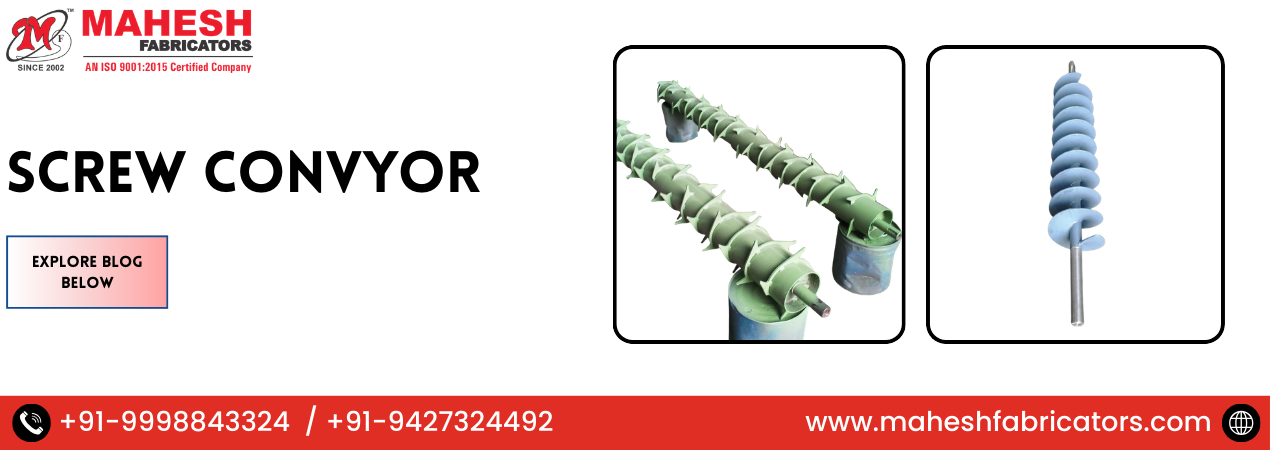
Screw convyor – Efficient Bulk Material Handling System for Modern Industries
In modern manufacturing and processing industries, efficient material handling plays a crucial role in maintaining productivity and operational efficiency. Industries such as cement plants, food processing units, chemical factories, and wastewater treatment facilities require reliable systems that can transport bulk materials smoothly throughout the production process. One of the most effective solutions used across these industries is the screw conveyor.
A screw conveyor is a mechanical conveying system designed to move bulk materials through a rotating helical screw blade inside a trough or tube. As the screw rotates, materials are pushed forward along the conveyor path until they reach the discharge point. This simple yet powerful mechanism makes screw conveyors one of the most dependable material handling solutions used in industrial plants.
Industries prefer screw conveyors because they offer continuous material movement, controlled discharge, and efficient handling of powders, granules, and semi-solid materials. Their compact design allows them to be installed in limited spaces while still delivering high operational performance.
Companies like Mahesh Fabricators, an ISO 9001:2015 certified engineering company based in Ahmedabad, manufacture industrial equipment that supports efficient material handling and reliable industrial operations.
How a Screw Conveyor Works in Industrial Systems
The working principle of a screw conveyor is based on the rotation of a helical screw blade, also known as an auger, inside a cylindrical tube or trough. When the screw rotates, it pushes the material forward along the conveyor path.
The material enters through an inlet opening and moves continuously until it reaches the discharge outlet. The entire system is typically powered by an electric motor connected to a gearbox that rotates the screw shaft.
Screw conveyors are designed to handle various types of materials including powders, grains, chemicals, and sludge. Because the system is enclosed, it also helps reduce dust emissions and protects materials from contamination.
This design allows industries to move materials efficiently between different stages of production without manual handling.
Key Components of a Screw Conveyor System
Every screw conveyor system is made up of several important components that ensure smooth operation and reliable material movement.
- Helical screw flight that moves the material forward
- Conveyor trough or tube that holds the material
- Electric motor and gearbox for rotating the screw
- Inlet and outlet ports for feeding and discharge
- Bearings and support structure for stability
Each component plays an important role in maintaining efficient and continuous material transportation within industrial processes.
Major Applications of Screw Conveyors in Industry
Screw conveyors are widely used across multiple industries due to their ability to transport different types of bulk materials safely and efficiently.
Cement plants for transporting cement powder and fly ash
Food processing industries for moving flour, sugar, and grains
Chemical plants for handling powdered chemicals and compounds
Wastewater treatment plants for sludge handling systems
Agriculture and grain processing units for seeds and crop materials
Their versatility makes screw conveyors one of the most commonly used material handling systems in industrial facilities.
Importance of Quality Manufacturing in Screw Conveyors
The durability and efficiency of a screw conveyor depend largely on the quality of manufacturing. Industrial conveyors must be built using strong materials and precise engineering standards to handle demanding operating conditions.
High-quality screw conveyors are usually manufactured using carbon steel, stainless steel, or specialized alloys depending on the application environment. Precision manufacturing ensures proper alignment of screw flights and reduces friction during operation.
Reliable manufacturing practices help industries achieve consistent performance, reduced maintenance costs, and longer equipment lifespan.
Mahesh Fabricators follows strict quality control standards to deliver dependable industrial equipment for various sectors.
Types of Screw Conveyors Used in Industrial Plants
Different industries require different types of screw conveyors depending on the material characteristics and conveying requirements.
Horizontal screw conveyor used for standard material transport
Inclined screw conveyor used to lift materials between levels
Vertical screw conveyor used for vertical material transfer
Shaftless screw conveyor used for sticky or fibrous materials
Selecting the correct type of screw conveyor ensures smooth operation and improves production efficiency.
Advantages of Using Screw Conveyors
Screw conveyors offer several operational advantages that make them an ideal choice for industrial material handling.
Continuous and controlled material transportation
Compact design suitable for limited industrial spaces
Reduced dust generation due to enclosed structure
Customizable design according to industrial requirements
Reliable performance with minimal maintenance
These advantages allow industries to maintain stable production processes while reducing operational costs.
Maintenance Practices for Long-Term Screw Conveyor Operation
Regular maintenance is essential for keeping screw conveyors running efficiently. Preventive maintenance helps avoid unexpected equipment failure and ensures smooth operation.
Operators should regularly inspect bearings, drive motors, and support components to ensure they are functioning correctly. Proper lubrication of moving parts is necessary to reduce friction and wear.
Cleaning the conveyor system periodically prevents material buildup that could affect performance. Monitoring motor performance and alignment also helps maintain stable operation.
By following proper maintenance procedures, industries can significantly extend the lifespan of their screw conveyor systems.
Frequently Asked Questions (FAQs)
A screw conveyor is a mechanical device used to transport bulk materials using a rotating helical screw blade inside a tube or trough.
Screw conveyors are used in industries such as cement plants, food processing units, chemical factories, agriculture processing facilities, and wastewater treatment plants.
Screw conveyors can transport powders, granules, grains, sludge, chemicals, and other bulk materials.
They offer continuous material transport, compact design, low maintenance, and controlled material movement.
Common types include horizontal screw conveyors, inclined screw conveyors, vertical screw conveyors, and shaftless screw conveyors.
Conclusion
Screw conveyors have become an essential component in modern industrial material handling systems. Their ability to transport bulk materials efficiently, safely, and continuously makes them valuable for industries such as cement manufacturing, chemical processing, food production, agriculture, and wastewater treatment.
With advantages such as compact design, controlled material movement, low maintenance requirements, and versatile applications, screw conveyors help industries improve productivity and streamline operations.
As industrial processes continue to evolve, reliable engineering solutions will play an important role in supporting efficient manufacturing systems. Companies like Mahesh Fabricators contribute to this progress by providing high-quality industrial equipment designed to meet the demanding requirements of modern industries.