Medium Pressure Blower vs High Pressure Blower
In the realm of industrial airflow solutions, understanding the nuances between different types of blowers is paramount for efficiency and operational success. Two critical categories often discussed are medium pressure blowers and high pressure blowers. While both serve to move air, their design, performance characteristics, and ideal applications differ significantly. Selecting the right type of blower ensures that your specific industrial process receives the precise airflow and pressure it needs, preventing inefficiencies, equipment damage, and unnecessary energy consumption. This comprehensive guide delves into the core distinctions between medium and high pressure blowers, helping you navigate the selection process with confidence.
Understanding Blower Pressure Ratings
Industrial blowers are categorized based on the pressure they can generate to move air or gas. This pressure is typically measured in inches of water gauge ("wg"), millimeters of water gauge (mm wg), or Pascals (Pa). The distinction between medium and high pressure is not always rigidly defined by a single number but rather by the blower's intended operating range and design characteristics. Generally, medium pressure blowers operate in a range that can overcome moderate system resistance, while high pressure blowers are designed to generate significantly more force to push air through systems with very high resistance or for specific applications requiring intense airflow.
The internal design, impeller type, speed, and casing of a blower all contribute to its pressure-generating capability. For instance, blowers with smaller impellers rotating at higher speeds, or those with specially designed impeller shapes and casings, are often engineered for higher pressure applications.
Medium Pressure Blowers: Versatility in Operation
Medium pressure blowers are workhorses in many industrial settings, providing a balance between airflow volume and pressure. They are designed to operate efficiently within a moderate pressure range, typically from around 2" wg up to 20-30" wg (approximately 500 Pa to 7,500 Pa), though these ranges can vary by manufacturer and specific blower model. Their impellers are often forward-curved or backward-inclined, offering a good combination of efficiency and robustness for various tasks.
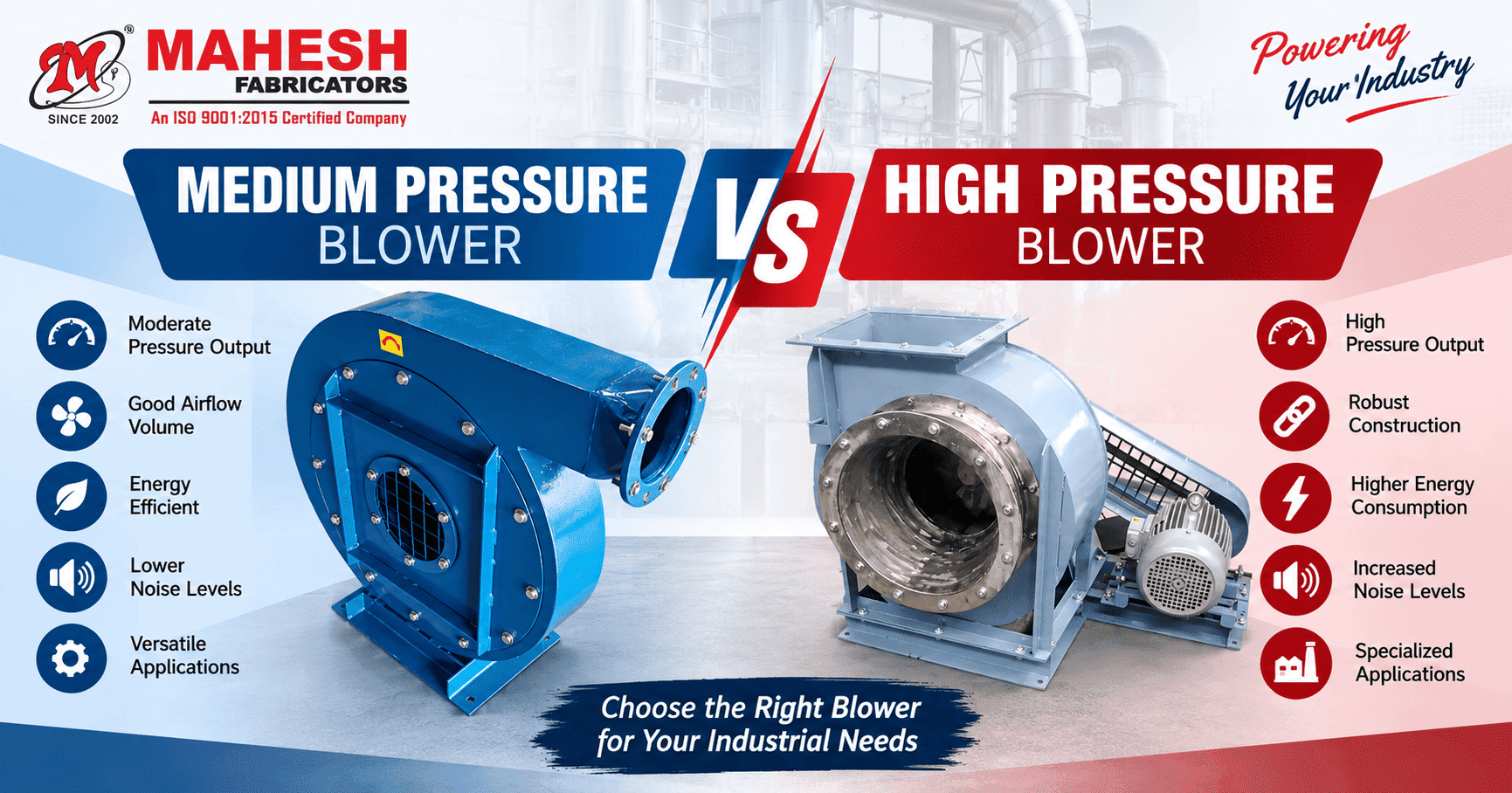
Key Characteristics of Medium Pressure Blowers:
- Moderate Pressure Output: Capable of overcoming moderate system resistance.
- Good Airflow Volume: Often designed to deliver substantial volumes of air.
- Energy Efficiency: Generally more energy-efficient than high pressure blowers when operating within their designed range.
- Lower Noise Levels: Typically operate at lower noise levels compared to high pressure units.
- Versatile Applications: Suitable for a broad spectrum of industrial uses.
High Pressure Blowers: Power for Demanding Tasks
High pressure blowers are engineered for applications where significant force is needed to move air against substantial resistance. These blowers can generate pressures typically exceeding 30" wg (7,500 Pa) and can go much higher, often into pounds per square inch (PSI) ranges for the most extreme applications. They are characterized by their robust construction, often featuring specialized impeller designs like radial or airfoil blades, and high-speed operation. The primary goal of a high pressure blower is to deliver air with enough force to penetrate dense materials, move air through long duct runs with many bends, or operate high-temperature processes.
Key Characteristics of High Pressure Blowers:
- High Pressure Output: Capable of overcoming very high system resistance.
- Robust Construction: Built to withstand demanding operating conditions and higher stresses.
- Higher Energy Consumption: Generally require more power to achieve their pressure ratings.
- Increased Noise Levels: Tend to operate at higher noise levels due to higher speeds and pressures.
- Specialized Applications: Suited for specific, high-demand industrial tasks.
Applications and Use Cases
The choice between a medium and high pressure blower is dictated by the specific demands of the application.
Medium Pressure Blower Applications:
- General Ventilation: Providing fresh air and exhausting stale air in industrial facilities.
- HVAC Systems: Circulating conditioned air in large buildings.
- Material Handling: Pneumatic conveying of lighter materials like grains, plastics, or sawdust over moderate distances.
- Combustion Air: Supplying air to boilers and furnaces where resistance is not excessively high.
- Drying and Cooling: Providing airflow for industrial drying ovens or cooling processes.
- Dust Collection: Evacuating dust and fumes from workstations.
High Pressure Blower Applications:
- Pneumatic Conveying of Dense Materials: Transporting heavy or abrasive materials like cement, sand, or metal powders over long distances or through complex systems.
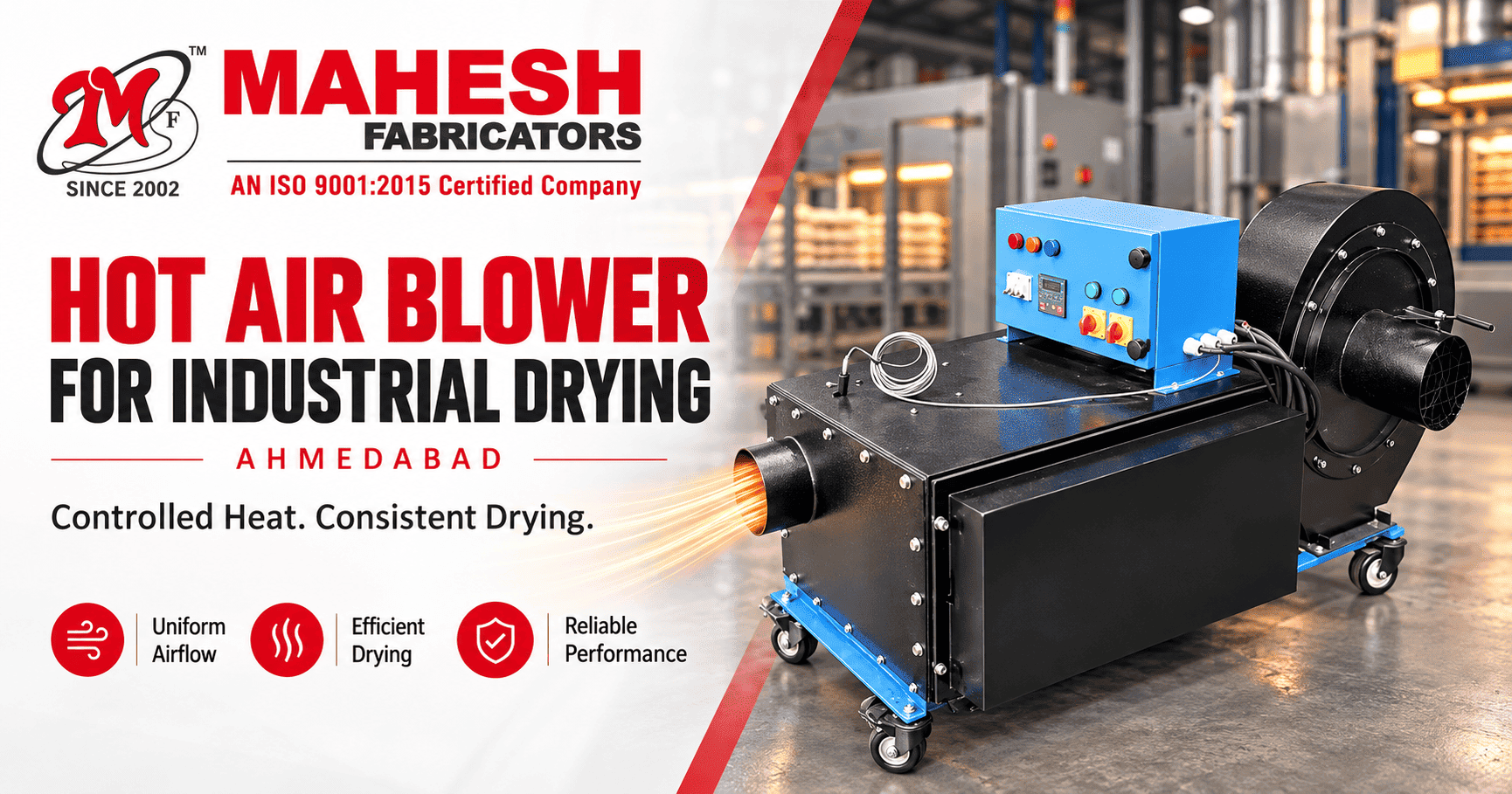
- Industrial Drying Processes: High-velocity air for rapid drying of products, often at elevated temperatures.
- Aeration in Wastewater Treatment: Injecting high-pressure air deep into treatment tanks.
- Industrial Furnaces and Kilns: Providing high-pressure combustion air for very high-temperature processes.
- Vacuum Cleaning Systems: Centralized industrial vacuum systems requiring significant suction.
- Process Air for Chemical Plants: Supplying air or gases for specific reactions requiring high pressure.
Medium Pressure Blower vs High Pressure Blower: A Comparative Overview
| Feature | Medium Pressure Blower | High Pressure Blower |
|---|---|---|
| Pressure Range (Typical) | 2" to 30" wg (500 to 7,500 Pa) | 30" wg and above (7,500 Pa+) |
| Primary Design Goal | Balanced airflow and moderate pressure | Maximum pressure and force |
| Impeller Design | Forward-curved, backward-inclined | Radial, backward-curved, airfoil (robust, high-speed) |
| Motor Speed | Moderate to high | High to very high |
| Energy Consumption | Generally lower for comparable airflow volume | Generally higher |
| Noise Level | Typically lower | Typically higher |
| System Resistance Tolerance | Moderate | High |
| Common Applications | Ventilation, general conveying, drying, cooling | Dense material conveying, high-temp processes, deep aeration |
Choosing the Right Blower: Key Considerations
Selecting the appropriate blower is a critical decision that impacts operational efficiency, energy costs, and process reliability. Here’s a guide to help you make an informed choice when considering medium pressure blowers versus high pressure blowers:
Buyer Insight: Do not oversize the blower. A common mistake is choosing a blower with a significantly higher pressure capacity than required. This leads to wasted energy, increased wear and tear, and potentially disruptive noise levels. Always precisely define your system's pressure and airflow needs before selecting a unit.
1. Define Your Airflow and Pressure Requirements:
This is the most crucial step. Accurately determine the required cubic feet per minute (CFM) or cubic meters per hour (CMH) of airflow and the total system pressure (in "wg, Pa, or PSI) needed to achieve your process goals. Consider factors like ductwork length and diameter, bends, filters, and any other resistances in the system.
2. Analyze the Application:
What is the primary purpose of the blower? Is it for general ventilation (likely medium pressure), or is it for conveying abrasive materials in a high-resistance pipeline (likely high pressure)? The nature of the process will guide you towards the appropriate category.
3. Consider System Resistance:
A system with numerous filters, long runs of piping, or high operational temperatures will introduce more resistance. High resistance demands a high pressure blower. Conversely, open areas or short duct runs may only need a medium pressure unit.
4. Evaluate Noise and Vibration:
High pressure blowers, due to their higher speeds and greater power, generally produce more noise and vibration. If your application is in a sensitive area or requires a quieter operation, a medium pressure blower might be more suitable, or specific noise-dampening measures may be necessary for a high pressure unit.
5. Energy Efficiency:
While high pressure blowers are essential for specific tasks, they consume more energy. For applications that fall within the medium pressure range, selecting an appropriately sized medium pressure blower will lead to significant energy savings over time.
6. Material Compatibility and Durability:
Consider the nature of the air or gas being handled. If it's hot, corrosive, or contains abrasive particles, the blower's materials of construction and impeller type must be suitable. High pressure applications often require more robust materials.
Expert Blower Solutions from MAHESH FABRICATORS
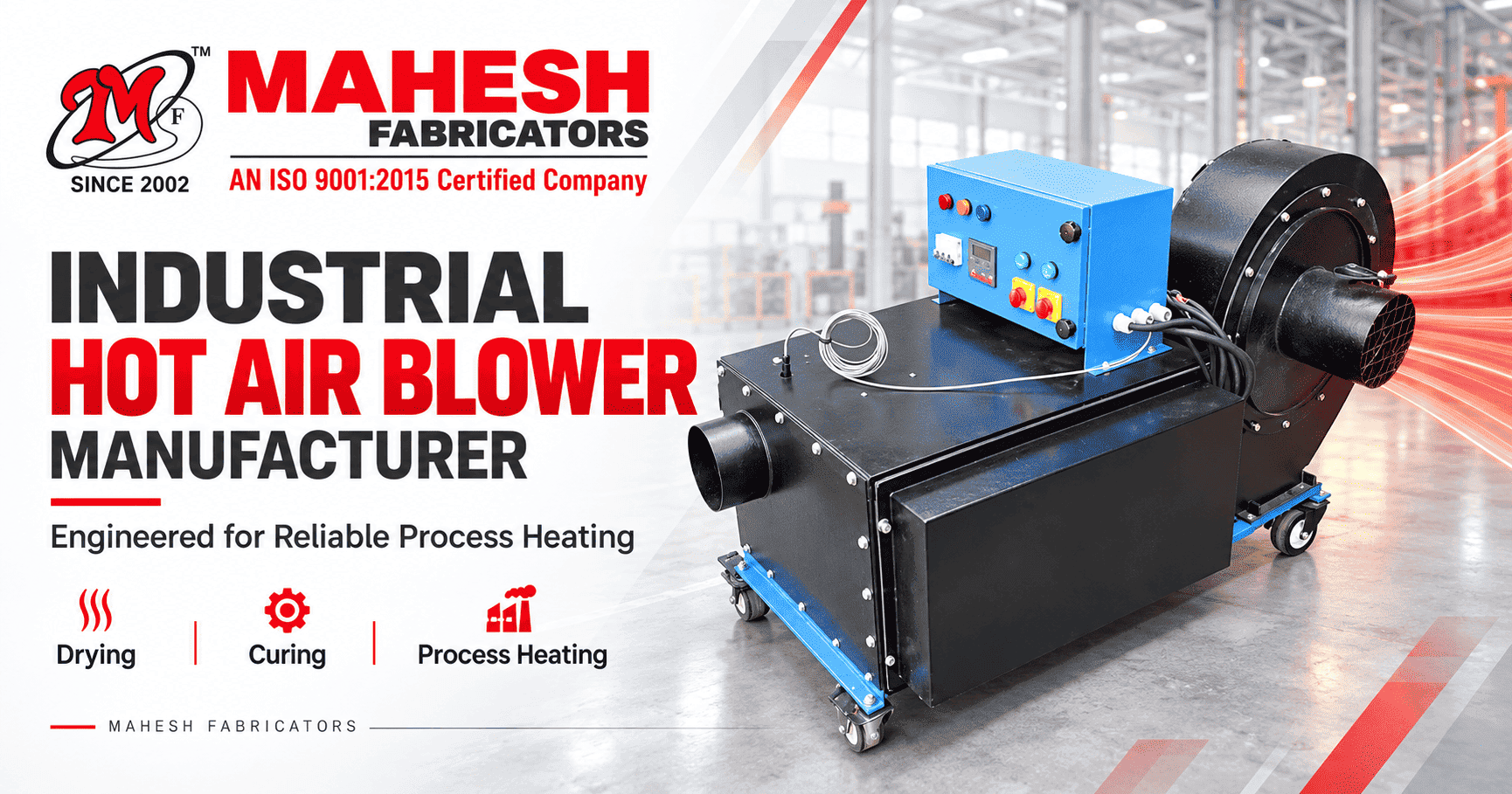
At MAHESH FABRICATORS, we understand the critical role that correctly specified industrial blowers play in your operations. We are dedicated to providing robust and efficient airflow solutions tailored to meet the diverse needs of various industries. Our expertise lies in understanding your specific application requirements, from general ventilation and material handling to more demanding industrial processes.
Whether your process calls for the balanced performance of a medium pressure blower or the intense force of a high pressure blower, our team is equipped to help you identify the optimal solution. We focus on delivering reliable equipment that enhances your productivity, ensures operational safety, and contributes to your overall efficiency. Partner with MAHESH FABRICATORS for expert guidance and dependable industrial blower systems.
Frequently Asked Questions (FAQ)
What is the main difference in function between medium and high pressure blowers?
The main difference lies in their capacity to overcome system resistance. Medium pressure blowers are designed for moderate resistance, offering a balance of airflow and pressure, while high pressure blowers are built to generate significantly more force to move air through systems with very high resistance.
How do I determine if I need a medium or high pressure blower?
You need to calculate your system's total pressure drop (resistance) and required airflow. If the resistance is high, due to long duct runs, many bends, filters, or high process temperatures, a high pressure blower is likely necessary. For simpler ventilation or moderate conveying needs, a medium pressure blower is usually sufficient.
Are high pressure blowers always more powerful?
High pressure blowers are designed to deliver higher pressure, which requires more power. However, 'powerful' can also refer to airflow volume. A medium pressure blower might deliver a larger volume of air at a lower pressure than a high pressure blower.
Can a medium pressure blower be used for high pressure applications?
No, attempting to use a medium pressure blower in a high pressure application will result in insufficient airflow, potential overheating of the motor due to strain, and overall system underperformance. It's crucial to match the blower's capabilities to the system's demands.
What are the energy implications of choosing between these two types of blowers?
High pressure blowers generally consume more energy because they operate at higher speeds and overcome greater resistance. For applications within the medium pressure range, selecting an appropriately sized medium pressure blower will be more energy-efficient.
Ready to Optimize Your Airflow?
Don't let inefficient airflow hinder your operations. MAHESH FABRICATORS offers expert consultation to help you select the ideal medium or high pressure blower for your specific industrial needs. Contact us today to discuss your project and get a tailored solution.
Request a Consultation