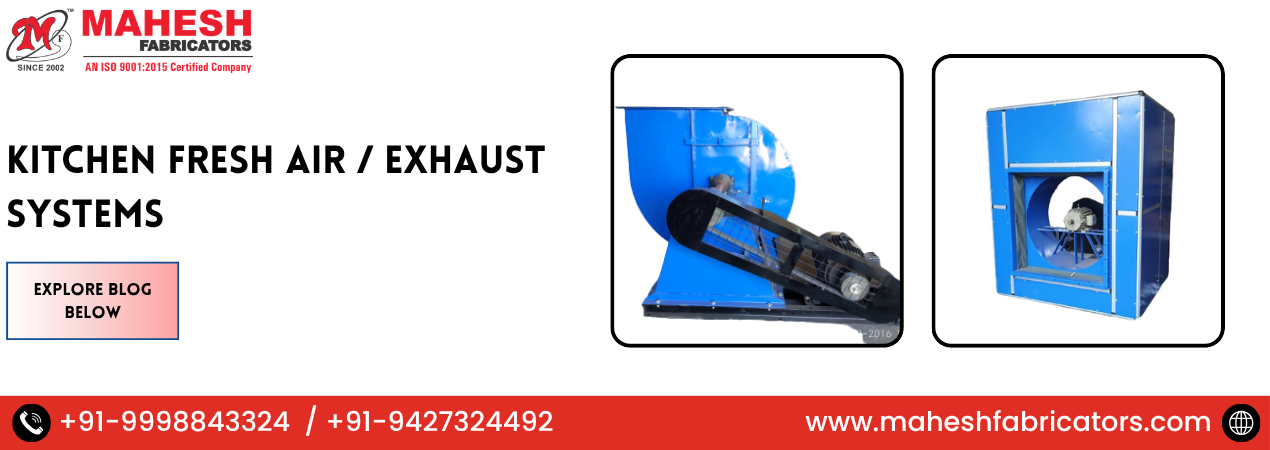
Kitchen Fresh Air / Exhaust Systems
Kitchen environments generate a mix of heat, grease particles, smoke, and strong odours during daily operations. Without proper ventilation, these elements can accumulate quickly, affecting air quality, worker comfort, and overall hygiene standards. Kitchen fresh air and exhaust systems are designed to maintain balanced airflow and ensure efficient removal of contaminants.
These systems extract polluted air while simultaneously introducing fresh air into the space, creating a controlled and breathable working environment. They are widely used in commercial kitchens, food processing units, restaurants, and industrial cooking facilities where continuous operations demand reliable ventilation solutions.
Understanding the Role of Kitchen Fresh Air / Exhaust Systems
A kitchen ventilation system goes beyond simply removing smoke; it is a comprehensive solution for managing multiple air quality concerns. These systems are specifically designed to handle grease accumulation, heat buildup, and airborne particles that standard ventilation methods may not effectively control.
The system typically includes an exhaust canopy or hood positioned above cooking equipment. This canopy captures rising fumes and directs them into ducting systems, where filtration and extraction processes take place. At the same time, fresh air systems ensure that the extracted air is replaced with clean air, maintaining proper pressure balance within the kitchen.
This dual functionality makes kitchen fresh air and exhaust systems essential for maintaining operational efficiency and meeting hygiene and safety standards in modern kitchen environments.
How Kitchen Fresh Air / Exhaust Systems Work
The working principle of these systems is based on controlled airflow and filtration. The process begins when cooking activities generate heat, smoke, and grease-laden vapours. These contaminants rise naturally and are captured by the exhaust hood.
The captured air then moves through the ducting system, where grease filters trap solid particles. The remaining air is either discharged outside or further treated, depending on the system design. At the same time, fresh air units introduce filtered air into the kitchen, preventing negative pressure and maintaining ventilation balance.
This continuous cycle helps maintain stable air quality, regulate temperature, and efficiently remove harmful particles.
Key Components of a Kitchen Exhaust System
A well-designed system includes multiple interconnected components that work together to ensure effective air purification and circulation. Each element plays a specific role in maintaining system performance.
Exhaust Hood or Canopy: Positioned above cooking stations to capture smoke, grease, and heat at the source
Ducting System: Channels contaminated air from the hood to the filtration and exhaust units
Filtration Units: Remove grease particles and impurities before air discharge
Exhaust Fan or Blower: Drives airflow and ensures continuous extraction of polluted air
Fresh Air Unit: Supplies clean air to replace extracted air and maintain indoor balance
These components must be carefully selected and configured to match the specific requirements of the kitchen environment.
Applications Across Different Kitchen Environments
Kitchen fresh air and exhaust systems are widely used across industries where cooking and heat generation are continuous processes. These systems are essential for both small-scale and large-scale operations.
- Commercial restaurants and hotel kitchens
- Industrial food processing units
- Catering facilities and central kitchens
- Bakery and confectionery production units
- Institutional kitchens such as hospitals and schools
Each application requires a tailored system design based on cooking intensity, layout, and operational requirements.
Importance of Proper Airflow and System Design
The effectiveness of a kitchen exhaust system depends largely on its design and airflow management. Several technical factors must be considered during system planning to ensure consistent performance.
Airflow is typically measured in cubic feet per minute (CFM), which determines how much air the system can handle. Selecting the correct airflow capacity is essential to match the cooking load and kitchen size.
Static pressure is another important factor, as it affects how efficiently air moves through ducts and filters. Poor system design can create resistance, reducing performance and increasing energy consumption.
Noise levels are also important, particularly in environments where comfort and communication matter. Proper fan selection helps achieve a balance between efficient operation and acceptable noise levels.
Benefits of Installing Kitchen Fresh Air / Exhaust Systems
These systems offer several operational and environmental benefits that contribute to improved kitchen efficiency and safety standards.
- Improved air quality by removing smoke, grease, and odours
- Enhanced worker comfort through better temperature and airflow control
- Reduced risk of fire hazards caused by grease accumulation
- Improved hygiene and compliance with safety regulations
- Extended equipment lifespan due to controlled heat conditions
By maintaining a clean and balanced environment, these systems support efficient kitchen operations and long-term reliability.
Maintenance and Performance Optimization
Regular maintenance is essential to ensure that kitchen fresh air and exhaust systems continue to operate efficiently. Over time, grease and dust accumulation can restrict airflow and reduce system performance.
Routine cleaning of filters and ducting helps maintain proper airflow and prevents blockages. Periodic inspection of fans and blowers ensures that all mechanical components function correctly.
Consistent maintenance not only improves efficiency but also extends system lifespan and reduces the risk of unexpected breakdowns.
FAQs
Conclusion
Kitchen fresh air and exhaust systems are a critical component of modern kitchen infrastructure, ensuring clean air, efficient operations, and safe working conditions. By combining effective extraction with a consistent fresh air supply, these systems create a balanced environment that supports productivity and hygiene.
Proper system design, regular maintenance, and correct component selection are essential for achieving long-term performance. As kitchen operations continue to evolve, reliable ventilation systems remain vital for maintaining quality, safety, and operational efficiency.