Industrial Low Pressure Blower Maintenance Tips
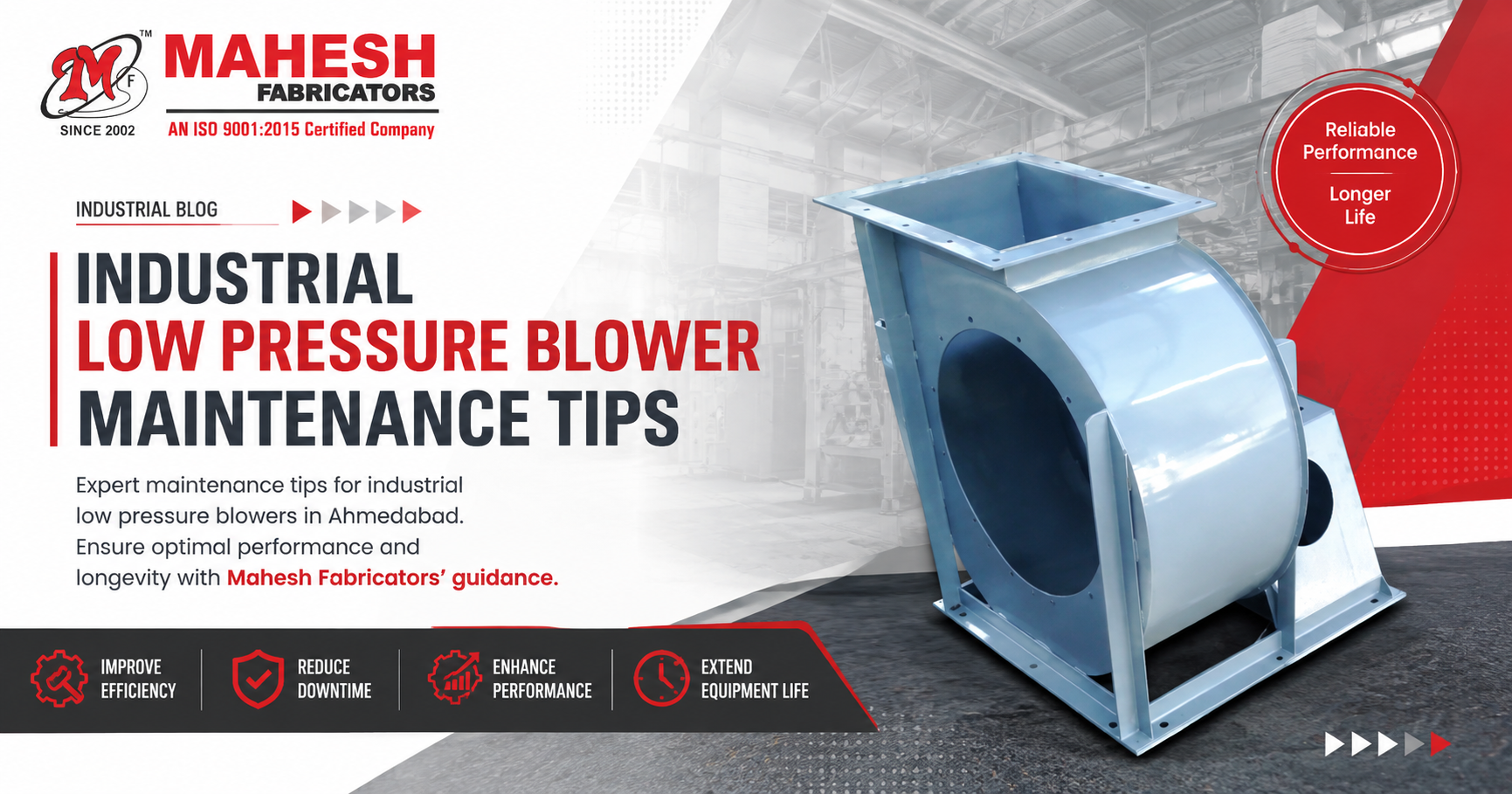
Expert maintenance tips for industrial low pressure blowers in Ahmedabad. Ensure optimal performance and longevity with Mahesh Fabricators' guidance.
Industrial Low Pressure Blower Maintenance Tips in Ahmedabad
Maintaining the efficiency and longevity of your industrial low pressure blowers is critical for uninterrupted operations. In the bustling industrial landscape of Ahmedabad, where manufacturing processes rely heavily on efficient air movement, understanding proper maintenance is not just beneficial—it's essential. Neglecting these vital machines can lead to costly downtime, reduced performance, and premature equipment failure. This guide provides practical, actionable maintenance tips specifically for industrial low pressure blowers, ensuring your operations in Ahmedabad run smoothly.
Why This Matters in Ahmedabad
Ahmedabad, a significant industrial hub in Gujarat, hosts a diverse range of manufacturing sectors including textiles, pharmaceuticals, chemicals, and heavy engineering. These industries frequently utilize industrial low pressure blowers for ventilation, material handling, and process air supply. The consistent demand for reliable air movement systems in Ahmedabad's active industrial environment means that any disruption caused by blower malfunction can have a cascading effect on production schedules and profitability. Proactive maintenance is key to sustaining the high operational tempo expected in this dynamic city.
What is an Industrial Low Pressure Blower — Overview
An industrial low pressure blower is a type of fan designed to move a moderate volume of air at relatively low static pressures. Unlike high-pressure blowers or compressors, these units are optimized for applications where airflow is more critical than extreme pressure. They typically operate with pressures ranging from a few inches of water gauge up to around 2-3 psi. These blowers are commonly used for general ventilation, exhaust systems, drying processes, and conveying lightweight materials. Their design often prioritizes energy efficiency and quiet operation, making them suitable for a wide array of industrial settings.
Key Features and Technical Specifications
Industrial low pressure blowers are engineered with specific characteristics to meet diverse operational needs. Understanding these features is the first step in effective maintenance.
- Impeller Design: Features robust impellers, often backward-curved or airfoil types, designed for optimal airflow and efficiency at lower pressures.
- Motor Efficiency: Equipped with energy-efficient motors, typically TEFC (Totally Enclosed Fan Cooled) or ODP (Open Drip Proof), to reduce operational costs.
- Robust Construction: Built with durable materials such as mild steel, stainless steel, or specialized alloys to withstand industrial environments.
- Bearing Systems: Utilizes heavy-duty ball or roller bearings for smooth operation and extended service life.
- Mounting Options: Available in various configurations, including direct drive, belt drive, and various frame mounts for flexible installation.
- Noise Reduction Features: Often incorporate features like acoustically lined housings or optimized fan blades to minimize operational noise.
- Sealing Mechanisms: Employ effective seals to prevent air leakage and protect internal components from dust and contaminants.
Industrial Applications and Use Cases
The versatility of industrial low pressure blowers makes them indispensable across numerous manufacturing and processing sectors prevalent in and around Ahmedabad.
- Textile Industry: Used for ventilation, dust collection, and material transport in spinning and weaving processes.
- Pharmaceutical Manufacturing: Essential for cleanroom ventilation, fume extraction, and maintaining controlled air environments.
- Chemical Processing: Employed for fume and vapor removal, as well as for supplying process air in reactors.
- Food and Beverage Production: Utilized for cooling, drying, and ventilation in processing and packaging areas.
- Plastics and Rubber Manufacturing: Applied in drying, cooling, and conveying plastic pellets or rubber compounds.
- Foundries and Metalworking: Used for furnace ventilation, dust collection, and general shop floor air circulation.
- Woodworking and Furniture: Essential for dust collection systems and ventilation in cutting and finishing areas.
- General HVAC: Provide make-up air and exhaust for large industrial facilities and workshops.
How to Choose the Right Industrial Low Pressure Blower
Selecting the appropriate low pressure blower is crucial for achieving desired performance and avoiding premature wear. Consider these factors:
- Airflow and Pressure Requirements: Clearly define the required CFM (Cubic Feet per Minute) and static pressure for your specific application.
- Operating Environment: Assess temperature, humidity, and the presence of corrosive or abrasive elements in the air stream.
- Motor Specifications: Match motor horsepower and voltage to your facility's power supply and the blower's load requirements.
- Material of Construction: Choose materials resistant to the process air and environmental conditions.
- Drive Type: Decide between direct drive (simpler, less maintenance) or belt drive (allows speed adjustment, easier motor replacement).
- Noise Levels: Consider the acceptable noise limits for your operational area.
- Certifications and Standards: Ensure the blower meets relevant industry standards (e.g., ISO, AMCA) for safety and performance.
- Supplier Reputation and Support: Partner with a reputable manufacturer offering good after-sales service and technical assistance.
Quality Standards and Compliance
Adherence to recognized quality standards is paramount for industrial low pressure blowers, ensuring safety, reliability, and consistent performance. In India, manufacturers often comply with Bureau of Indian Standards (BIS) specifications where applicable. Internationally, standards set by the Air Movement and Control Association (AMCA) are widely respected for fan performance and sound testing. Mahesh Fabricators, as an ISO 9001-2015 certified company, demonstrates a commitment to quality management systems throughout its manufacturing processes. Buyers should verify that the blowers they procure are manufactured in accordance with relevant industry standards and that the manufacturer has robust quality control procedures in place.
Why Mahesh Fabricators' Experience and Capability Matters
With over 17 years of experience since its founding in 2002, Mahesh Fabricators has developed deep expertise in manufacturing industrial air systems, including low pressure blowers. Our commitment to quality is underscored by our ISO 9001-2015 certification, reflecting a systematic approach to production and customer satisfaction. We pride ourselves on our in-house design and manufacturing capabilities, allowing for precise control over product quality and the flexibility to offer customized solutions tailored to specific industrial needs in Ahmedabad and beyond. Our experienced engineering team ensures that each blower is built for durability and efficient performance, backed by a dedication to reliable after-sales support.
Installation, Maintenance, and Care Tips
Proper installation and regular maintenance are key to maximizing the lifespan and efficiency of your industrial low pressure blower.
Installation
Ensure the blower is installed on a solid, vibration-free foundation.
Verify that the motor voltage and frequency match the power supply.
Check that the fan rotation direction is correct as per manufacturer guidelines.
Ensure adequate clearance around the blower for airflow and maintenance access.
If belt-driven, ensure proper belt tension and alignment.
Routine Maintenance (Weekly/Monthly):
- Visual Inspection: Check for loose bolts, damaged wiring, or any signs of wear.
- Lubrication: Lubricate bearings according to the manufacturer's schedule and recommended lubricant type. Over-lubrication can be as detrimental as under-lubrication.
- Belt Inspection (if applicable): Inspect belts for cracks, fraying, or excessive wear. Adjust tension as needed.
- Cleanliness: Keep the blower housing, motor, and surrounding area clean to prevent dust buildup, which can impede cooling and airflow.
Periodic Maintenance (Quarterly/Annually):
- Impeller Cleaning: Inspect the impeller for dirt, grease, or material buildup. Clean gently with a soft brush or cloth. Imbalanced impellers can cause vibration and reduce efficiency.
- Bearing Check: Listen for unusual noises from the bearings, which could indicate wear.
- Motor Check: Inspect the motor for overheating or unusual sounds.
- Ductwork Inspection: Check intake and outlet ductwork for obstructions or leaks.
- Performance Testing: Periodically measure airflow and pressure to ensure the blower is operating within specifications.
Frequently Asked Questions
A1: Bearing lubrication frequency depends on the type of bearing, operating conditions, and the manufacturer's recommendations. Typically, it ranges from monthly to quarterly for standard bearings, but consult your blower's manual for specific intervals and the correct lubricant type to avoid damage.
A2: An imbalanced impeller will typically cause noticeable vibration, increased noise levels, and potentially premature wear on bearings and motor mounts. It can also lead to reduced airflow efficiency and increased energy consumption.
A3: It is strongly recommended to use only the specified belt type and size recommended by the blower manufacturer. Using an incorrect belt can lead to slippage, premature wear, inefficient power transfer, and potential damage to the blower or motor.
A4: Excessive noise can stem from several issues, including impeller imbalance, bearing wear, loose components, or airflow restrictions. First, check for obvious issues like loose guards or debris. If the noise persists, inspect bearings and the impeller, and ensure ductwork is not causing resonance.
A5: Maintaining proper airflow is critical for the blower's intended function, whether it's ventilation, material handling, or process air. It also ensures the motor is adequately cooled, preventing overheating and extending its lifespan. Reduced airflow can indicate blockages or mechanical issues.
A6: Regular cleaning is the primary method. For applications with heavy dust, consider installing appropriate filtration systems on the blower's intake. Periodic inspections and cleaning schedules, as outlined in the maintenance section, will help keep the impeller clear.
Get In Touch
Mahesh Fabricators