Industrial Fresh Air System Supplier
Indoor air quality has become a critical consideration across industrial, commercial, and controlled process environments, where airflow management, pollutant reduction, and proper ventilation directly influence performance. An industrial fresh air system supplier provides ventilation solutions designed to support the controlled introduction of fresh air while maintaining indoor air balance, filtration efficiency, and humidity management.
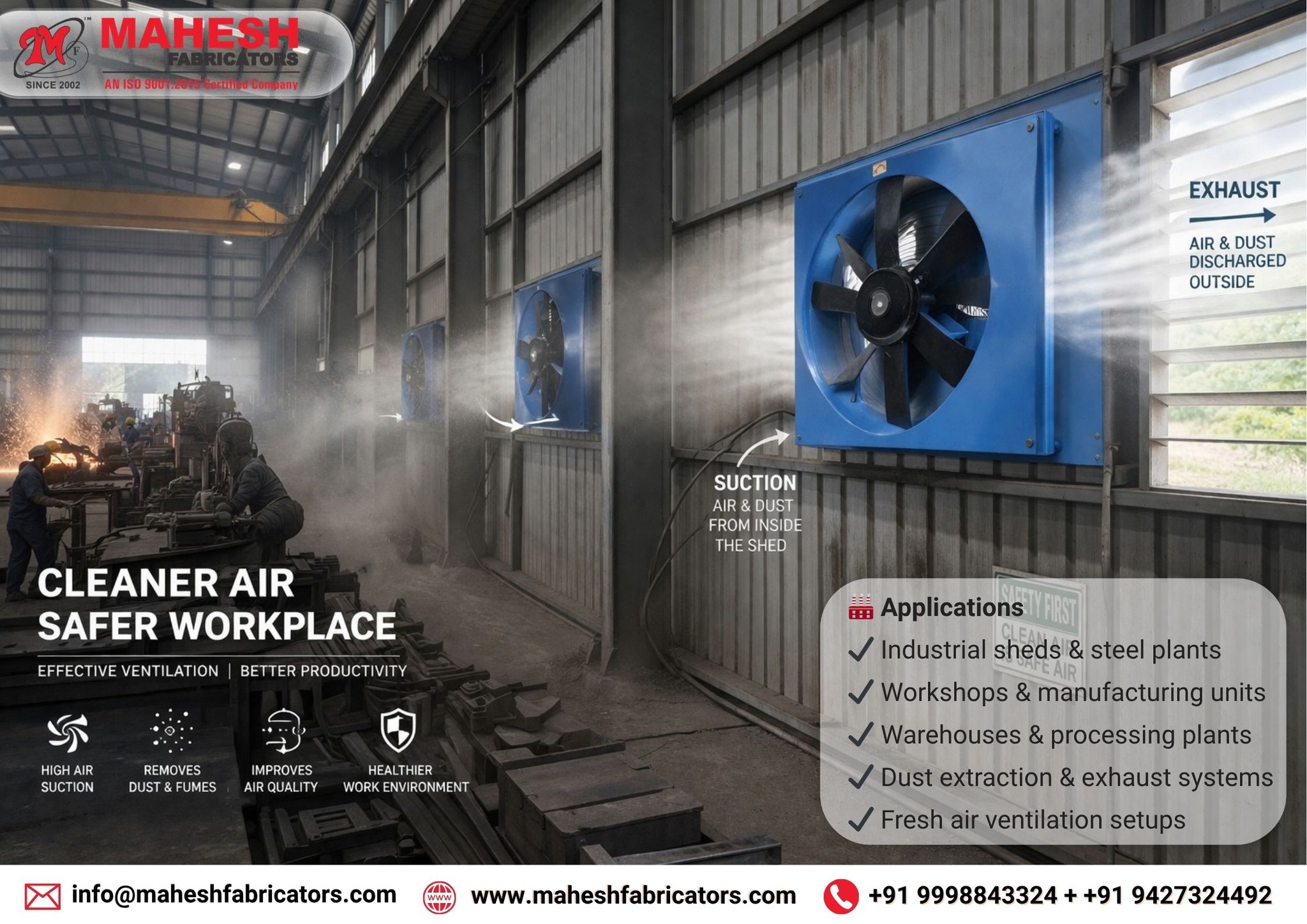
Air ventilation systems are widely used wherever continuous circulation of fresh outside air is required to improve environmental conditions. These systems support the movement of filtered air into enclosed spaces while helping manage airborne contaminants, dust particles, temperature variations, and process-generated fumes. In many facilities, controlled ventilation also contributes to worker comfort, equipment protection, and operational stability.
Industrial fresh air systems often form part of a broader air handling strategy that may include filtration units, blowers, ducting networks, and pressure balancing systems. Their function extends beyond simple air movement, supporting healthier, safer, and more productive environments.
Understanding Air Ventilation Systems in Industrial Applications
Air ventilation systems are designed to regulate the entry, movement, and circulation of air within a building or industrial plant. These systems can introduce fresh air from outside, remove stale indoor air, and support balanced airflow conditions where process efficiency or environmental control is important.
In industrial environments, ventilation systems may help reduce the concentration of suspended particles, maintain oxygen-rich indoor air, and assist in managing heat loads generated by machinery or production operations. Their role may also include controlling moisture, reducing odor accumulation, and limiting the buildup of potentially harmful airborne pollutants.
Depending on the application, a fresh air system may operate as a standalone solution or be integrated with broader HVAC or industrial air handling arrangements.
How Industrial Fresh Air Systems Support Air Quality
Air quality management is often a critical requirement in manufacturing units, processing plants, workshops, and controlled indoor spaces. Fresh air systems support this by introducing treated outside air and improving circulation patterns.
Key functional contributions may include:
- Supplying filtered outdoor air into indoor environments
- Diluting indoor pollutants and airborne contaminants
- Assisting humidity control in sensitive environments
- Supporting pressure control in enclosed process areas
- Reducing dust and pollen entry through filtration support
These functions can contribute to both environmental control and operational continuity in industries where air conditions influence productivity.
Features Commonly Considered in Industrial Fresh Air Systems
An industrial fresh air system supplier may provide systems designed around specific airflow requirements, environmental conditions, and facility layouts. Important features often considered include airflow capacity, filtration efficiency, pressure control, and construction durability.
Many systems are evaluated based on:
- Controlled fresh air intake performance
- Pollutant reduction capability
- Dust and particle filtration support
- Humidity management compatibility
- Air distribution consistency
- Integration with air handling units and blowers
Feature selection typically depends on the process environment, indoor air quality goals, and operating conditions.
Applications of Industrial Fresh Air Systems
Fresh air ventilation systems are used across a wide range of sectors where controlled airflow and air quality support are essential. Their application may vary depending on process demands, occupancy levels, or environmental sensitivity.
Common application areas include:
- Industrial manufacturing facilities
- Commercial and institutional buildings
- Air handling units in production plants
- Dust and humidity control environments
- Warehouses and enclosed processing units
- Utility rooms and equipment spaces
In each application, system design is generally influenced by airflow volume, contamination control requirements, and operating conditions.
Importance of Proper Ventilation in Industrial Environments
Poor ventilation can affect indoor conditions in ways that impact both personnel and equipment. Inadequate airflow may contribute to pollutant buildup, moisture imbalance, heat concentration, or reduced comfort levels.
Properly designed ventilation systems help maintain balanced air exchange, supporting healthier working conditions while reducing issues related to stagnant indoor environments. In many operations, ventilation planning also plays a role in meeting process control and environmental compliance requirements.
For facilities where combustion equipment or process heat sources are present, controlled pressurization and fresh air intake may also help reduce risks associated with back drafting and air imbalance.
Factors to Consider When Selecting an Industrial Fresh Air System Supplier
Selecting a suitable industrial fresh air system supplier often depends on technical understanding rather than product availability alone. System suitability is generally influenced by airflow design, application knowledge, and customization capability.
Important considerations may include:
- Understanding of industrial airflow requirements
- Ability to support customized ventilation layouts
- Integration capability with existing systems
- Material and construction suitability
- Technical support for filtration and pressure balancing
- Experience across industrial ventilation applications
The right system selection often depends on aligning ventilation performance with the actual needs of the operating environment.
Role of Fresh Air Systems in Energy and Process Efficiency
Ventilation systems are often associated only with air movement, but they can also influence process efficiency. Balanced airflow can contribute to more stable indoor conditions, potentially supporting improved equipment performance and better working conditions.
In some facilities, optimized ventilation may help reduce unnecessary heat buildup, support moisture management, and improve environmental consistency across production zones. These factors can contribute indirectly to operational efficiency.
System design, airflow balancing, and controlled fresh air introduction often determine how effectively a ventilation solution performs over time.
Frequently Asked Questions
An industrial fresh air system introduces outside air into indoor spaces in a controlled manner to support ventilation, improve air quality, reduce pollutants, and maintain balanced airflow conditions.
They are commonly used in industrial plants, commercial buildings, processing units, factories, and facilities where controlled airflow and air quality management are required.
Yes, many systems include filtration support that helps reduce dust, pollen, and other airborne contaminants entering indoor environments.
Yes, fresh air systems focus on controlled intake and circulation of outside air, while exhaust systems primarily remove indoor air or contaminants.
Humidity management can help maintain comfortable indoor conditions, reduce moisture-related issues, and support process stability in sensitive environments.
Factors such as application understanding, airflow design capability, system customization, filtration support, and technical expertise are commonly considered.
Conclusion
Industrial ventilation systems play a critical role in supporting air quality, pollutant control, humidity management, and environmental balance across many applications. An industrial fresh air system supplier provides solutions that support controlled airflow management and healthier indoor conditions while meeting industrial performance requirements.