Hot air blower for textiles
Reliable hot air blowers for textile processing in Ahmedabad. Enhance drying and heating efficiency with Mahesh Fabricators' custom solutions.
Why This Matters in Ahmedabad
Ahmedabad, with its rich history and continued prominence in the textile manufacturing landscape, presents a unique demand for specialized industrial equipment. The sheer volume of textile processing units, from large mills to smaller specialized units, creates a consistent need for reliable machinery. Factors like the humid climate in certain seasons can also impact drying times, making efficient hot air circulation even more crucial. Local textile businesses require solutions that are not only effective but also durable and supported by responsive local service, which is why understanding the specific needs of this region is paramount.
What is a Hot Air Blower — Overview
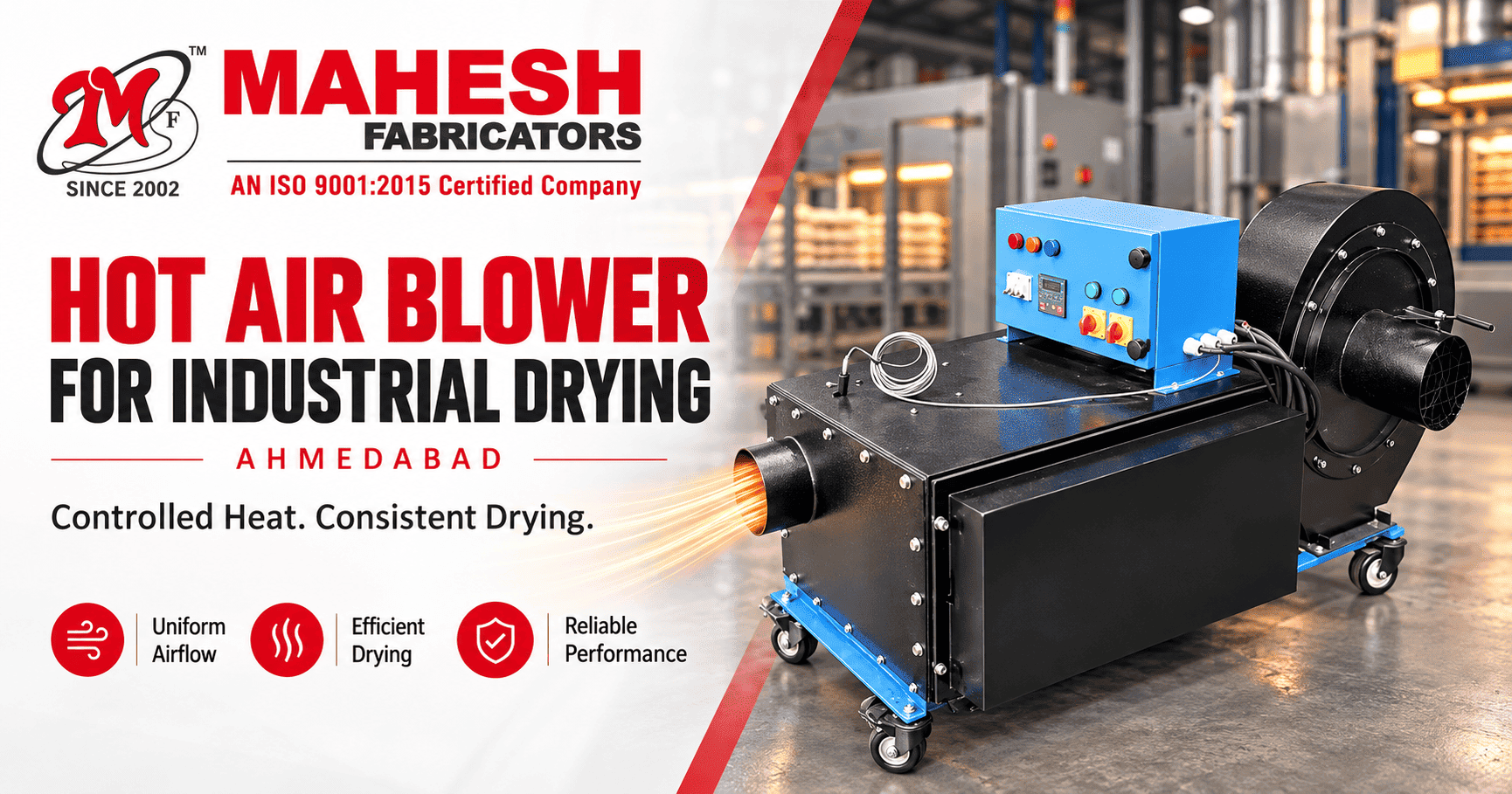
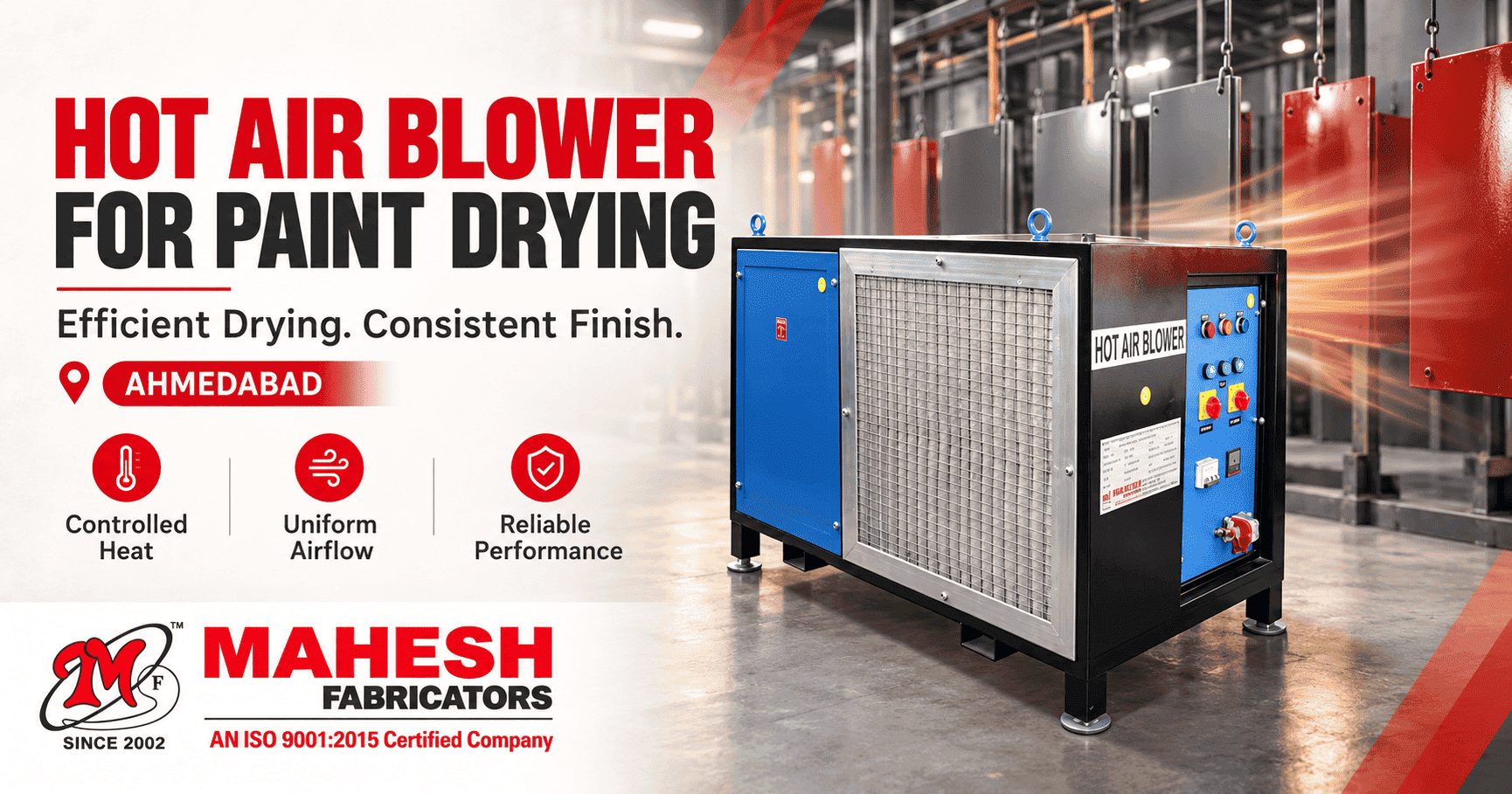
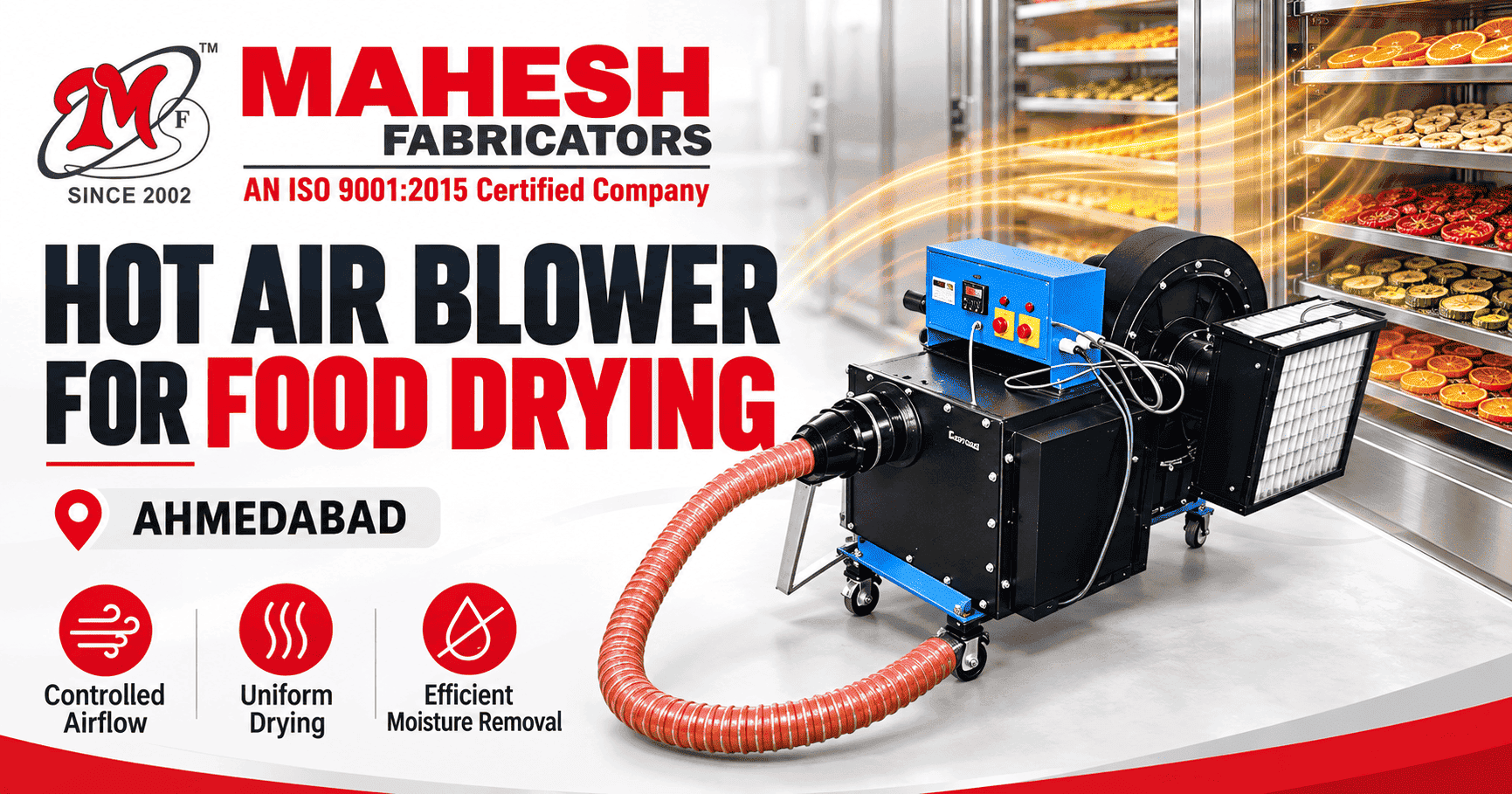
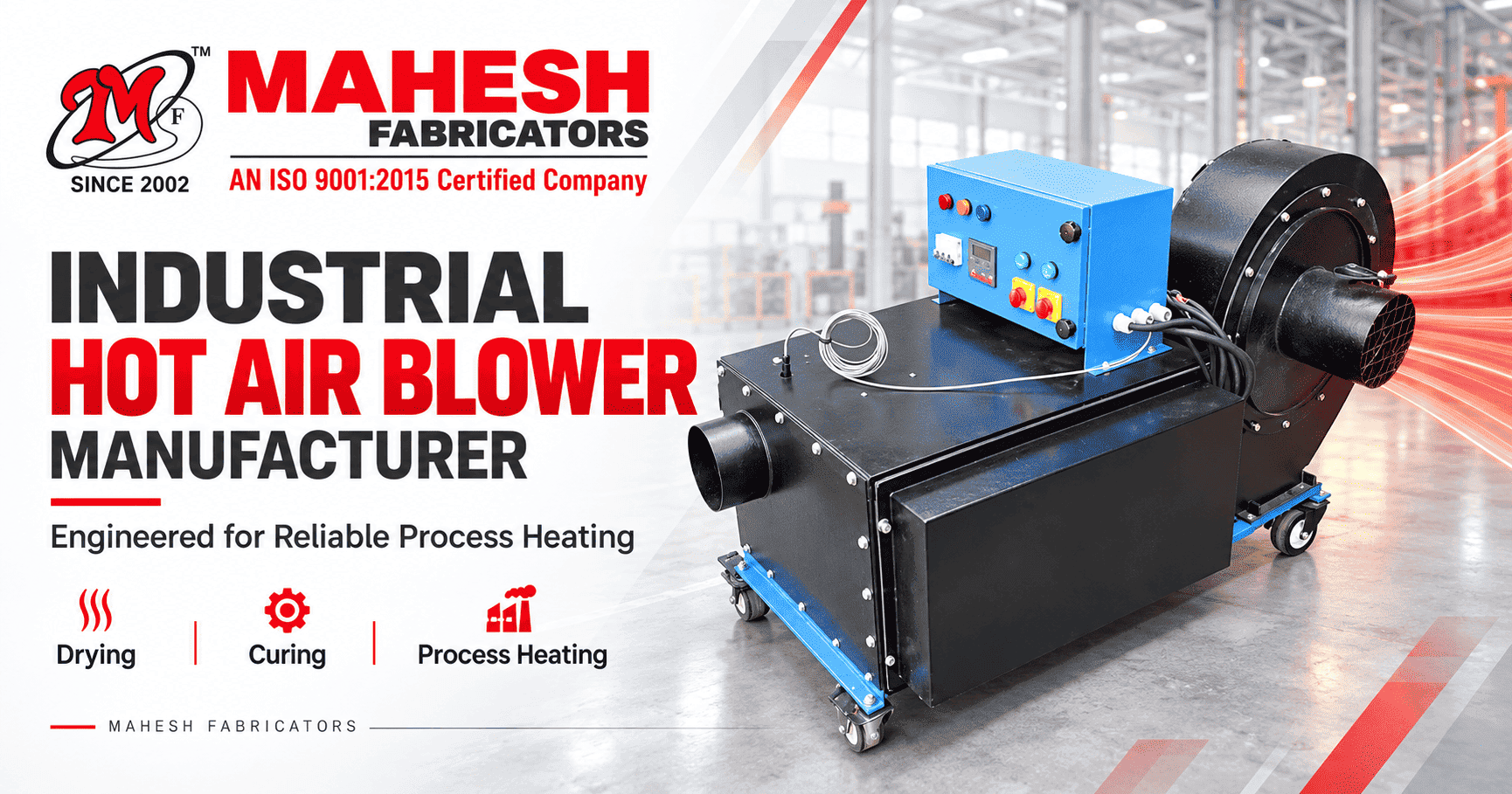
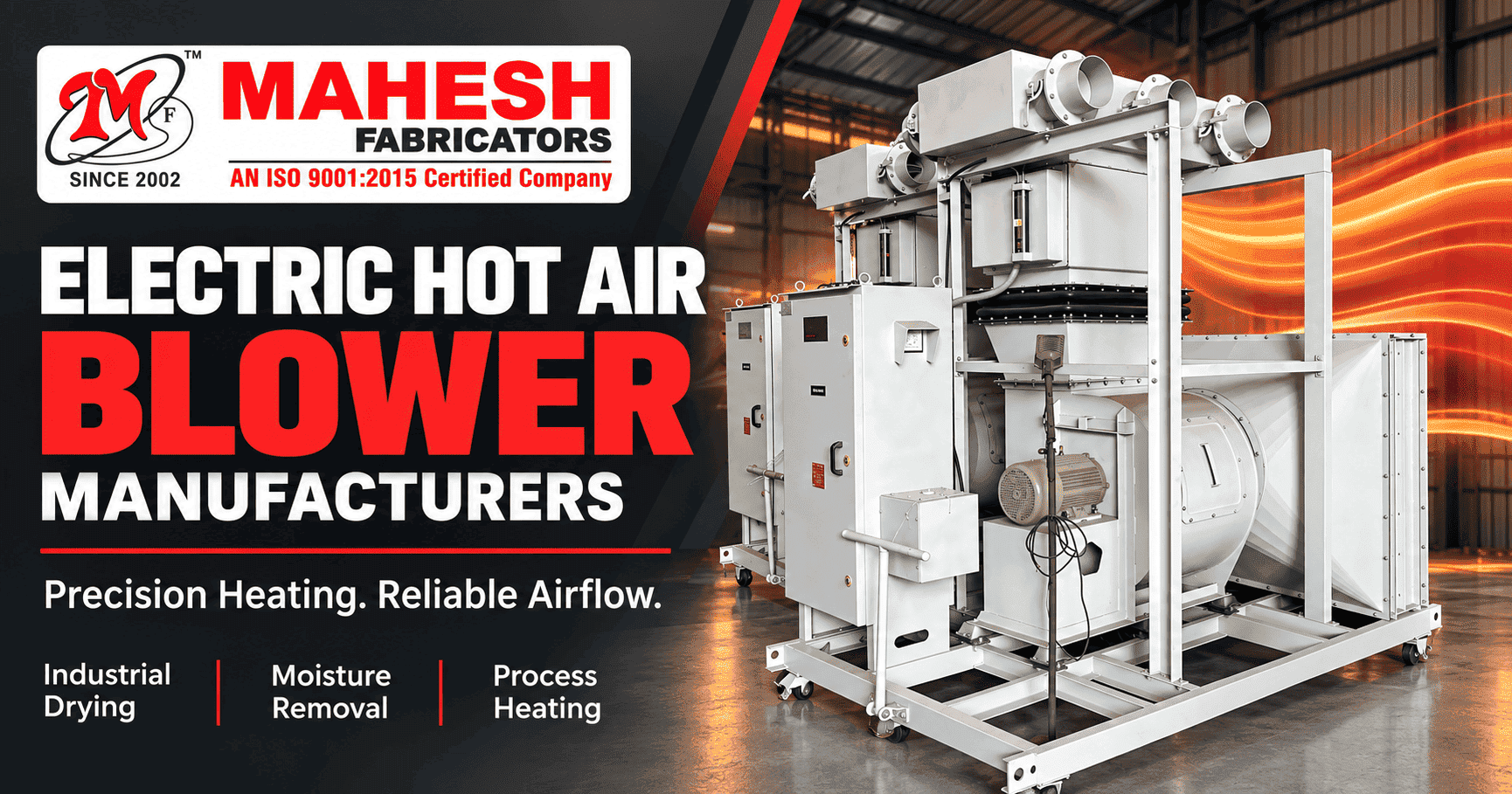
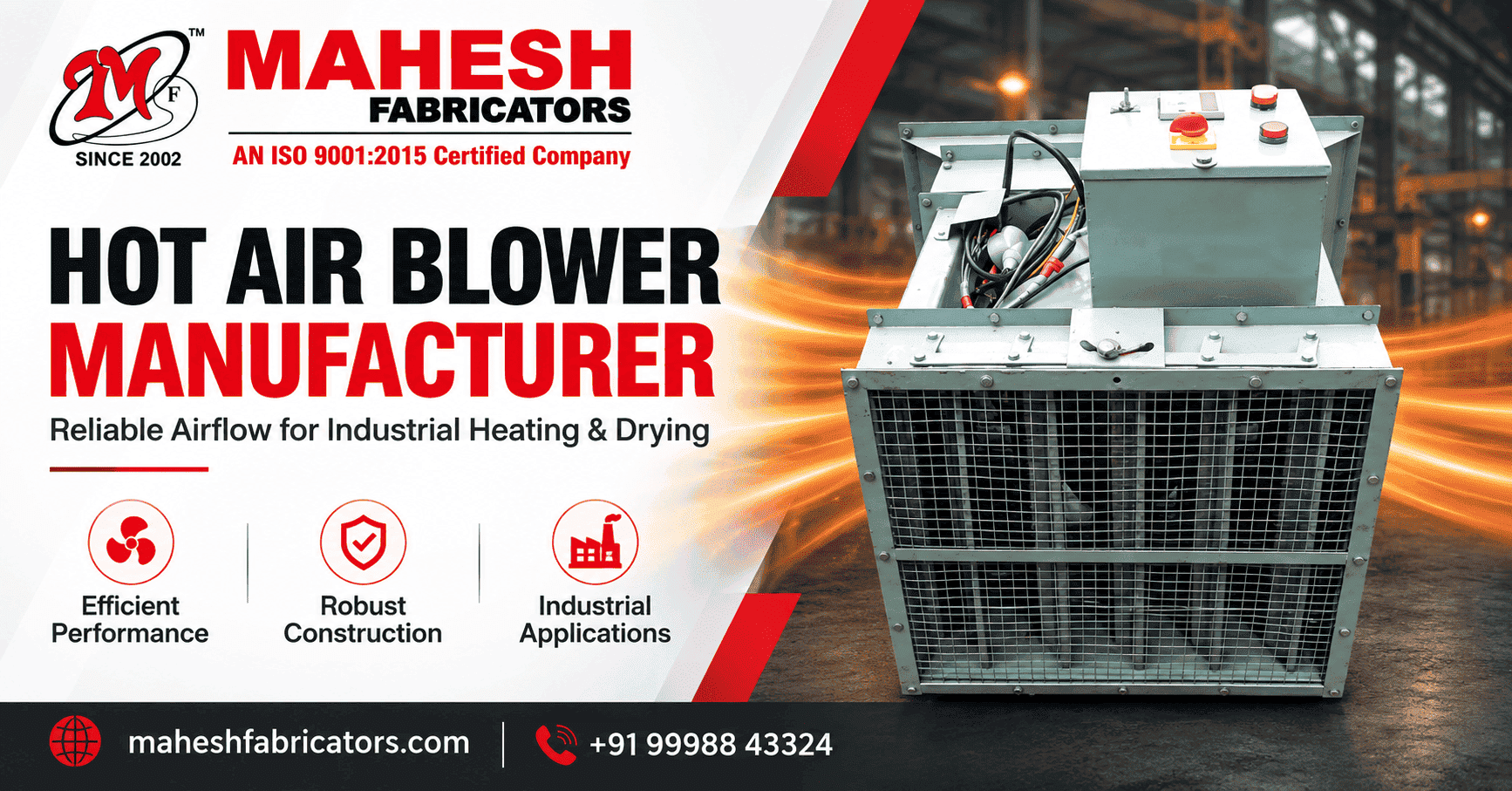
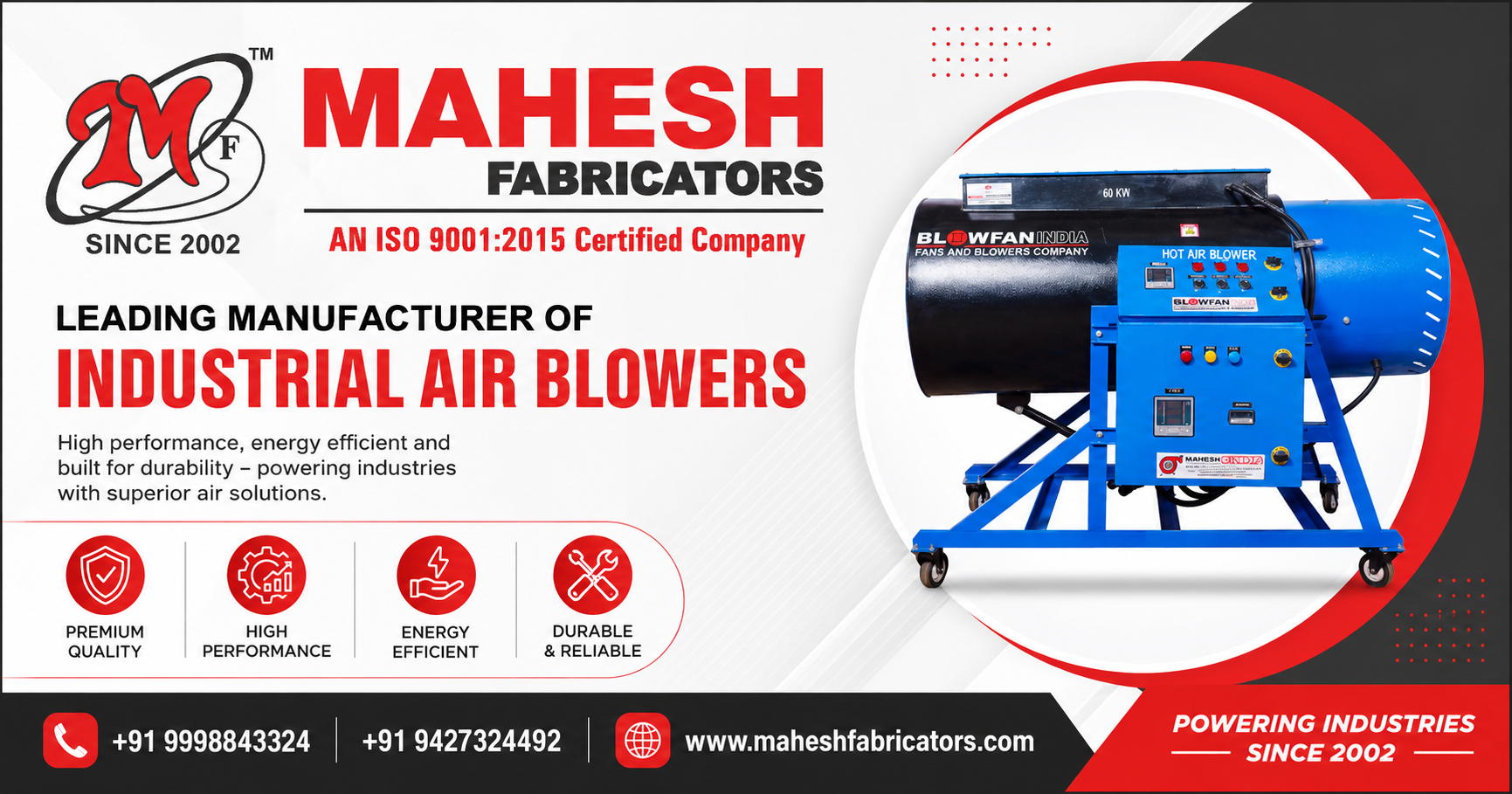
A hot air blower is an industrial device designed to generate and deliver heated air at controlled temperatures and volumes. It typically comprises a fan or blower mechanism to move air, a heating element (such as electric coils or a heat exchanger), and a casing to direct the airflow. The heated air is then channeled through ducts or nozzles to the specific application area. These blowers are engineered to provide consistent thermal energy for processes like drying, curing, pre-heating, and various other industrial heating applications where precise temperature control is essential for product quality and process efficiency.
Key Features and Technical Specifications
- Robust Construction: Built with industrial-grade materials like stainless steel or mild steel for durability in demanding environments.
- Efficient Heating Elements: Utilizes high-performance electric resistance heaters or heat exchangers for rapid and uniform temperature rise.
- Variable Airflow Control: Features adjustable fan speeds or damper systems to precisely regulate the volume of air delivered.
- Precise Temperature Regulation: Equipped with accurate thermostats or PID controllers to maintain set temperatures within tight tolerances.
- Integrated Safety Features: Includes over-temperature cut-offs, motor overload protection, and flameproof options where required.
- Customizable Ducting and Nozzles: Designed to accommodate specific application needs for airflow direction and distribution.
- High-Efficiency Motor: Paired with energy-efficient motors to minimize power consumption during operation.
- Compact and Modular Design: Allows for easier installation and integration into existing production lines.
Industrial Applications and Use Cases
- Textile Drying: Uniformly drying dyed fabrics, yarns, and finished garments after washing or dyeing processes.
- Pre-heating: Warming materials like synthetic fibers or fabrics before further processing, such as calendering or lamination.
- Curing: Accelerating the curing of coatings, adhesives, or finishes applied to textiles.
- Shrink Wrapping: Applying heat to shrink films around textile products for packaging.
- Moisture Removal: Reducing residual moisture content in textiles to meet quality specifications.
- Setting Treatments: Applying heat to set specific finishes or treatments on fabrics.
- Industrial Ovens: Serving as the heating unit for batch or continuous industrial ovens used in textile manufacturing.
- Process Air Heating: Supplying heated air for various specialized textile processing steps requiring controlled thermal input.
How to Choose the Right Hot Air Blower
Selecting the appropriate hot air blower is crucial for optimal performance and longevity. Consider the following factors:
- Required Airflow Rate (CFM/CMH): Determine the volume of air needed to effectively heat or dry your specific textile application.
- Temperature Range: Identify the minimum and maximum operating temperatures your process demands.
- Heating Capacity (kW/kcal/hr): Calculate the thermal energy required to achieve the desired temperature rise at the specified airflow rate.
- Power Source Availability: Ensure compatibility with your facility's electrical supply (voltage, phase, frequency).
- Material Compatibility: Consider if the materials being processed require specific airflow patterns or temperature profiles.
- Space Constraints: Evaluate the available installation space and the physical dimensions of the blower unit.
- Environmental Conditions: Assess factors like ambient temperature, humidity, and potential for dust or corrosive elements in the operating environment.
- Supplier Reputation and Support: Look for manufacturers with a proven track record, quality certifications, and reliable after-sales service.
Quality Standards and Compliance
For industrial applications, especially in a critical sector like textiles, adherence to quality standards and compliance is non-negotiable. Manufacturers should ideally operate under an ISO 9001:2015 certified quality management system, ensuring consistent product quality and process control. Components used, particularly electrical heating elements and motors, should meet relevant national or international standards such as those set by the Bureau of Indian Standards (BIS) or IEC. Buyers should verify that the equipment is designed and manufactured to withstand the rigors of continuous industrial operation, with safety features that comply with industrial safety regulations.
Why Mahesh Fabricators' Experience and Capability Matters
Established in 2002, Mahesh Fabricators brings over two decades of dedicated experience in manufacturing industrial air pollution control equipment, including specialized hot air blowers. Our manufacturing process is guided by an ISO 9001-2015 certified quality management system, ensuring that every unit leaving our facility meets stringent quality benchmarks. We possess the technical capability to design and fabricate blowers tailored to the specific airflow, temperature, and application requirements of the textile industry in Ahmedabad and beyond. Our experienced team focuses on robust construction, efficient performance, and reliable operation, ensuring that our clients receive equipment built for longevity and consistent output.
Installation, Maintenance, and Care Tips
Proper installation and regular maintenance are key to maximizing the lifespan and efficiency of your hot air blower. Ensure the unit is installed on a stable, level surface, with adequate ventilation around it. Connect electrical components according to the manufacturer's specifications and local electrical codes.
Regular maintenance should include:
- Fan Inspection: Periodically check fan blades for damage or excessive dust buildup. Clean as necessary.
- Motor Lubrication: Follow the motor manufacturer's recommendations for lubrication intervals.
- Heating Element Check: Inspect heating elements for signs of wear or damage.
- Filter Cleaning/Replacement: If your blower has air intake filters, ensure they are cleaned or replaced regularly to maintain airflow and prevent dust ingress.
- Ductwork Inspection: Check ducting for leaks or obstructions.
- Control Panel Check: Verify that temperature controllers and safety cut-offs are functioning correctly.
Always disconnect power before performing any maintenance or inspection.
Frequently Asked Questions
A hot air blower in textile processing is primarily used to supply controlled streams of heated air for applications such as drying dyed fabrics, yarns, and finished garments, as well as pre-heating materials for subsequent processes like calendering or lamination. It ensures efficient and uniform thermal treatment critical for product quality.
Unlike a standard industrial fan that simply moves ambient air, a hot air blower incorporates a heating mechanism, such as electric coils or a heat exchanger, to raise the air temperature to specific set points before delivering it. This controlled heating capability is its defining feature for industrial thermal processes.
Key factors include the required airflow rate (volume of air), the precise temperature range needed for the specific textile process, the heating capacity to achieve that temperature, available power supply, and any specific material handling or safety considerations unique to the application.
Yes, hot air blowers can be highly customized. Manufacturers can adjust dimensions, airflow direction, nozzle designs, heating element configurations, and control systems to seamlessly integrate with existing textile machinery and meet unique process demands.
With proper installation, regular maintenance, and operation within specified parameters, an industrial hot air blower can typically last between 10 to 15 years. The lifespan is significantly influenced by the quality of components, the intensity of use, and the adherence to maintenance schedules.
Safety considerations include ensuring proper electrical grounding, using over-temperature protection devices, maintaining adequate clearance around the unit to prevent fire hazards, and ensuring operators are trained on safe start-up, operation, and shutdown procedures. Flameproof options are available for hazardous environments.
Conclusion
For textile manufacturers in Ahmedabad seeking to optimize their drying, heating, and curing processes, a high-quality hot air blower is an indispensable piece of equipment. The ability to deliver precise, consistent thermal energy directly impacts product quality, production efficiency, and operational costs. When selecting a supplier, prioritize experience, adherence to quality standards like ISO 9001-2015, and the capability to provide tailored solutions. Mahesh Fabricators offers this combination of expertise and commitment, ensuring that your textile operations benefit from reliable and effective hot air blower technology designed for the demanding industrial environment.
Get In Touch
Mahesh Fabricators