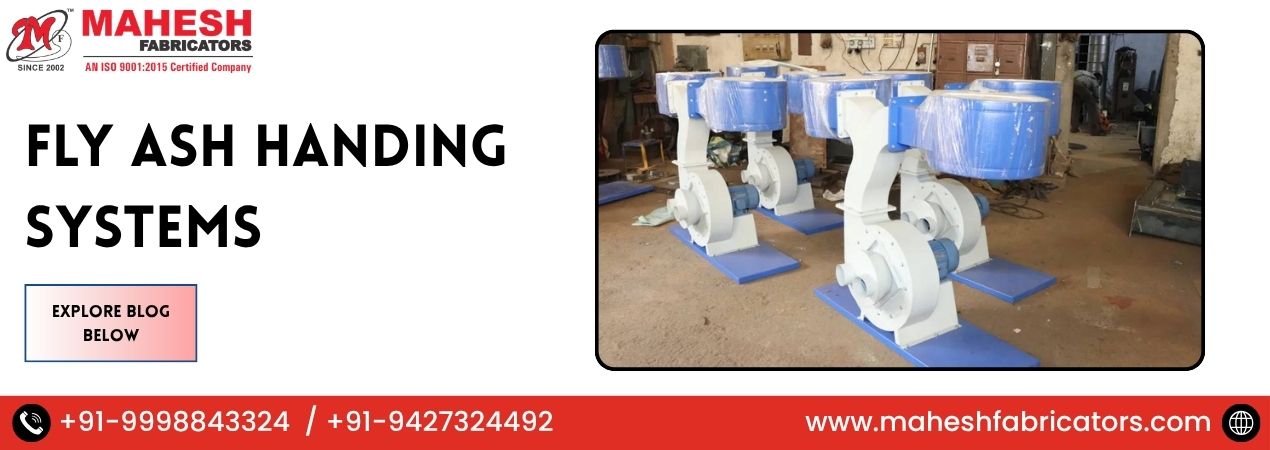
Fly Ash Handling Systems
Fly Ash Handling Systems play a critical role in modern industrial operations, especially in thermal power plants and heavy manufacturing units where coal combustion generates large volumes of ash. These systems are designed to manage, transport, cool, and store ash efficiently, ensuring smooth plant operations while supporting environmental compliance.
In industrial environments, uncontrolled ash can lead to operational inefficiencies, equipment damage, and environmental concerns. A well-designed system ensures that ash is collected directly from the source, cooled to a manageable temperature, and transferred safely to storage or disposal units. This process not only improves plant productivity but also supports the reuse of ash in industries such as construction and cement manufacturing.
Understanding the Role of Fly Ash Handling Systems
Fly Ash Handling Systems are engineered to manage both fly ash and bottom ash generated during coal combustion. Fly ash is the fine particulate matter carried by flue gases, while bottom ash is the heavier residue collected at the base of boilers.
The system integrates multiple components such as conveyors, pipelines, storage silos, and dust control mechanisms to ensure smooth ash movement. It is specifically designed to handle high temperatures and abrasive materials, making it suitable for demanding industrial environments.
These systems are not limited to power plants alone. They are widely used in industries where combustion processes generate ash as a by-product. By ensuring proper ash handling, industries can maintain operational efficiency while meeting regulatory and environmental standards.
Types of Fly Ash Handling Systems
Different industries require different types of ash handling systems based on operational requirements and the nature of the ash generated. The most commonly used systems include pneumatic and mechanical conveying systems.
Pneumatic systems use air pressure to transport ash through pipelines, making them ideal for long-distance, enclosed, and dust-free transfer. Mechanical systems, on the other hand, rely on conveyors such as belt conveyors or screw conveyors, making them suitable for shorter distances and bulk material handling.
In some industrial facilities, hybrid systems are also used. These combine the advantages of both pneumatic and mechanical methods to achieve better efficiency and flexibility. The right system depends on factors such as plant layout, ash volume, conveying distance, and environmental considerations.
Key Components of Fly Ash Handling Systems
A Fly Ash Handling System consists of several interconnected components that work together to ensure efficient and continuous operation. Each component plays a vital role in maintaining system reliability and performance.
- Ash hoppers for initial collection
- Pneumatic conveying lines or mechanical conveyors
- Ash conditioning units for moisture control
- Storage silos for bulk storage
- Dust collectors and filters for pollution control
- Control panels for monitoring and automation
These components are designed to withstand high temperatures and abrasive materials, ensuring long-term durability, consistent performance, and reduced maintenance needs.
Applications of Fly Ash Handling Systems
Fly Ash Handling Systems are widely used across various industries where ash is generated as a by-product. Their versatility makes them an important part of industrial material handling and waste management infrastructure.
- Thermal power plants for ash collection and disposal
- Cement industries for using fly ash as a raw material
- Construction sector for producing bricks and concrete
- Steel and metal industries for waste management
- Chemical plants for handling combustion residues
The ability to collect and reuse fly ash in multiple applications adds economic value while also reducing environmental impact.
Benefits of Using Fly Ash Handling Systems
Implementing a Fly Ash Handling System offers several advantages that improve overall plant performance, safety, and sustainability. These systems are designed to solve operational challenges while supporting environmental compliance.
- Efficient ash collection and transportation
- Reduced manual handling and improved workplace safety
- Minimized dust emissions and better pollution control
- Enhanced operational efficiency and productivity
- Possibility of reusing ash in other industries
- Lower maintenance costs through automated processes
These benefits make Fly Ash Handling Systems an essential part of modern industrial operations where efficiency, safety, and environmental responsibility are key priorities.
Importance in Industrial Efficiency and Environmental Control
In industrial operations, efficient by-product management is essential for maintaining productivity and sustainability. Fly Ash Handling Systems play a significant role by ensuring that ash is handled safely and systematically without interrupting core plant processes.
Proper ash handling helps reduce equipment wear and tear caused by abrasive particles. It also prevents blockages, spillages, and unplanned downtime that can negatively affect production efficiency. From an environmental standpoint, these systems help control dust emissions and support compliance with pollution control regulations.
By enabling the safe storage, transfer, and reuse of ash, industries can reduce waste and contribute to more sustainable operating practices. This supports broader industrial goals of minimizing environmental impact while improving resource utilization.
Future Trends in Fly Ash Handling Systems
With growing emphasis on sustainability, efficiency, and automation, Fly Ash Handling Systems are evolving to meet modern industrial requirements. Advanced technologies such as automated controls, remote monitoring, and energy-efficient system designs are increasingly being integrated into ash handling operations.
Industries are also focusing more on maximizing the reuse of fly ash, transforming it from a waste material into a valuable industrial resource. This shift is encouraging innovation in system design, handling efficiency, and material recovery.
The future of Fly Ash Handling Systems lies in smarter, more automated solutions that improve productivity while reducing environmental impact and operating costs.
Frequently Asked Questions
Conclusion
Fly Ash Handling Systems are essential for efficient, safe, and sustainable industrial operations. By ensuring the proper collection, transportation, cooling, and storage of ash, these systems help industries maintain productivity while meeting environmental and operational standards.
Their ability to support the reuse of ash as a valuable industrial resource further increases their importance in modern manufacturing and power generation facilities. With ongoing technological advancements and a growing focus on sustainability, Fly Ash Handling Systems continue to evolve, offering improved efficiency, reliability, and environmental performance across a wide range of industries.