Energy-efficient Cooling Systems for Industries
Energy-efficient cooling systems for industries play an important role in maintaining safe, stable, and productive working conditions across manufacturing plants, processing units, workshops, warehouses, and heavy-duty industrial environments. In many industries, heat is generated continuously by machinery, production processes, electrical systems, compressors, furnaces, motors, and material handling operations. If this heat is not managed properly, it can affect worker comfort, machine performance, product quality, and overall operational efficiency.
Industrial cooling is not only about reducing temperature. It is about managing airflow, heat load, ventilation, humidity, and process stability in a practical and energy-conscious way. Modern industries need cooling systems that can perform consistently without excessive power consumption. This is why energy-efficient cooling systems have become an important requirement for factories and production facilities that want long-term reliability with controlled operating costs.
Understanding Industrial Cooling Requirements
Industrial spaces are different from commercial or residential spaces. A factory may have multiple heat sources, continuous machine operations, high roof structures, dust generation, fumes, moisture, and changing air movement patterns. Because of this, a standard cooling approach may not be suitable for industrial use. Energy-efficient cooling systems for industries should be selected according to the actual process, equipment layout, operating hours, heat load, and airflow requirement.
In many production units, heat buildup affects both people and machines. Workers may experience discomfort in high-temperature zones, while machines may face reduced efficiency due to overheating. Electrical panels, motors, compressors, and process equipment also need stable ambient conditions for better performance. When cooling is planned properly, it helps create a safer and more controlled working environment.
A good industrial cooling system should not waste energy by cooling unnecessary areas. Instead, it should support targeted airflow, proper ventilation, heat removal, and continuous air circulation. This helps industries achieve practical cooling performance while reducing unnecessary load on power systems.
Why Energy Efficiency Matters in Industrial Cooling
Energy efficiency is a major factor in industrial cooling because cooling equipment often operates for long hours. In many factories, ventilation fans, blowers, cooling units, and air handling systems run throughout production shifts. If the system is poorly designed or oversized, it can consume more energy without delivering the required cooling results. If it is undersized, it may run continuously under pressure and still fail to control heat effectively.
Energy-efficient cooling systems for industries are designed to balance performance and power usage. They help industries manage temperature and airflow without unnecessary energy loss. This supports smoother production, better equipment life, and improved workplace comfort.
Energy efficiency also supports sustainability. Industries are increasingly focusing on responsible energy use, lower waste, and improved operational planning. A well-designed cooling system contributes to these goals by reducing avoidable power consumption and improving the overall efficiency of the plant environment.
Role of Airflow in Industrial Cooling Systems
Airflow is one of the most important elements in industrial cooling. In large industrial spaces, heat does not remain in one place. It moves with air, collects near roofs, stays around machines, or spreads across working zones depending on ventilation and plant design. Proper air movement helps remove hot air, bring in fresh air, and maintain circulation across the facility.
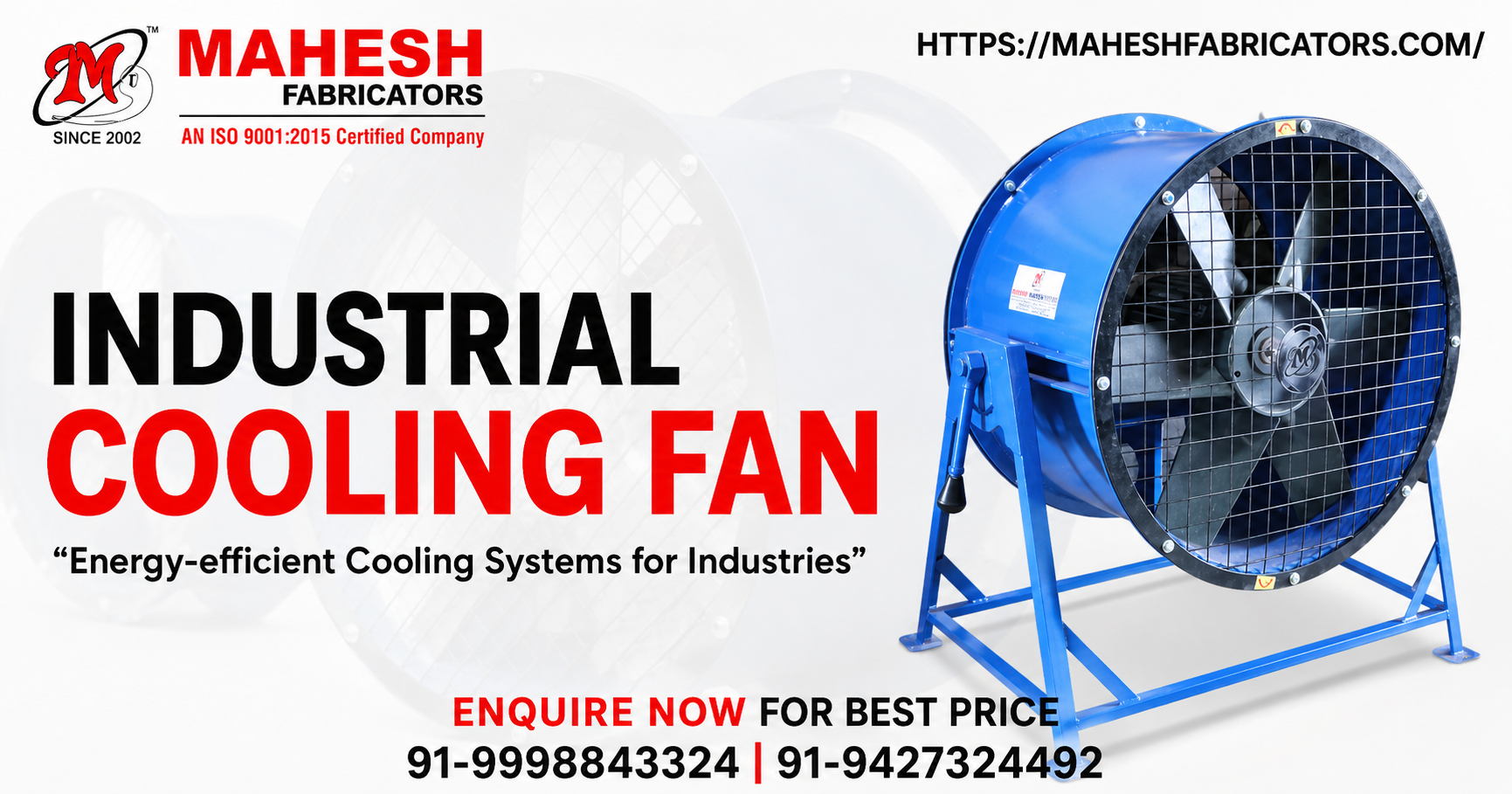
Industrial fans and blowers play a key role in this process. Centrifugal blowers, industrial fans, exhaust systems, and ventilation equipment help move air in a controlled direction. When airflow is planned correctly, the cooling system becomes more effective and energy-efficient.
Poor airflow can create hot spots, uneven cooling, and uncomfortable working areas. It can also increase the load on cooling equipment. By improving air movement, industries can often improve cooling performance without depending only on high-energy cooling machines.
Common Applications of Energy-efficient Cooling Systems
Energy-efficient cooling systems are used in many industrial environments where heat control and ventilation are essential. Their application depends on the process, working conditions, and cooling requirement.
Common industrial applications include:
- Manufacturing plants requiring continuous air circulation
- Workshops with heat-generating machines and tools
- Warehouses needing temperature and ventilation control
- Chemical and pharmaceutical processing areas
- Food processing and packaging units
- Foundries, fabrication units, and metalworking facilities
- Textile, plastic, and rubber processing industries
- Electrical panel rooms and compressor rooms
- Dust collection and air pollution control systems
- Production lines requiring stable working conditions
Each application requires a proper understanding of air volume, static pressure, temperature conditions, dust level, and equipment placement. This is why system selection should be based on technical requirements rather than a one-size-fits-all approach.
Benefits of Energy-efficient Cooling Systems for Industries
A properly designed cooling system can support both operational performance and workplace safety. It helps industries control heat while improving the overall working environment.
Key benefits include:
- Better temperature control in industrial spaces
- Reduced energy waste through optimized airflow
- Improved machine performance and reliability
- Better worker comfort during long operating hours
- Controlled ventilation in heat-generating areas
- Reduced risk of overheating in sensitive equipment
- Support for cleaner and safer working conditions
- Improved process stability in production areas
- Longer operational life of ventilation and cooling equipment
- Better alignment with energy-conscious industrial practices
These benefits make energy-efficient cooling systems an important part of industrial planning, especially for facilities that run machinery for extended hours.
Important Factors Before Selecting an Industrial Cooling System
Choosing the right cooling system requires proper evaluation. A system that works well in one factory may not be suitable for another because every industrial environment has different heat loads, layouts, and process needs.
Important selection factors include:
- Total area and height of the industrial space
- Type of machinery and heat generation level
- Required air volume and airflow direction
- Dust, fumes, or moisture present in the environment
- Operating hours and production shift pattern
- Ventilation openings and exhaust requirements
- Equipment placement and worker movement areas
- Power availability and energy consumption goals
- Maintenance accessibility
- Long-term reliability requirements
A technical evaluation helps avoid common issues such as poor cooling, excess energy use, uneven airflow, and frequent maintenance problems. It also helps industries select equipment that matches actual working conditions.
How Industrial Blowers and Fans Support Cooling Efficiency
Industrial blowers and fans are important components in many cooling and ventilation systems. They help move air through ducts, production areas, exhaust points, filtration systems, and process zones. In industrial cooling, airflow must often overcome resistance from ducting, filters, bends, dampers, or equipment layouts. This is where properly designed blowers become important.
Centrifugal blowers are widely used where controlled airflow and pressure are required. Industrial fans are used for general ventilation, exhaust, and air circulation. Depending on the application, these systems can help remove hot air, supply fresh air, support dust collection, and improve air exchange inside the facility.
Energy Saving Through Proper System Design
Energy saving in industrial cooling does not depend only on the equipment. It also depends on system design. Even a high-quality fan or blower may perform poorly if the ducting, layout, airflow path, or capacity selection is incorrect. Proper design helps reduce pressure loss, avoid unnecessary bends, improve air delivery, and reduce power load.
Correct sizing is also important. Oversized systems may consume more energy, while undersized systems may run continuously without meeting cooling needs. A balanced design ensures that the system performs efficiently under real operating conditions.
Industries can also improve efficiency through regular maintenance. Dust buildup, blocked filters, worn belts, loose fittings, and damaged ducts can reduce airflow and increase energy consumption. Preventive maintenance keeps the cooling system stable and helps avoid performance loss.
Maintenance for Reliable Industrial Cooling Performance
Regular maintenance is essential for energy-efficient cooling systems. Industrial environments often contain dust, heat, vibration, moisture, and continuous operating loads. Over time, these conditions can affect fans, motors, filters, bearings, ducts, and airflow components.
Maintenance should include checking airflow performance, cleaning dust deposits, inspecting moving parts, checking motor condition, tightening fittings, and ensuring that air passages are not blocked. Any unusual noise, vibration, or drop in cooling performance should be inspected early to avoid bigger issues.
A well-maintained cooling system performs more consistently and uses energy more effectively. It also reduces downtime and extends equipment life. For industries where continuous production is important, maintenance planning is as important as equipment selection.
Energy-efficient Cooling and Workplace Safety
Heat control has a direct impact on workplace safety. High temperatures can create uncomfortable and unsafe working conditions, especially in factories where workers are exposed to machinery, hot surfaces, and long production shifts. Proper cooling and ventilation help reduce heat stress and support better working comfort.
Cooling systems also help protect equipment and materials. Overheating can affect electrical components, control panels, motors, bearings, and production machinery. In some industries, temperature control also supports product consistency and process quality. By investing in energy-efficient cooling systems for industries, businesses can create a better working environment while supporting operational safety and equipment reliability.
Why Technical Expertise Matters
Industrial cooling requires practical engineering knowledge. The right solution depends on airflow calculations, pressure requirements, heat load, process type, ducting design, ventilation paths, and equipment durability. Without technical understanding, industries may face issues such as uneven cooling, energy waste, poor air circulation, and frequent equipment breakdowns.
Working with an experienced provider of industrial air handling systems helps in selecting suitable solutions based on real industrial needs. Technical expertise supports industries looking for dependable airflow and cooling-related solutions for long-term use.
Future Importance of Energy-efficient Cooling Systems
Industrial operations are becoming more energy-conscious. As production demands increase, factories need systems that can support continuous work without unnecessary energy loss. Energy-efficient cooling systems will continue to be important for manufacturing units, processing plants, warehouses, and heavy-duty industrial facilities.
Future industrial cooling will focus more on optimized airflow, better system design, lower energy consumption, easier maintenance, and reliable performance. Industries that plan cooling systems carefully can improve working conditions, reduce operational strain, and support more sustainable manufacturing practices.
Frequently Asked Questions
Conclusion
Energy-efficient cooling systems for industries are essential for maintaining reliable production, safe working conditions, and controlled energy use. Industrial cooling is not just about lowering temperature; it is about designing proper airflow, removing heat effectively, supporting equipment performance, and improving workplace comfort.
For industries that operate under demanding conditions, the right cooling and ventilation approach can make a clear difference in day-to-day operations. With proper system design, suitable fans and blowers, regular maintenance, and technical evaluation, industries can achieve dependable cooling performance while reducing unnecessary energy waste.
For businesses seeking practical and reliable cooling-related air handling solutions, technical expertise and correct system selection remain the foundation of long-term performance.