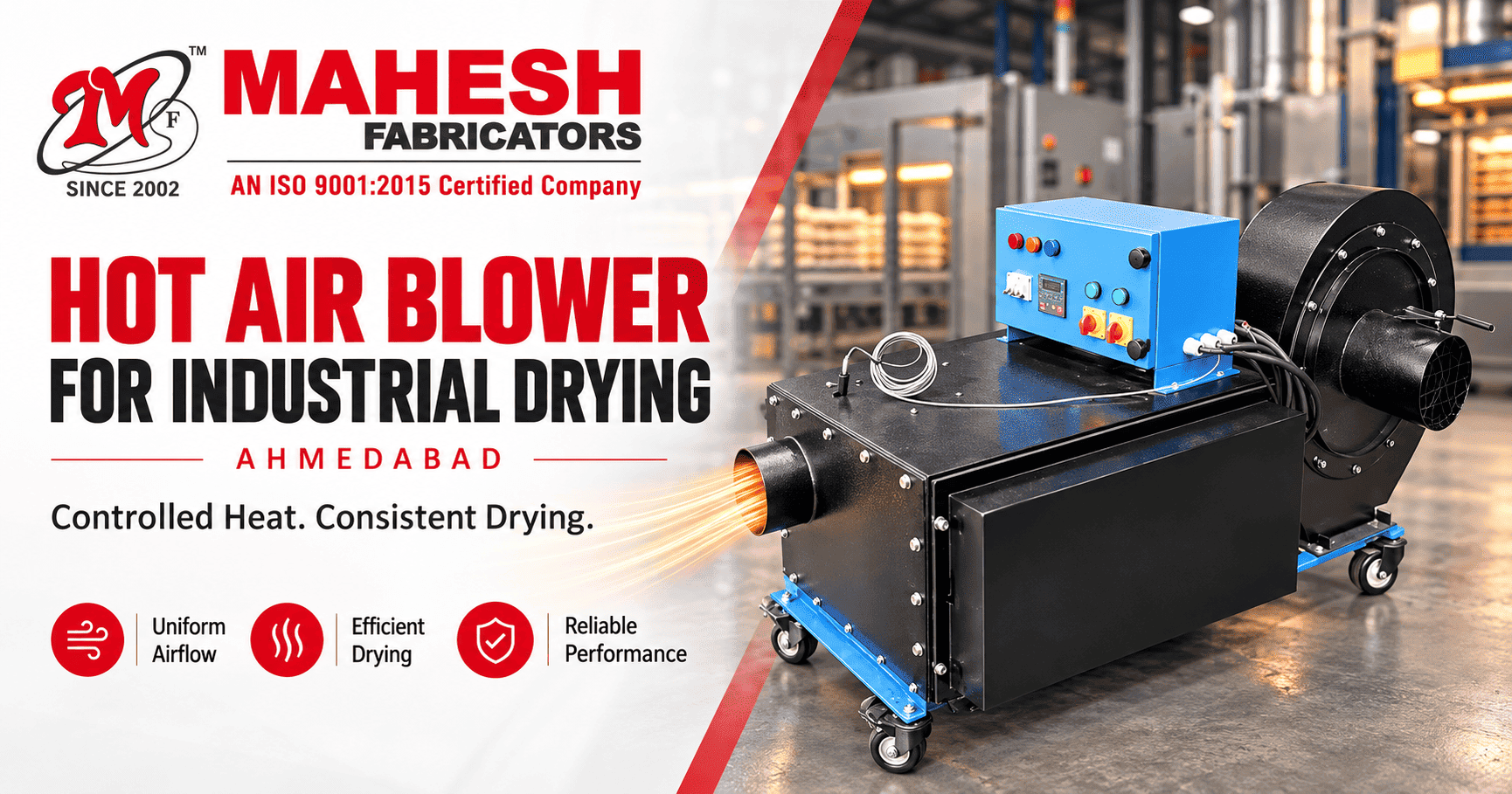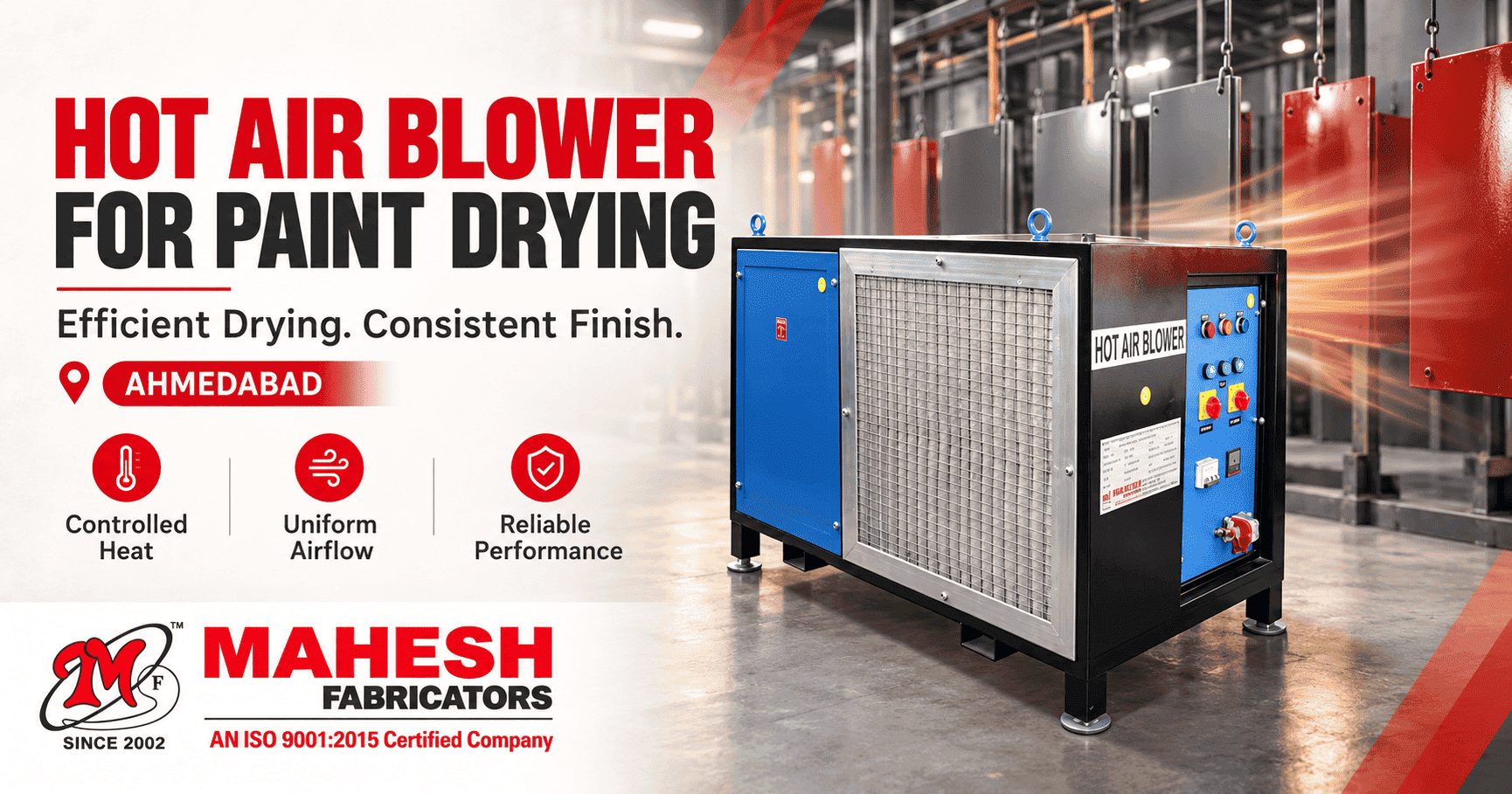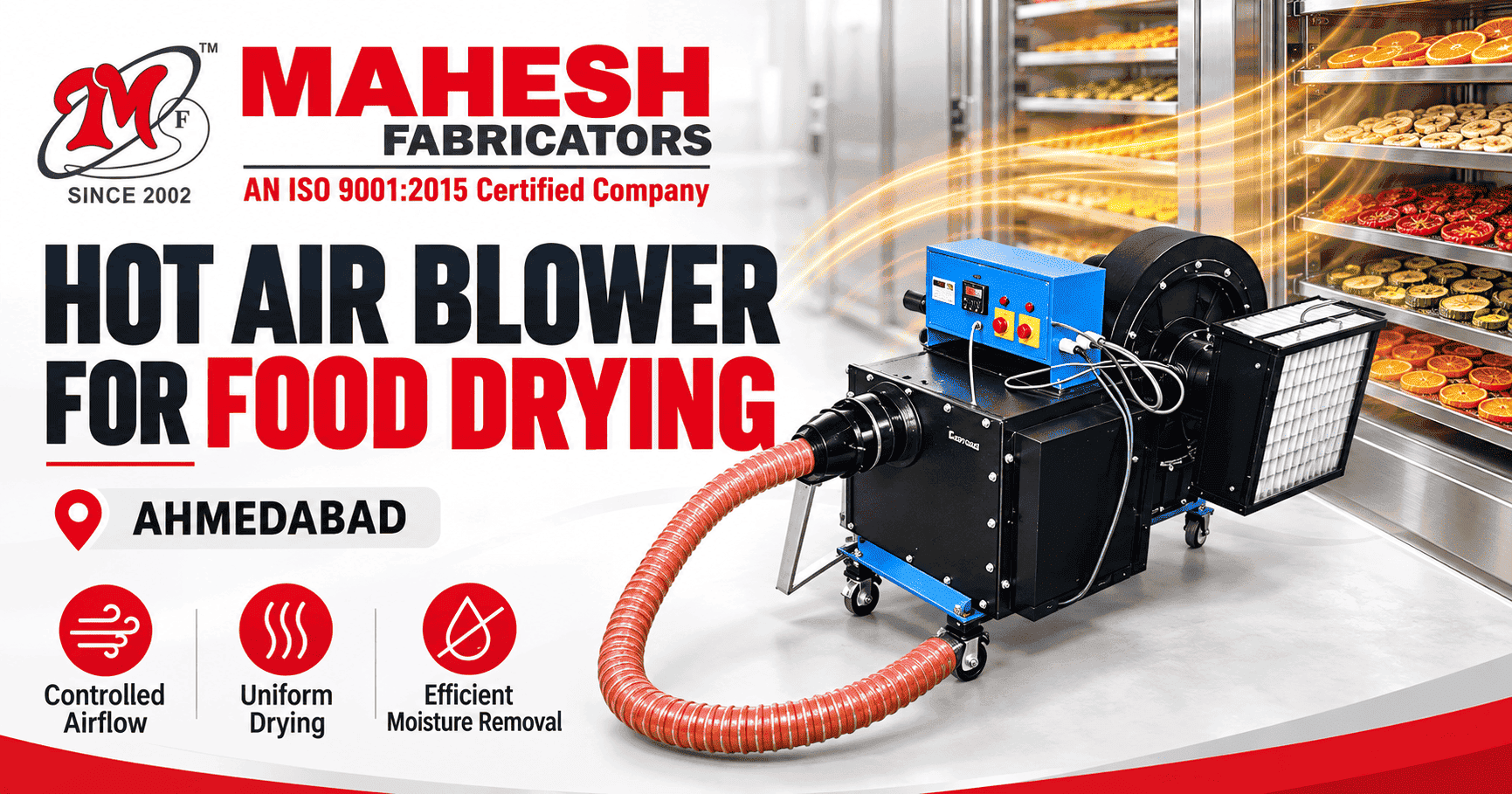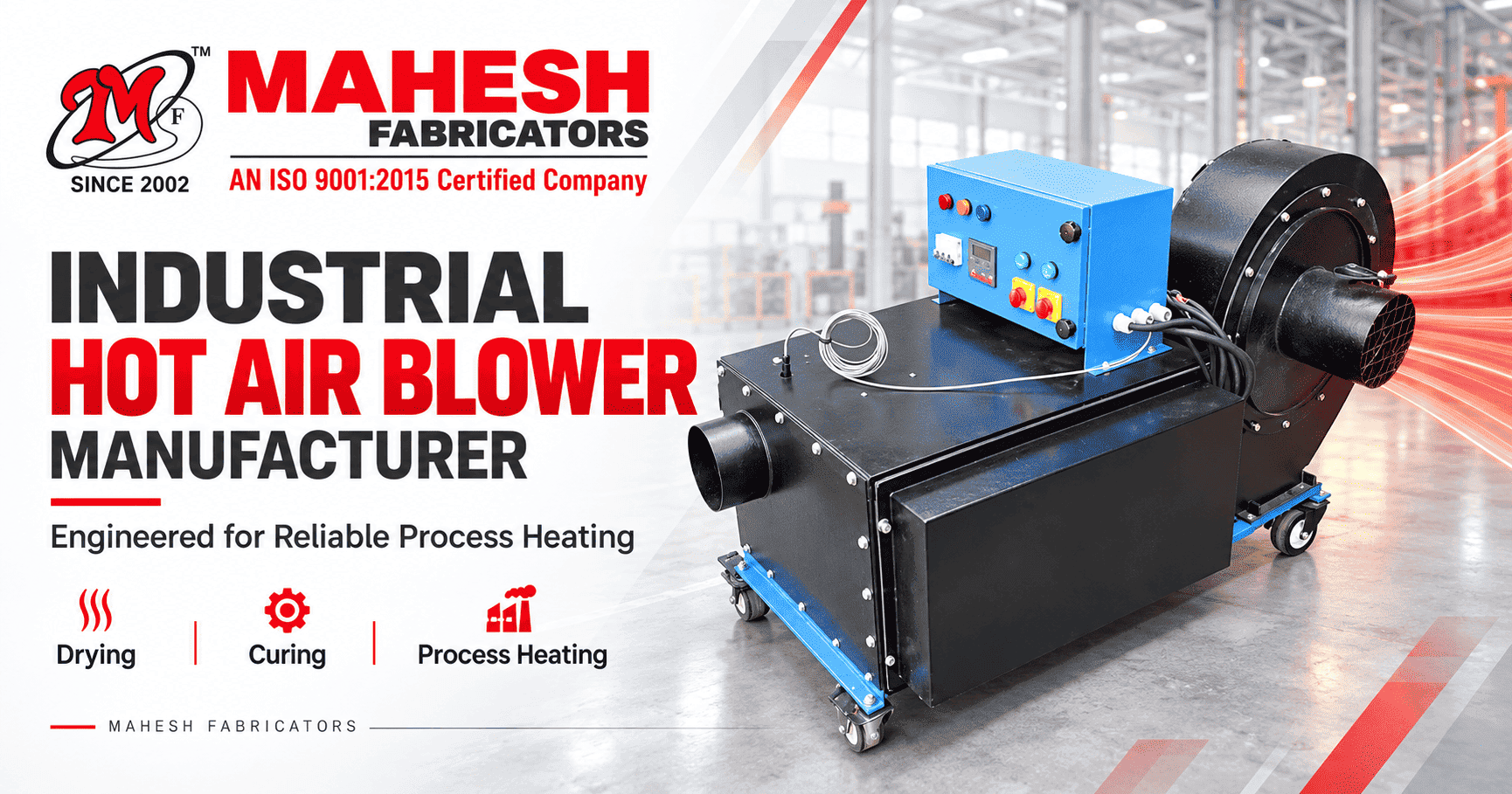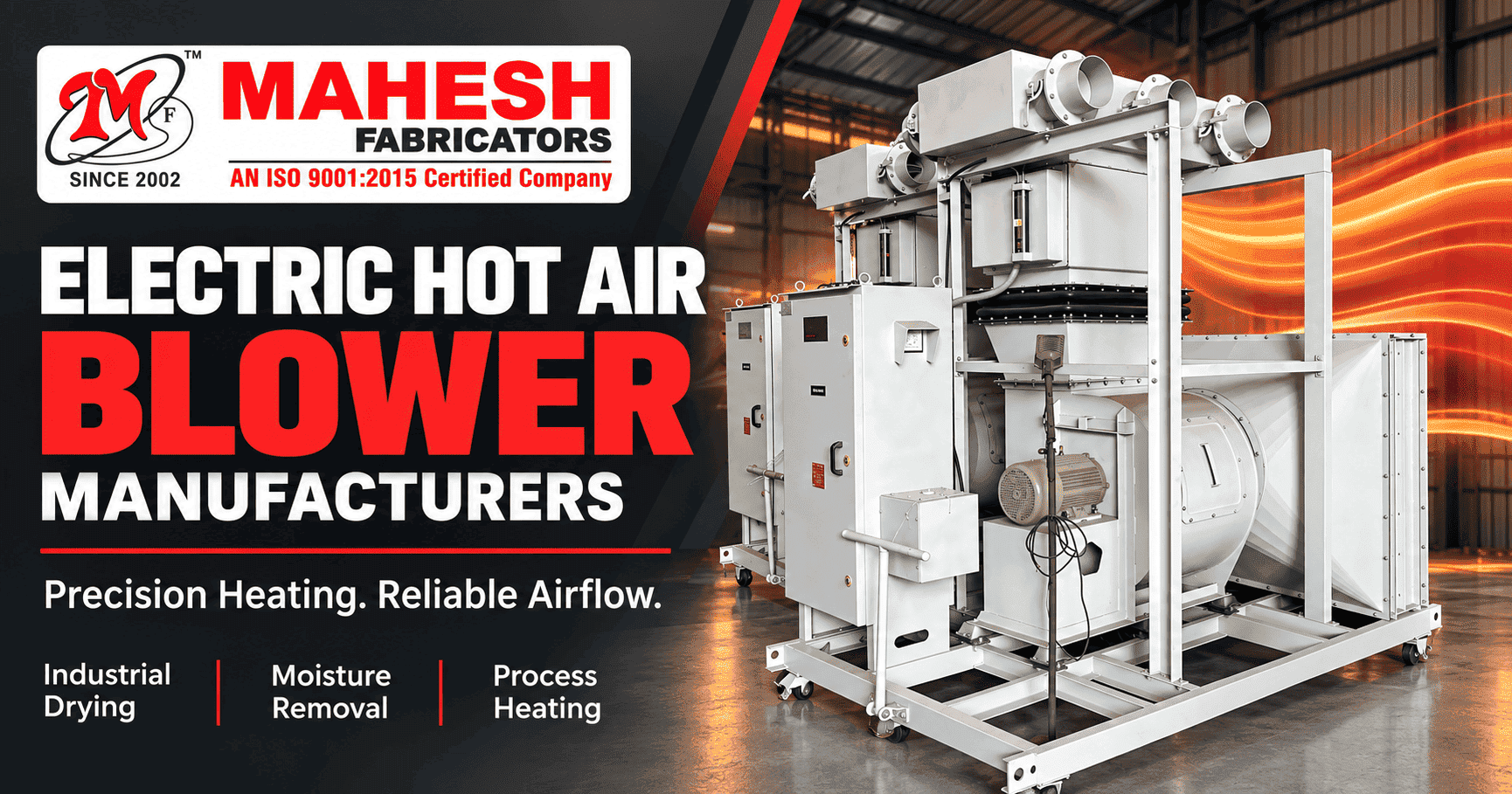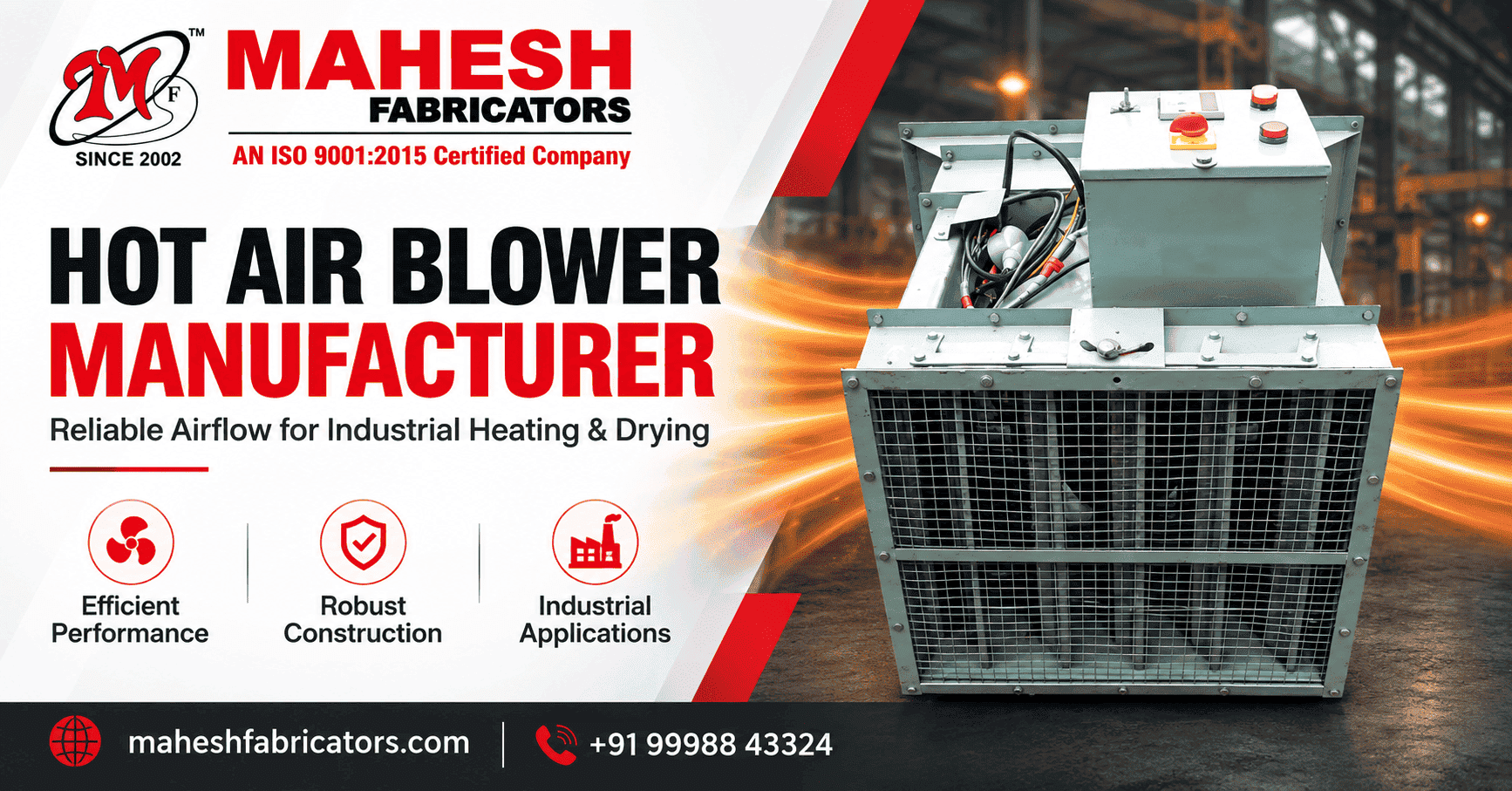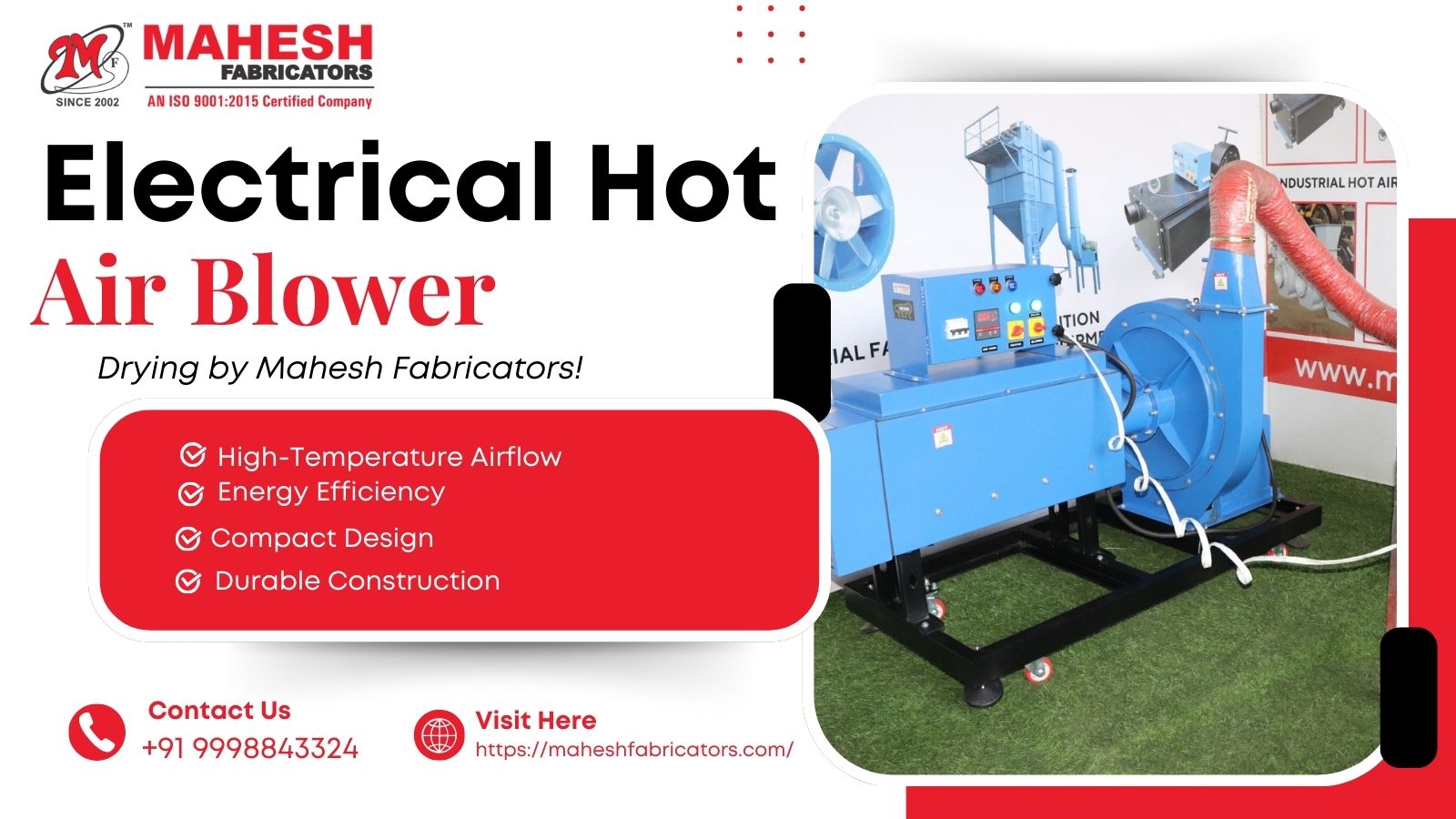
Electric Hot Air Blower
An electric hot air blower is an important industrial air heating equipment used where controlled hot air is required for drying, heating, curing, moisture removal, preheating, and process support. In many industries, hot air is not only used for temperature generation but also for maintaining process stability, improving production quality, and supporting continuous operation.
Industries working with powders, chemicals, plastics, coatings, food products, packaging materials, textiles, and engineering components often need a reliable hot air source. An electric hot air blower generates heated airflow and directs it toward the required process area. Since it works through electrical heating and controlled air movement, it is suitable for applications where clean, steady, and consistent hot air is required.
Mahesh Fabricators is associated with the manufacturing of industrial air movement and air pollution control equipment. The company manufactures industrial blowers, centrifugal blowers, fans, blower accessories, dust collection systems, and related air handling equipment. With ISO 9001-2015 certification and manufacturing experience since 2002, Mahesh Fabricators focuses on reliable engineering, industrial performance, and application-based blower solutions.
What Is an Electric Hot Air Blower?
An electric hot air blower is a system that combines a blower unit with an electric heating arrangement to produce hot airflow. The blower draws air, passes it across heating elements, and delivers heated air through an outlet for industrial use. Temperature, air volume, and pressure requirements may vary depending on the application and process design.
Unlike general-purpose fans, hot air blowers are designed to handle controlled heating requirements. They are commonly used where uniform air distribution, stable temperature, and continuous airflow are important. The equipment can support both direct and indirect heating processes, depending on the system layout and production requirement.
In industrial environments, hot air blowers are selected based on airflow capacity, heating load, outlet temperature, construction material, insulation, motor rating, and safety requirements. A properly designed blower helps maintain process efficiency while reducing uneven heating, moisture-related issues, and production delays.
How an Electric Hot Air Blower Works
The working principle of an electric hot air blower is simple but highly effective. Air is drawn into the blower by an impeller or fan mechanism. This air then passes through an electrically heated chamber or heating element zone. As the air moves across the heated surface, it absorbs heat and exits through the outlet as hot air.
The system may include controls for temperature regulation, airflow adjustment, and operational safety. In many industrial setups, hot air blowers are integrated with ducts, nozzles, chambers, ovens, dryers, or process machines. This allows heated air to reach the exact area where it is required.
The performance of a hot air blower depends on correct engineering. If airflow is too low, heating may become uneven. If airflow is too high without suitable heating capacity, the required temperature may not be achieved. This is why blower selection should match actual process conditions, not only the machine size.
Importance of Electric Hot Air Blowers in Industrial Processes
Industrial production often depends on controlled process conditions. Moisture, temperature variation, and uneven drying can affect product quality, surface finish, shelf life, and processing speed. An electric hot air blower helps manage these challenges by supplying steady hot air to the required production stage.
In drying applications, it helps remove moisture from products or materials. In heating applications, it supports temperature buildup before processing. In curing and coating applications, it helps maintain stable heat exposure. In packaging and printing, it supports faster drying and surface preparation.
Because electric heating provides controlled operation, these blowers are often preferred where fuel-based heating is not suitable or where process cleanliness is important. They also help reduce dependency on open flame systems in certain applications.
Key Features of an Electric Hot Air Blower
An industrial hot air blower must be designed with attention to performance, safety, and durability. Common features may include:
- Electric heating arrangement for controlled hot air generation
- Strong blower construction for continuous industrial use
- Uniform airflow for better heat distribution
- Suitable motor and impeller design for required air delivery
- Temperature control compatibility based on process needs
These features help industries use hot air more effectively while maintaining operational consistency.
Applications of Electric Hot Air Blowers
An electric hot air blower is used across different industrial segments because hot air is required in many production and process activities. Its application depends on temperature requirement, airflow pattern, material type, and production method.
Common applications include:
- Drying of industrial components, sheets, granules, powders, and coated surfaces
- Moisture removal from raw materials, finished products, and process lines
- Heating support for chemical, plastic, rubber, and engineering processes
- Curing and drying of paints, coatings, adhesives, and surface treatments
- Preheating of materials before forming, sealing, or processing
- Air circulation in drying chambers, ovens, and heating tunnels
Because every industry has different operating needs, blower design should be selected according to process temperature, air volume, space condition, and product sensitivity.
Benefits of Using an Electric Hot Air Blower
A well-designed electric hot air blower offers several practical benefits for industrial users. It supports process control, improves workflow, and helps maintain consistent production results.
Main benefits include:
- Provides controlled hot air for industrial heating and drying
- Helps improve moisture removal and process consistency
- Improves productivity by reducing manual drying or heating dependency
- Offers application flexibility across multiple industrial sectors
These benefits make hot air blowers useful for companies that require reliable air heating support in their daily operations.
Electric Hot Air Blower for Drying and Moisture Removal
Drying is one of the most common uses of an electric hot air blower. Many materials absorb moisture during storage, washing, coating, cleaning, or production. If moisture is not removed properly, it can create quality issues, surface defects, material sticking, corrosion, or packaging problems.
Hot air blowers help remove moisture by supplying heated air across the material surface. The airflow carries away moisture and supports faster drying. This is useful in industries handling granules, powders, parts, sheets, coated materials, food products, and packaging components.
For effective drying, the blower must provide the right balance of temperature and air volume. Excessive heat may damage sensitive materials, while insufficient airflow may slow down the process. A properly engineered blower helps maintain this balance for stable and efficient drying.
Frequently Asked Questions
An electric hot air blower is used for industrial heating, drying, moisture removal, curing, preheating, and air circulation applications. It supplies controlled hot air to process areas where consistent temperature and airflow are required.
It works by drawing air through a blower mechanism and passing it across electric heating elements. The air absorbs heat and exits through the outlet as hot air, which can then be directed through ducts, nozzles, chambers, or machines.
Yes, an industrial-grade electric hot air blower can be designed for continuous use when selected according to the required airflow, temperature, heating load, and duty cycle. Proper installation and maintenance are also important for reliable operation.
Electric hot air blowers are used in chemical, plastic, rubber, textile, food processing, packaging, printing, pharmaceutical, coating, engineering, and general manufacturing industries. They are suitable wherever controlled hot air is required for process support.
Before selecting a blower, users should check temperature requirement, airflow capacity, pressure need, material type, operating hours, ducting layout, electrical load, safety requirements, and maintenance accessibility. Correct selection improves performance and equipment life.
Yes, hot air blowers can be customized based on application requirements such as airflow, temperature range, body construction, outlet size, ducting arrangement, control panel compatibility, and installation conditions.
Airflow is important because it carries heat to the required process area. If airflow is not properly matched with heating capacity, the process may face uneven drying, slow heating, or temperature instability.
Conclusion
An electric hot air blower is valuable industrial equipment for businesses that need controlled hot air for drying, heating, moisture removal, curing, and process support. It helps maintain consistent airflow and temperature, which are important for production quality and operational efficiency.
For industrial users, the right blower selection should be based on application requirements, heating load, airflow capacity, construction quality, and long-term reliability. A properly engineered hot air blower can support smoother processes, better drying performance, and dependable operation across different manufacturing environments.
Mahesh Fabricators, an ISO 9001-2015 certified company founded in 2002, has experience in manufacturing industrial air movement and air pollution control equipment. With expertise in blowers, fans, accessories, and related systems, the company supports industries that require reliable air handling and process air solutions.