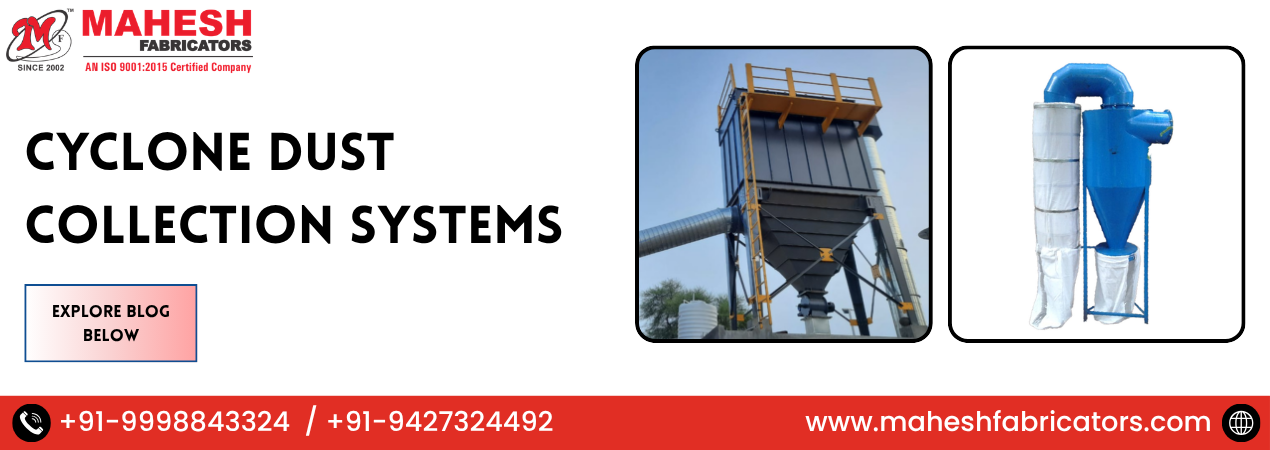
Cyclone Dust Collection Systems
Cyclone dust collection systems play a critical role in industrial air pollution control by separating dust particles from air or gas streams using centrifugal force. These systems are widely used across industries where airborne dust is generated during manufacturing, material handling, or processing operations. Their design enables efficient removal of particulate matter without relying on complex filtration mechanisms, making them a practical solution for maintaining cleaner work environments.
Dust Control in Industrial Settings
In industrial settings, controlling dust is essential not only for operational efficiency but also for worker safety. Exposure to airborne dust can lead to serious health concerns, making it necessary for industries to implement reliable dust management systems. Cyclone dust collectors provide a structured approach to reducing these risks by capturing particles before they disperse into the workspace.
Understanding Cyclone Dust Collection System Technology
A cyclone dust collection system operates on the principle of centrifugal separation. Dust-laden air enters the system at high velocity, creating a spinning motion inside the cyclone chamber. This rotational movement forces heavier dust particles toward the outer walls, where they lose momentum and fall into a collection chamber, while cleaner air exits through the top.
Unlike traditional filtration systems, cyclone dust collectors do not rely on filter media for separation. This reduces maintenance requirements and ensures consistent performance, even in environments with high dust loads. The system is particularly effective for handling coarse particles and is often used as a primary dust separation unit or as a pre-cleaner before secondary filtration systems.
Role in Industrial Air Pollution Control
Cyclone dust collection systems are an integral part of air pollution control strategies in various industries. They help reduce emissions released into the atmosphere and improve overall air quality within facilities. By removing particulate matter at the source, these systems support compliance with environmental standards and workplace safety regulations.
In processes involving ash handling, such as in power plants, cyclone systems assist in managing and cooling ash particles before further processing or disposal. This ensures that the material remains manageable and can be reused in other industrial applications where applicable.
Working Process of Cyclone Dust Collection Systems
The functioning of a cyclone dust collector follows a structured process that ensures efficient particle separation:
- 01Dust-laden air enters the cyclone chamber tangentially at high speed
- 02A vortex is created, causing particles to move outward due to centrifugal force
- 03Heavier particles settle along the walls and move downward
- 04Collected dust is stored in a hopper or collection chamber
- 05Clean air exits through the top outlet
This continuous process allows uninterrupted operation, making cyclone systems suitable for high-volume industrial applications.
Advantages of Cyclone Dust Collection Systems
Cyclone dust collectors offer several operational and functional advantages, making them suitable for a wide range of industrial environments:
Industrial Applications and Use Cases
Cyclone dust collection systems are used across multiple industries where dust generation is a common challenge. Their adaptability allows seamless integration into various production and handling processes.
Each application benefits from the system's ability to maintain cleaner air and improve overall process efficiency.
Importance of Dust Control in Industrial Environments
Maintaining a dust-free environment is essential for both operational efficiency and human safety. Accumulated dust can affect machinery performance, reduce product quality, and pose serious health risks to workers. Cyclone dust collection systems help address these challenges by ensuring continuous removal of airborne particles.
In addition to safety, effective dust control enhances productivity. Clean working conditions allow machinery to function efficiently and reduce downtime caused by dust-related issues. This makes dust collection systems a vital component of modern industrial infrastructure.
con clusion
Cyclone dust collection systems provide a reliable solution for managing industrial dust and maintaining cleaner working environments. Their efficient design, low maintenance requirements, and adaptability across industries make them an essential component of air pollution control systems. By ensuring effective dust separation and supporting safer operations, these systems continue to play a significant role in modern industrial processes.
Maintenance and Operational Considerations
Although cyclone dust collection systems require minimal maintenance, regular inspection is essential to ensure long-term performance. Key aspects to monitor include airflow efficiency, structural integrity, and dust discharge mechanisms.
Routine checks help identify blockages or wear that may affect system performance. Proper maintenance ensures consistent operation and prevents unexpected disruptions in industrial processes.
Future Relevance of Cyclone Dust Collection Systems
As industries continue to focus on environmental responsibility and workplace safety, the demand for efficient dust control solutions is expected to grow. Cyclone dust collection systems remain relevant due to their simplicity, reliability, and effectiveness in handling a wide range of industrial dust types.
Their ability to operate without complex filtration components makes them a sustainable choice for industries aiming to optimize performance while maintaining environmental standards.