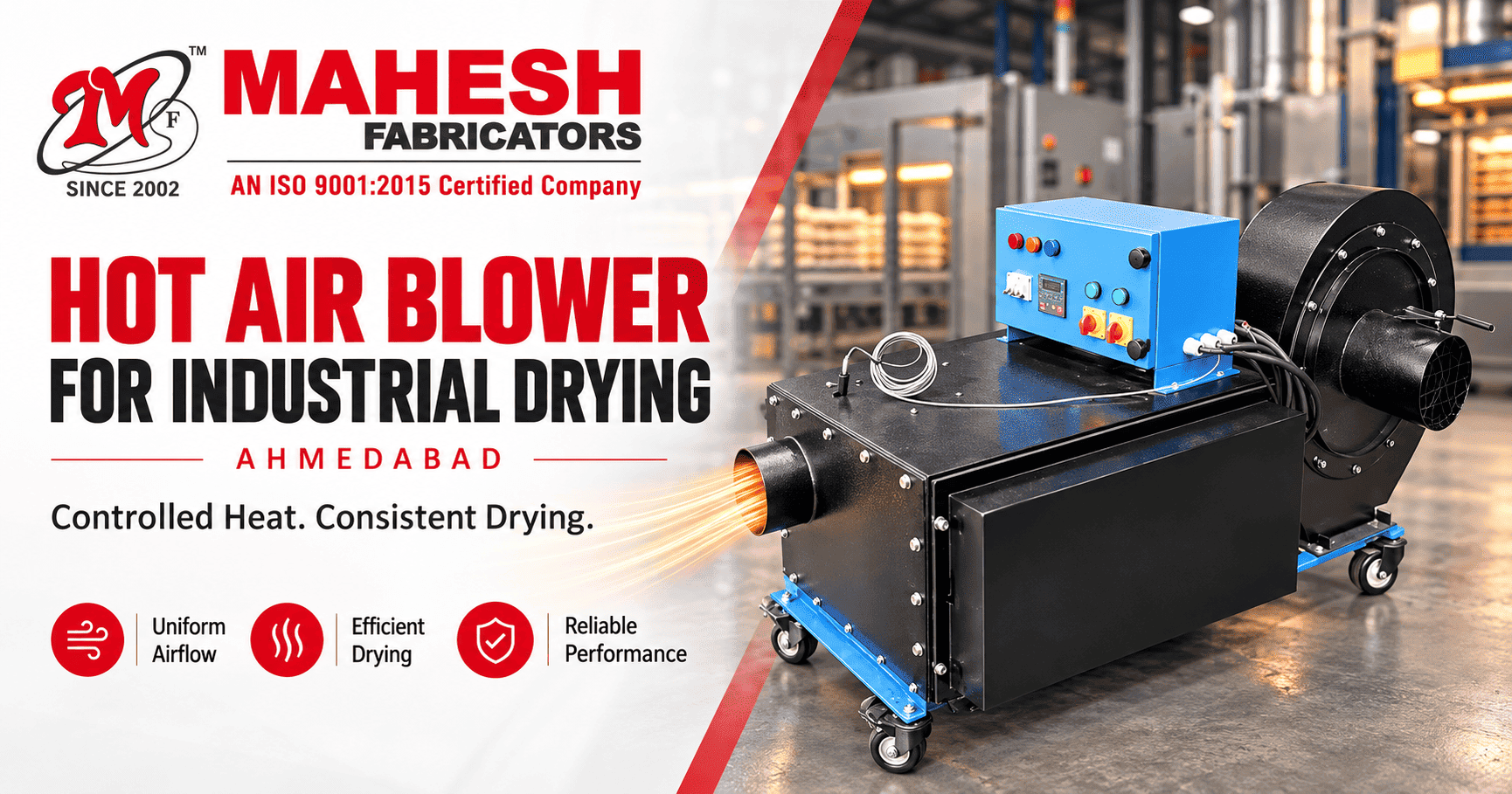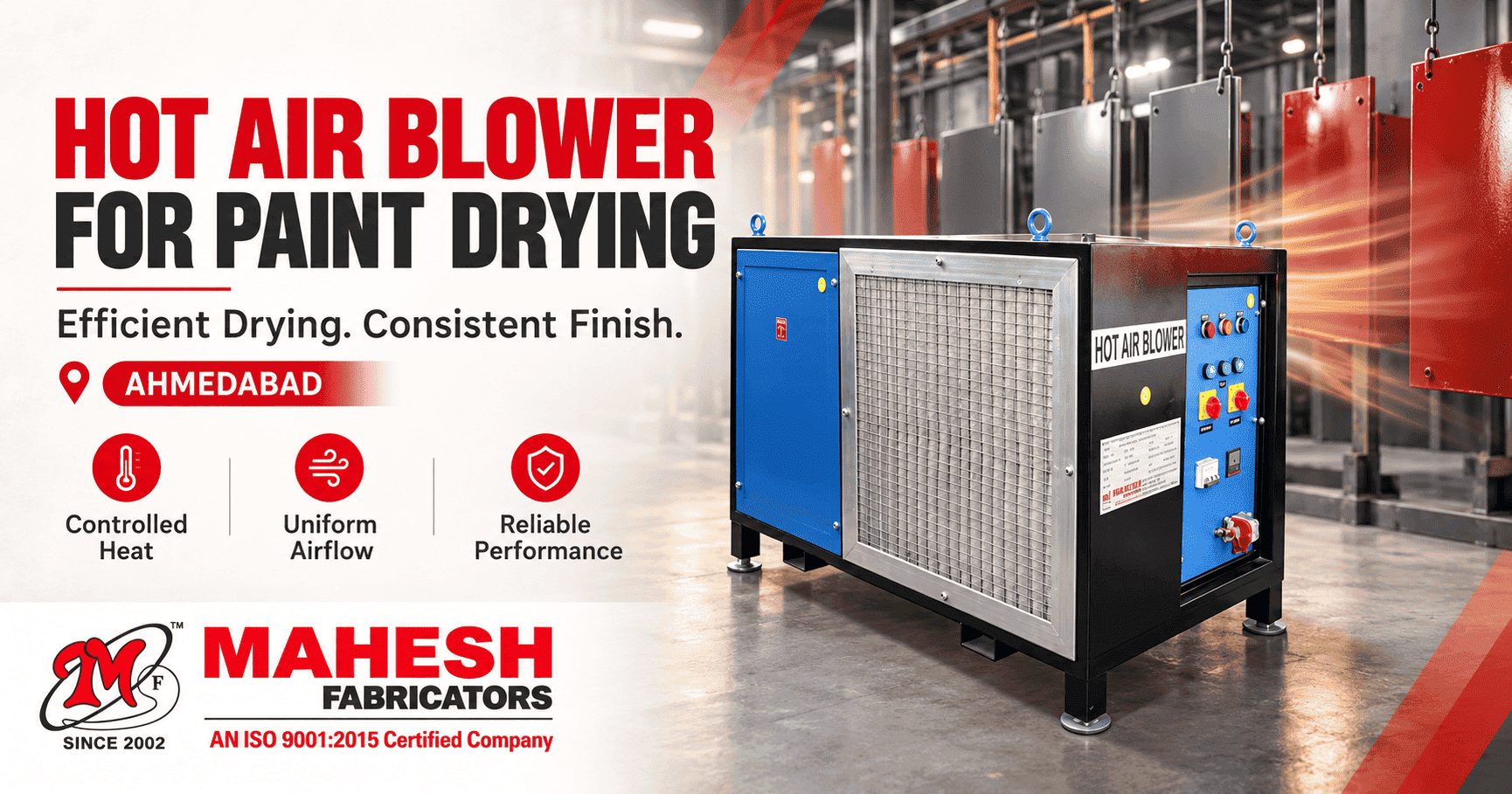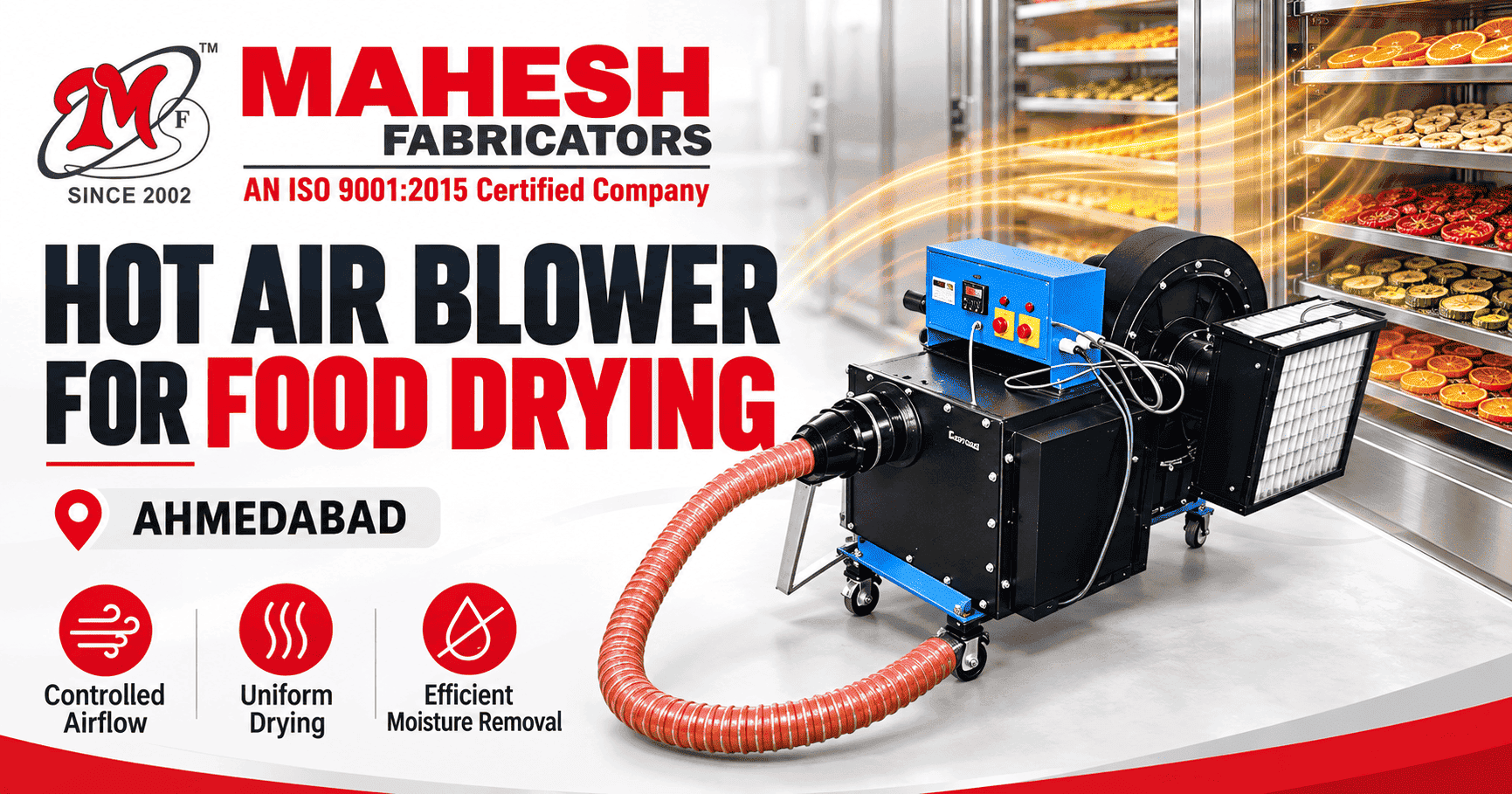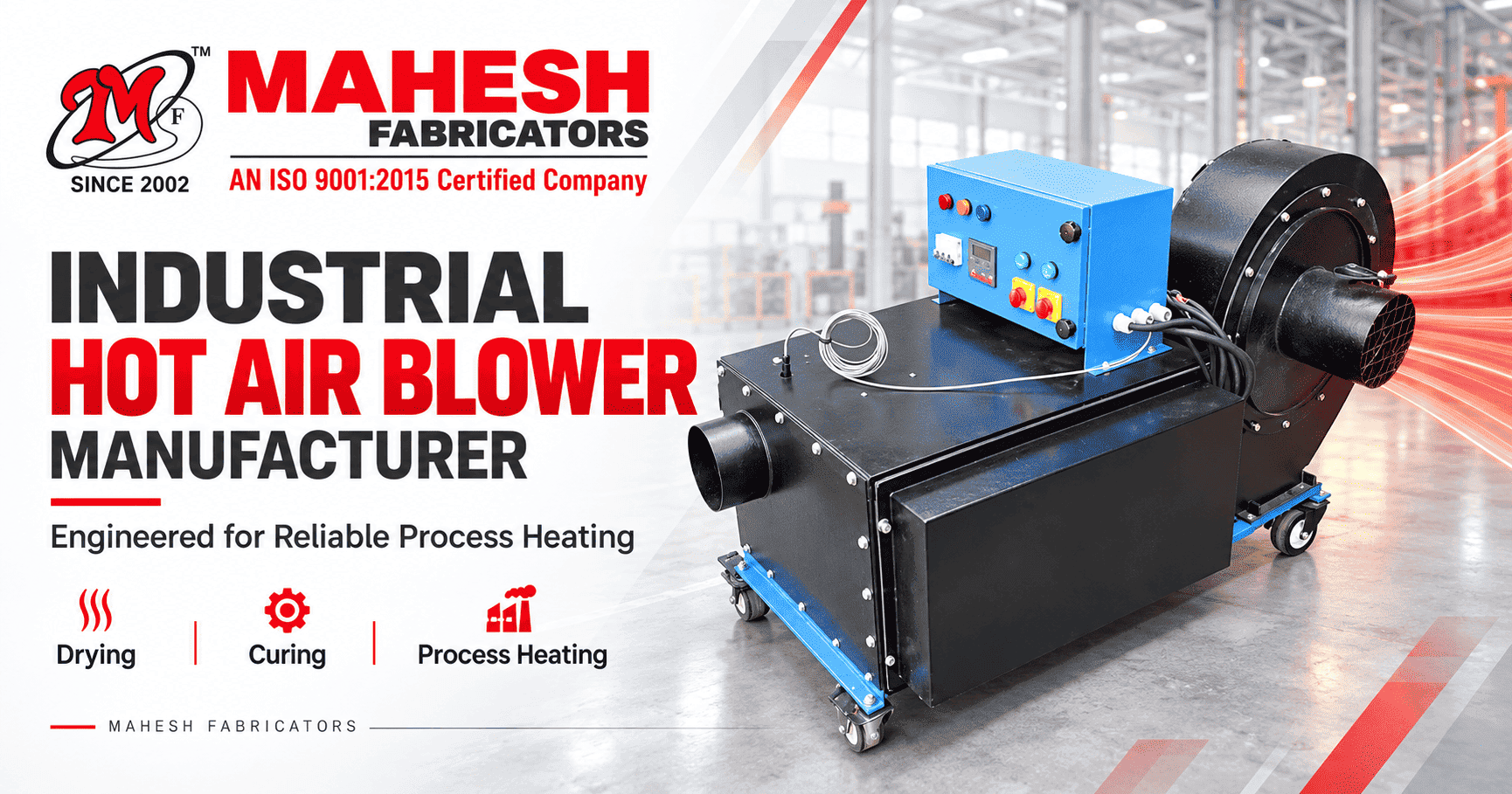
Axial Hot Air Blower for Industrial Drying Room
Applications in GYPSONIC Acoustic Ceiling Manufacturing
Introduction
In modern manufacturing, moisture control is critical for
maintaining product quality, surface finish, dimensional stability, and process
consistency. In the production of GYPSONIC Acoustic Ceiling panels,
residual moisture after washing, coating preparation, or intermediate handling
can affect drying time and final quality.
An axial hot air blower system offers an efficient
industrial solution for moisture removal and controlled drying. By supplying
uniform heated air through GI ducting into a drying room, manufacturers
can achieve reliable drying performance with better production efficiency.
Why drying is important in acoustic ceiling manufacturing
During manufacturing, acoustic ceiling panels can retain
moisture from ambient humidity, cleaning processes, or raw material handling.
If this moisture is not removed properly, it may lead to:
- Uneven
drying
- Surface
defects
- Reduced
coating quality
- Increased
production cycle time
- Product
inconsistency
A controlled drying system helps maintain product quality
while supporting continuous production.
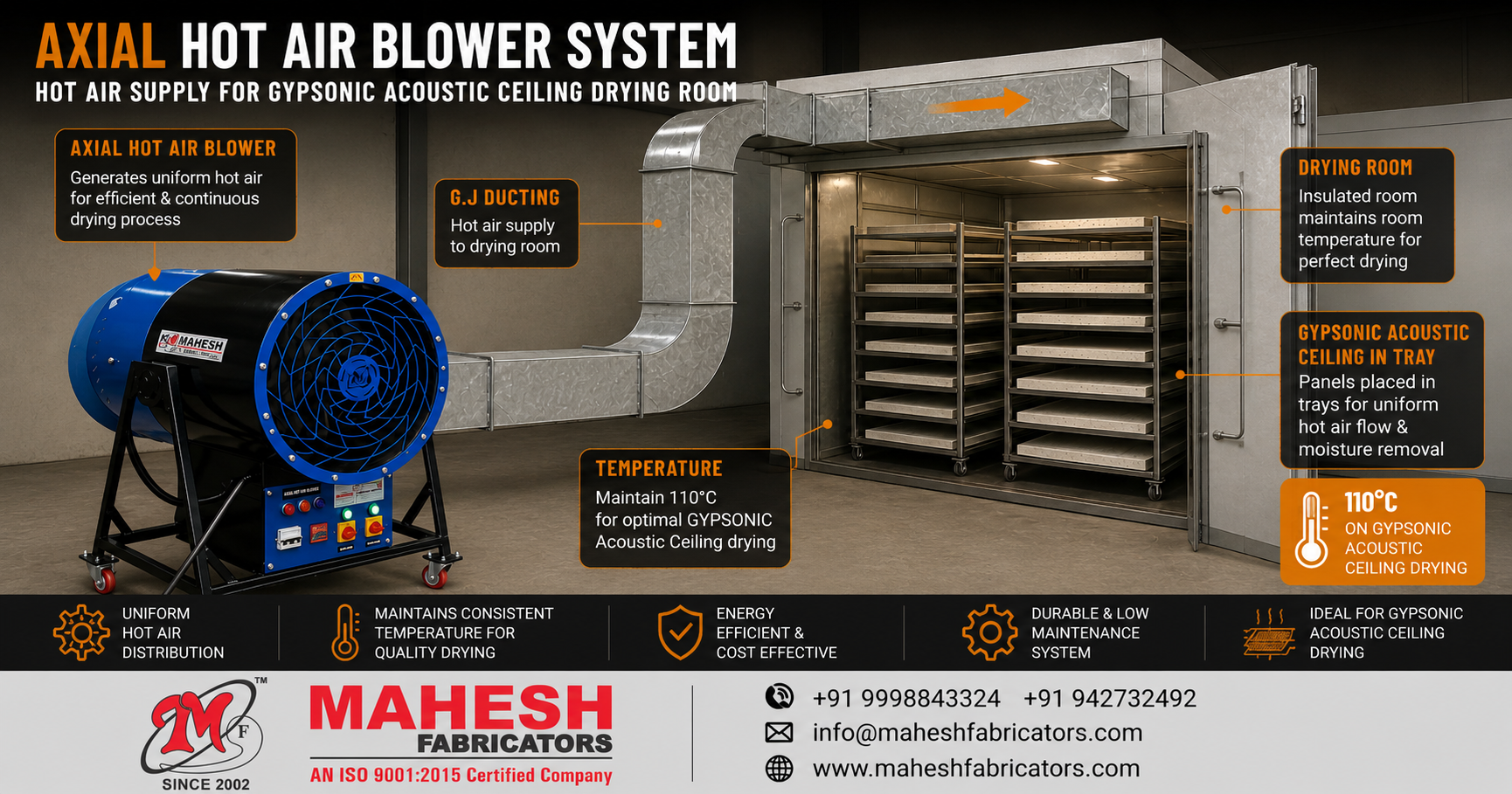
Industrial drying solution using an axial hot air blower
A customized axial hot air blower can be connected to
a GI ducting system that supplies heated air directly into an insulated
drying room.
In this setup:
- The
blower generates a high volume of heated air
- GI
ducting carries the hot air into the drying chamber
- GYPSONIC
acoustic ceiling panels are placed in trays
- Hot
air circulates uniformly around the trays
- Moisture
is removed effectively from the panels
This creates a stable drying environment that supports
consistent production output.
Working principle of the drying room system
The drying system is simple but highly effective.
1. Hot air generation
The axial hot air blower heats air to the required temperature.
2. Air delivery through GI ducting
Galvanized iron ducting transports the hot air from the
blower outlet into the drying room.
3. Uniform air circulation
The heated air spreads evenly throughout the room, ensuring
that all trays receive consistent airflow.
4. Moisture removal
The hot air removes moisture from the surface and internal
structure of the acoustic ceiling panels.
5. Controlled drying process
The drying room maintains a stable temperature for uniform
and repeatable drying results.
Recommended drying temperature
For this type of application, the drying room is commonly
maintained at approximately 110°C.
Benefits of 110°C drying
- Fast
moisture evaporation
- Uniform
drying across multiple trays
- Better
product stability
- Reduced
drying time
- Improved
production flow
Temperature can also be customized depending on product
thickness, moisture content, and production requirements.
Why axial hot air blowers are suitable for drying rooms
Axial hot air blowers are widely used in industrial drying
because they provide high airflow volume with uniform air circulation.
Main advantages
- High
air delivery capacity
- Uniform
temperature distribution
- Fast
heat transfer
- Suitable
for medium and large drying rooms
- Lower
operating cost
- Continuous-duty
industrial operation
For tray drying applications such as acoustic ceiling
drying, axial blowers are often more suitable where large air circulation is
needed.
Applications of this drying system
This type of industrial hot air drying setup can be used for
many manufacturing applications, including:
- GYPSONIC acoustic ceiling drying
- Gypsum
board drying
- Moisture
removal from panels
- Tray
drying applications
- Powder
coating preheating
- Component
drying
- Industrial
drying rooms
- Process
heating applications
Key system features
A well-designed drying system generally includes:
- Axial
hot air blower
- GI
ducting connection
- Insulated
drying room
- Tray
storage arrangement
- Temperature
control system
- Blower
and heater interlocking
- Short
circuit protection
- Earth
leakage protection
- 25
mm rockwool insulation
These features improve safety, thermal efficiency, and
process reliability.
Benefits for manufacturers
Using a controlled hot air drying system provides measurable
production advantages.
Production benefits
- Faster
drying cycles
- Better
moisture control
- Reduced
rejection rate
- Improved
product finish
- Stable
production quality
- Lower
labor dependency
- Higher
throughput
- Energy-efficient
operation
Why choose Mahesh Fabricators
Mahesh Fabricators designs and manufactures
customized industrial hot air blower systems for drying, heating, preheating,
and moisture removal applications.
The company provides complete solutions including:
- Axial
hot air blowers
- Industrial
drying room systems
- GI
ducting
- Temperature-controlled
hot air circulation systems
- Customized
process heating solutions
Conclusion
For manufacturers of GYPSONIC Acoustic Ceiling panels,
controlling moisture is essential for achieving consistent quality and
efficient production.
A properly engineered axial hot air blower drying roomsystem with GI ducting and controlled 110°C hot air circulation
offers an effective solution for fast moisture removal, uniform drying, and
reliable industrial performance.
If your process requires dependable industrial drying, a
customized hot air blower system can significantly improve both product quality
and production efficiency.
Suggested keywords
- axial
hot air blower
- industrial
drying room
- GYPSONIC
acoustic ceiling drying
- industrial
hot air blower
- tray
drying system
- GI
ducting hot air system
- moisture
removal drying system
- acoustic
ceiling drying machine
- industrial
drying solution
- hot
air circulation system